


The costly and protracted court fight between Antoinette Lattouf and the ABC is in its final stages before the judge’s decision.
The costly and protracted court fight between Antoinette Lattouf and the ABC is in its final stages before the judge’s decision.
Hello and welcome to our live coverage of journalist Antoinette Lattouf’s unlawful termination case against the ABC.
I’m Michaela Whitbourn and I’ll be keeping you informed of the latest developments in the Federal Court in Sydney today.

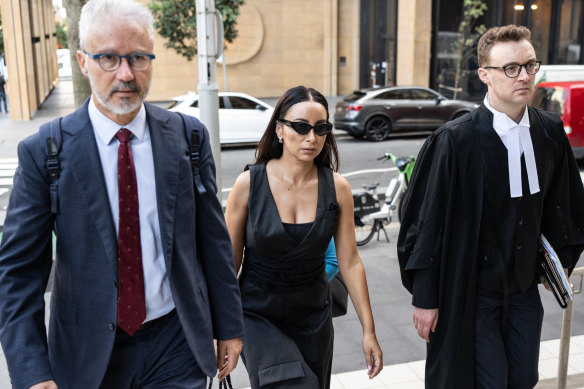
If you’re just catching up on the trial now, here’s what you need to know: Lattouf was told not to return to work three days into a five-day casual contract as a fill-in Mornings presenter on ABC Radio Sydney in December 2023.
She alleges she was unlawfully terminated because of her political opinions about the Israel-Gaza war, which were not articulated on radio but on her social media accounts, as well as because of her race or national extraction as a woman of Lebanese, Arab and Middle Eastern descent.
The ABC took Lattouf off-air after she shared a post critical of Israel from non-governmental organisation Human Rights Watch on Instagram on December 19, 2023. She added the caption: “HRW reporting starvation as a tool of war.”
She claims the ABC bowed to pressure from pro-Israel lobbyists in removing her from air on December 20. The broadcaster had received complaints about her appointment as a fill-in presenter even before the December 19 post, the court has heard.
Barrister Philip Boncardo, who is also acting for Antoinette Lattouf, is now on his feet and is addressing the court on the question of whether Lattouf’s employment was terminated.
This is a pivotal issue in her unlawful termination claim, because the ABC says her employment was not terminated.
Antoinette Lattouf’s barrister, Oshie Fagir, submits that the then ABC chair, Ita Buttrose, brought “pressure” to bear on the broadcaster’s managing director, David Anderson, and its chief content officer, Chris Oliver-Taylor.
This included by emailing both of them, he said. Fagir told the court that Buttrose’s “conduct had a material effect on the ultimate outcome”.
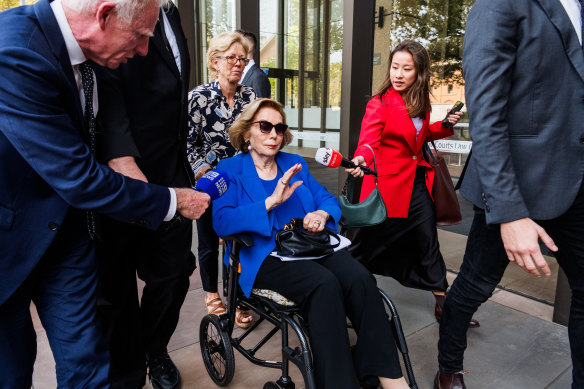
“Ms Buttrose’s attitude never wavered at any point,” he said.
Buttrose has denied influencing the decision to remove Lattouf from ABC Sydney Radio in December 2023.
Antoinette Lattouf’s barrister, Oshie Fagir, says during his submissions that ABC managing director David Anderson was one of four executives who had a hand in Lattouf’s sacking because he did not exercise a “right of veto”.
Fagir alleged in court earlier today that Anderson and the broadcaster’s then-chair, Ita Buttrose, were both involved in the decision to dismiss Lattouf, as were the ABC’s chief content officer, Chris Oliver-Taylor, and its head of audio content, Ben Latimer. But the levels of involvement of each person differed.

“We say that Mr Anderson and Mr Oliver-Taylor were decision makers in the conventional sense that they exercised authority to dismiss Ms Lattouf, and that Ms Buttrose and Mr Latimer were decision makers in the broader sense … being people who materially influenced the decision to dismiss,” Fagir said.
Fagir submitted that Anderson was a decision maker because he had a “right of veto” over Oliver-Taylor’s call to remove Lattouf on December 20, 2023, but he did not exercise it.
The ABC maintains Lattouf was not sacked. It says she was simply not required to work the final two shifts of a five-day contract.
Antoinette Lattouf’s barrister, Oshie Fagir, is back on his feet delivering closing submissions after the lunch break.
He returns to the question posed by Justice Darryl Rangiah before the break about the difference between having a political opinion and expressing it publicly, and whether an employer might lawfully dismiss an employee for doing the latter.
Fagir replies that an opinion exists only to the extent it is expressed or manifested in some way, and that there is no difference in this case.
This is relevant in the Lattouf case because the freelance journalist alleges she was sacked in part because of her political opinion, in contravention of the Fair Work Act.
Justice Darryl Rangiah raises a question about the difference between being sacked for holding a political opinion, or being sacked for expressing that opinion publicly.
Under the Fair Work Act, an employer may not take adverse action against an employee because of their political opinion.
Antoinette Lattouf alleges she was unlawfully terminated because of her political opinions about the Israel-Gaza war, which were not articulated on radio but on her social media accounts, as well as because of her race or national extraction as a woman of Lebanese, Arab and Middle Eastern descent.
Rangiah raises a hypothetical scenario about a cafe owner who does not object to an employee who supports the Greens party, but does object to them putting a Greens sign in the shop.
Lattouf’s barrister Oshie Fagir said that, in the context of the Lattouf case, “as we would see it, dismissal because of expression of opinion is dismissal because of that opinion”.
“The expression of the opinion is simply a manifestation of the opinion,” Fagir said.
The ABC maintains Lattouf was not sacked and her contract came to an end naturally at the end of the five-day term, although she did not have to work two of her five shifts on ABC Radio Sydney.
Antoinette Lattouf’s barrister, Oshie Fagir, takes aim at the use of the words “advocate” and “activist” to describe the freelance journalist.
The former ABC chair, Ita Buttrose, referred to Lattouf as an activist on the Israel-Gaza war during her evidence in court this month.
Fagir said that prominent ABC employees including Laura Tingle and Patricia Karvelas had expressed views, including on social media, and had not been labelled activists.

He submitted that the use of the word activist “involves a judgment on the relative merits of the opinions” being expressed by the individual, and it betrayed “a priori hostility to the opinions she holds”.
Justice Darryl Rangiah expressed reservations about this line of argument. He responded that this case involved a “very particular, if not unique, set of circumstances” and said that comparisons with other presenters’ comments on social media “may not be particularly helpful”.
Antoinette Lattouf’s barrister, Oshie Fagir, says in his closing submissions to the court that if the evidence of Lattouf’s line manager is accepted by Federal Court Justice Darryl Rangiah it is “game over for the ABC”.
Elizabeth Green, now executive producer of ABC Radio Sydney’s Drive program, gave evidence in court earlier this month about her dealings with Lattouf before and after the journalist was abruptly removed as fill-in host of the Sydney Mornings radio program in 2023.

At the time of Lattouf’s removal from the airwaves, Green was ABC Radio Sydney’s content director and Lattouf’s line manager.
On December 19, 2023, a day before her removal, Lattouf shared a post critical of Israel from non-governmental organisation Human Rights Watch on Instagram. She added the caption: “HRW reporting starvation as a tool of war.”
One of Lattouf’s barristers, Philip Boncardo, put to Green during her evidence that she “expressed the view that you did not see anything wrong with Ms Lattouf’s post” during an internal meeting on December 20, 2023.
“I did say that,” Green said.
Green agreed she told Lattouf she had “tried to stop them” and “tried hard to keep” her.
Fagir has submitted that Green’s evidence, if accepted, shows that Lattouf was not given an explicit direction not to post at all on social media about the Israel-Gaza war during her planned five-day stint on ABC radio.
It was “always clear that the post was not inconsistent with what she had asked Ms Lattouf to do”, Fagir said.
In a significant portion of this morning’s closing submissions, Antoinette Lattouf’s barrister, Oshie Fagir, identified the four ABC powerbrokers who Lattouf’s legal team allege were responsible for her dismissal.
They are: managing director David Anderson, the ABC’s chief content officer Chris Oliver-Taylor, then-ABC chair Ita Buttrose, and the ABC’s head of audio content Ben Latimer.

“We say that Mr Anderson and Mr Oliver-Taylor were decision-makers in the conventional sense that they exercised authority to dismiss Ms Lattouf, and that Ms Buttrose and Mr Latimer were decision-makers in the broader sense … being people who materially influenced the decision to dismiss,” Fagir said.
“You don’t assert that any other of the ABC employees were also decision-makers?” Justice Darryl Rangiah said.
“No, your honour, although we say that there is another group of persons who were materially influential and whose reasons are relevant and that is the group of campaigners, if I can put it that way.”
The ABC maintains that Lattouf was not sacked and that her contract ended as planned after five days. It says she was simply directed not to work the final two days of her contract.
Buttrose told the court that she did not want Lattouf taken off-air and “didn’t put pressure on anybody”.
Antoinette Lattouf’s barrister, Oshie Fagir, refers in court to an email sent by Chris Oliver-Taylor, the ABC’s chief content officer, after Lattouf’s first shift on-air on Monday, December 18, 2023.
The email asked: “[Can] we ensure that Antoinette is not and has not been posting anything that would suggest she is not impartial, I am concerned her public views may mean that she is in conflict with our own editorial policies.
“I am not suggesting we make any changes at this time, but the perceived or actual lack of impartiality of her views are concerning.”

That email was sent after the ABC started receiving the first of a flurry of emails in a campaign against Lattouf. The complaints called for Lattouf to be removed from radio because she had expressed views supportive of Palestinians in the Israel-Gaza war.
Fagir said there was “meagre evidence” Oliver-Taylor had ever given an explicit direction that Lattouf should not post at all about the Israel-Gaza war during her planned five-day stint on radio.
Lattouf’s legal team say this direction was never given and that Oliver-Taylor’s email does not prove that it was.
Antoinette Lattouf’s barrister, Oshie Fagir, tells the court that the grounds on which Lattouf was taken off-air were “clearly spurious”.
Fagir said emails from the ABC’s Steve Ahern, acting in the position of head of capital city networks, were “completely inconsistent with the notion that there had been any direction” given to Lattouf not to post on social media at all about the Israel-Gaza war during her planned five-day stint on radio.