


British Prime Minister Keir Starmer said he would increase annual defence spending, a signal to US President Donald Trump that the UK can boost Europe’s security.
British Prime Minister Keir Starmer said he would increase annual defence spending, a signal to US President Donald Trump that the UK can boost Europe’s security.
By Emma Farge
February 26, 2025 — 4.59am
Geneva: Dozens of countries rallied behind Ukraine at a meeting at the United Nations in Geneva on Tuesday, a day after the UN Security Council adopted a US-drafted resolution that takes a neutral stance on the conflict, as the UK pledged to increase defence spending.
The UN event, held to commemorate “resistance to the Russian aggression”, follows the resolution adopted in New York on the war’s third anniversary that reflects President Donald Trump’s upending of US policy on Ukraine and his more conciliatory stance towards Russia.

“You are not alone. Norway and other countries, all the countries who are here, but also other countries, will continue to support you as you fight for your territorial integrity, your sovereignty and your human dignity,” Norway’s Deputy Foreign Minister Andreas Motzfeldt Kravik told a packed room of ministers and diplomats.
Thousands of Ukrainian citizens have died since Russia invaded in 2022 and more than 6 million are refugees abroad. Russia launched what it calls its “special military operation” because of the NATO alliance’s eastwards expansion.
Estonia’s Minna-Liina Lind, Undersecretary for Global Affairs, told the room she was “extremely worried” by the fact that the Security Council passed a resolution that does not include long-held language on Ukraine’s territorial integrity.
“But I think the European resolve is even greater. When there’s someone else not as strong, the others fill in,” she told Reuters after the meeting, co-organised by Ukraine and Liechtenstein on the sidelines of the UN Human Rights Council.
The US failed to convince the UN General Assembly to pass the same resolution that passed in the Security Council on Monday. The General Assembly instead adopted motions seen as more favourable for Ukraine, in a diplomatic victory over Washington.
Most countries attending the Geneva event were European and included France and Germany, but others such as Turkey, South Korea, Australia and Japan were also present. Washington sent a delegate who did not take the floor.
Advertisement
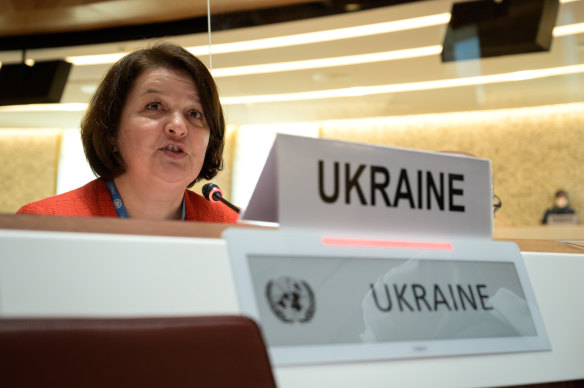
Ukraine’s ambassador Yevheniia Filipenko, who at one point became emotional while addressing the room, asked countries to continue their support for rebuilding Ukraine and seeking accountability for crimes committed since Russia’s invasion.
“The road ahead is very challenging but when we are united we can prevail,” she said.
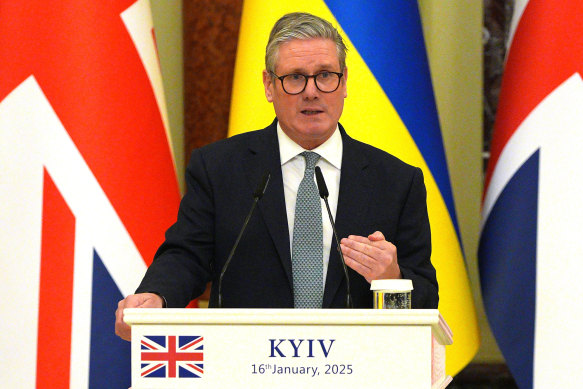
British Prime Minister Keir Starmer said on Tuesday he would increase annual defence spending to 2.5 per cent of GDP by 2027 and target a 3 per cent level last seen just after the Cold War, a signal to U.S. President Donald Trump that Britain can boost Europe’s security.
On the eve of his departure to meet Trump in Washington, Starmer told parliament he was bringing the increase in defence spending forward to offer Europe more support as the US spearheads peace talks with Russia over its war in Ukraine.
With public spending already stretched in Britain, Starmer said the increase from its current 2.3 per cent would be fully paid for by a 40 per cent cut to international aid, an announcement he said he was not happy to make but one which was necessary to offer Ukraine and Europe support in a “new era”.
Since Trump seemingly abandoned the United States’ more Ukraine-friendly approach to Russia’s war, blindsiding much of Europe, Starmer and other European leaders have stepped up diplomatic efforts to show a united front to support Kyiv.
“Starting today, I can announce this government will begin the biggest sustained increase in defence spending since the end of the Cold War,” Starmer said, adding that combined with spending on intelligence services it would reach 2.6 per cent from 2027.
“We must go further still. I have long argued that … all European allies must step up and do more for our own defence,” he said. He added that Britain would set a target for spending 3 per cent of gross domestic product in the next parliament, which will convene after a national election due in 2029.
US Defence Secretary Pete Hegseth welcomed the spending rise after speaking to British defence minister John Healey.
“A strong step from an enduring partner,” Hegseth said on X.
Reuters
Get a note directly from our foreign correspondents on what s making headlines around the world. Sign up for the weekly What in the World newsletter here.