


A 30-year draft infrastructure strategy urges the state government to double the standard size of schools.
A 30-year draft infrastructure strategy urges the state government to double the standard size of schools.
By Noel Towell
March 3, 2025 — 11.01pm
Cramming more classrooms into existing schools would be necessary to save Victoria’s cash-strapped government billions of dollars on building critical new campuses, according to the state’s peak infrastructure body.
Infrastructure Victoria says the state will need to build another 60 government schools in the decade to 2036 to keep up with demand as the population grows by more than 1 million every 10 years.
A 30-year draft infrastructure strategy for the state, published on Tuesday, urges the state government to take a more cost-effective approach to building the next generation of schools by almost doubling their standard size.
While the report finds the government is on track to deliver on a promise to build 100 schools by 2026, it predicts another 60 schools need to be built in the subsequent decade, and enrolment pressure will again be heaviest in Melbourne’s growth zones.
The regions of Wyndham and Melton-Bacchus Marsh will need a combined extra 28,000 school desks between 2026 and 2036, while about 14,000 new places will be needed in Whittlesea and another 11,700 in Casey.
Loading
But some regional areas such as Barwon, Central Highlands and Loddon-Campaspe are tipped to have dwindling school enrolments in the coming decade.
Infrastructure Victoria puts the cost of the new schools about $7.2 billion, but says the government could save $1.5 billion by almost doubling the size of the schools it builds from catering to an average of about 525 students for primary schools and 1200 for high schools to 900 and 2000 respectively.
Adding more classrooms to existing schools by leaning heavily on the use of demountable classrooms could save billions more, with existing school grounds possibly able to accommodate almost half of Victoria’s enrolment growth by 2036.
Advertisement
The plan estimates that adding extra buildings at existing schools would cost $1.5 billion to $3.3 billion, depending on how many relocatable classrooms the schools needed, and could save government up to $2.4 billion in construction and land costs for new schools by 2036.
At Coburg High School, the community knows all about making the most of the space it has. Principal Brent Houghton told The Age on Monday that if it were not for demountables, the school simply would not have coped with demand for enrolment, which had soared since its re-establishment in 2015.

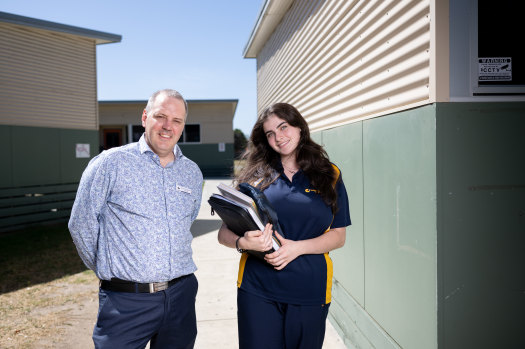
“Coburg High has experienced significant enrolment growth over the past 10 years and without portables, there would have been nowhere for classes to go,” Houghton said.
“The portables are air-conditioned, we find they work well for our senior classes.
“At the same time, they’re a stopgap, and they can’t replace specialist facilities. We look forward to new media, food, fashion and STEM spaces as part of our technology building being ready in 2026.”
Loading
Infrastructure Victoria also says that 900 new kindergartens will have to be built in the next 12 years, at a cost of $17 billion, to keep up with Victoria’s soaring demand for early childhood education places, which has been turbo-charged by the government’s free three- and four-year-old kinder programs.
The advisory body predicts that 138,000 new early childhood education places will be needed by 2036 – an almost 60 per cent increase on the existing supply – and that 900 new facilities would have to be added to the 4700 already operating.
The state government is building 50 new early education and childcare centres, but the infrastructure authority says up to $11 billion more in public investment might be needed to meet future demand, particularly in poorer areas of the state that struggle to attract for-profit childcare operators.
That investment would be required in addition to about $6 billion in expected private sector spending.
Loading
Kindergarten demand will be most acute in Melbourne’s sprawling growth corridors. Facilities will be needed to accommodate 20,000 new kinder places in the Wyndham and Melton-Bacchus Marsh areas.
The Morning Edition newsletter is our guide to the day’s most important and interesting stories, analysis and insights. Sign up here.
Noel Towell is Education Editor for The AgeConnect via Twitter.
Loading