


Two families may face years of emotional and legal turmoil after an IVF bungle led to a woman giving birth to a stranger’s baby, however Monash IVF may not face a penalty due to a gap in regulation.
Two families may face years of emotional and legal turmoil after an IVF bungle led to a woman giving birth to a stranger’s baby, however Monash IVF may not face a penalty due to a gap in regulation.
“While we understand the public interest in this matter, the privacy of the families involved – including the child – has been our priority. The information we have provided regarding this incident has been done in a de-identified way.”
Under Australia’s complex health regulation system, each state and territory is responsible for licensing and regulating the fertility clinics operating in its jurisdiction.
But up to late last year Queensland clinics had been operating with far fewer regulations and oversight than those in other states.
A senior source within Australia’s fertility regulation system, who was not authorised to speak publicly, described Queensland’s fertility oversight as “the Wild West of regulation”.
To beef up its oversight, Queensland parliament last year passed legislation in handing regulation of the assisted reproductive technology industry to Queensland Health from September 10, 2024.
But a Queensland Health spokesperson confirmed that although it had been advised of the embryo transfer mix-up in February, the incident occurred before the new regulation efforts were enacted.
“The Brisbane clinic became aware of the incident in February 2025 and it was reported to Queensland Health, as the new assisted reproductive technology (ART) regulator,” the spokesperson said.
“However, the embryo transfer occurred prior to Queensland Health becoming the ART regulator.
“We will work with Monash IVF to reinforce safeguards in their Queensland clinics and ensure any risks are identified and mitigated.”
Queensland introduced its strengthened ART regulation following a major investigation by the state’s Office of the Health Ombudsman (OHO) found the state had low levels of regulation compared with other jurisdictions.
Having helped overhaul Victoria’s fertility industry oversight in 2019, Michael Gorton AM was commissioned by the OHO to help it investigate Queensland’s regulation system.
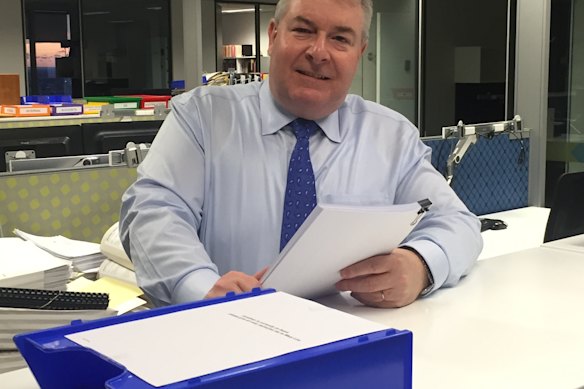
Speaking to this masthead following news of the embryo mix-up, Gorton said the new Queensland regulator would be able to take action to ensure Monash IVF did not present an ongoing risk to future clients, but would not be able to penalise the company for an incident that occurred before the legislation was enacted.
“They can’t give it a slap over the wrist for what happened before, but I can take action to ensure it is meeting requirements now,” he said.

“In Victoria you can take away their licence and in NSW and most of the other states there could be repercussions.
“But I think the greatest motivation here will be the legal case that comes out of it because it will be sqillions.
“Monash says it is human error, but the whole point of the exercise is that you have systems and processes to prevent human error.
“You have double-checking of labels and other measures, so I do not know what the human error was, but they should have system and processes to eliminate human error. That is the whole point.”
One of the world’s leading fertility clinics, Monash IVF spruiks it has “helped bring more than 50,000 babies into the world” since it was formed in 1971.
Gorton said that if the families could not resolve the highly emotional parenthood issues arising from the birth it might ultimately fall to the Family Court to decide on an unprecedented matter.
“This is the first time it has occurred, and we have had IVF in Australia for more than 30 years. I am aware of reports of two cases in America, so it is incredibly rare,” Gorton said.
“The Family Court would have jurisdiction over parenthood, and the court would start with the presumption that the birth mother is the birth mother.
“It would be a landmark [case] because they would have to consider these particularly unique circumstances where the child is biologically the child of other people.
“They have never had to consider that before.
“The fact it may take several years for any custody case to get to court would also make the matter more heartbreaking and fraught, due to the long-term relationship the child would have established with its birth mother.
“The longer it goes on, the worse it gets.”
Multiple fertility clinics contacted by The Age confirmed they use radio frequency technology to track the movement of embryos during the transfer processes to ensure no errors occur.
No 1 Fertility medical director Dr Lynn Burmeister said her clinics electronically tracked the movement of every embryo and gamete during every step of the transfer process.
“In addition to our highly trained staff manually double witnessing procedures, we utilise the industry leading ‘RI Witness’ electronic witnessing system for every gamete and embryo movement in our laboratories, providing extra security for our team and peace of mind for our patients,” Burmeister said.
Monash IVF also faces a huge financial hit over the bungle. Its share price dropped almost 30 per cent on Friday, falling overnight from $1.07 to 0.76 cents as of 3pm.
The crash comes after Monash IVF last year paid $56 million in compensation to settle a class action involving 700 families over a bungled genetic test, which may have cost dozens of families the chance to have children.
Loading
The mix-up also comes as the Victorian Health Department evaluates licence extensions required to allow Monash IVF’s clinics to continue operating in Victoria, with current licences for its Clayton, Geelong, Sunshine, Sale and Cremorne clinics set to expire on April 30.
While a fertility clinic must be accredited by Australia’s Reproductive Technology Accreditation Committee, each clinic must also apply for a licence to operate in each state. As part of the licence review process, the Secretary of the Department of Health may impose specific conditions or even suspend a provider’s registration.
IVF pioneer Gab Kovaks, who was the medical director of Monash IVF before retiring decade ago, said it was impossible to completely eliminate human error from the IVF process.
“It’s a terrible, life-altering citation for the two couples involved,” he said.
“Everyone has sympathy for them, but the next person who is probably suffering the most is the scientist who is involved in the mistake.
“If you look at the data there are more than 100,000 cycles of IVF in Australia every year now, so every few years there will be some sort of human error mistake, and it has happened all over the world.“
Most previous incidents around the world have arisen by the incorrect sperm being used to fertilise an egg, rather than a completely incorrect embryo being transferred.
Kovaks said double-checking processes have always been the cornerstone of IFV process since the first procedures were undertaken, but the sheer volume of births now resulting meant that mistakes would happen.
“Ï think it is inevitable that if you do large numbers of patients, and when people are doing it and it is not robots, there will always be mistakes – unfortunate as it is for everybody concerned.“
Start the day with a summary of the day’s most important and interesting stories, analysis and insights. Sign up for our Morning Edition newsletter.