





The White Lotus is the latest series to release product collabs, including covetable kaftans and luxury luggage, as TV merchandise goes upmarket.
The White Lotus is the latest series to release product collabs, including covetable kaftans and luxury luggage, as TV merchandise goes upmarket.
By Nell Geraets
February 27, 2025 — 2.30pm
A new season of Mike White’s black comedy-drama The White Lotus has returned to our screens – and with it, a new line of merchandise. But instead of the standard printed tee and figurine, this range is populated with cocktail recipe books, designer luggage collections and bespoke bed frames, with prices, in some cases, upwards of $4000.
It’s not the only TV show leaning into creative and elaborate merch: In 2022, Game of Thrones released a special-edition eyeshadow palette with Revolution, Succession launched a complete decanter set, and Bridgerton dropped an exclusive shoe collection with Malone Souliers.
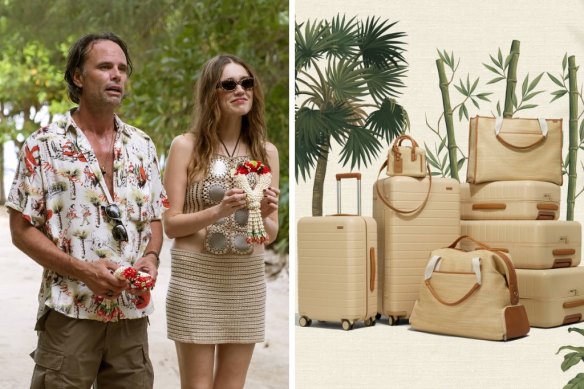
These are all examples of the ballooning TV merchandise business. Last year, Netflix’s period drama Bridgerton generated about $11.2 million in merchandise sales alone. Meanwhile, Emily in Paris products made $2.9 million. And it’s only set to grow, with market research analyst Technavio revealing the industry is projected to expand by nearly $163 billion between 2024 and 2028.
So, how has a business – once largely driven by super-fans – become such a mammoth enterprise? Brian Walker, chief executive of the Retail Doctor Group, believes the latest line from The White Lotus, replete with silk kaftans and Kiehl’s skincare sets, sums it up perfectly.
“With more people engaging deeply with their favourite shows across multiple platforms, TV merch is evolving beyond traditional T-shirts and posters to high-end collectibles, fashion collaborations and even home decor,” he says.
Merchandise now tends to prioritise functionality over decoration. For example, in 2019, Stranger Things collaborated with Polaroid to release a special edition camera. Lauren Rosewarne, associate professor in the School of Social and Political Sciences at Melbourne University, says this encouraged a wider variety of people to buy the product – including hardcore fans, casual viewers and even those who haven’t seen the show.
“Merch isn’t just a figurine you put on a shelf,” Rosewarne says. “It’s a hoodie you can wear, or a drink bottle.
“You don’t have to be a super-fan to think you may as well buy one connected to a show you like. After all, some people will feel better endorsing someone’s creative output than just buying a corporate-branded item.”
Advertisement
Granted, decorative merch still exists. (Take the Bridgerton Readers’ Club pillow, for instance.) But Rosewarne says it has improved in quality, often serving as a status symbol, or even an investment if the item appreciates in value. Perhaps the most extreme example of this is the Game of Thrones Fabergé egg, which sold for more than $3.4 million.
Loading
Christina Anthony, a marketing lecturer at Sydney University, describes current-day merch as “retail therapy with a side of social currency”.
“It’s all about perceived value,” Anthony says. “If it’s tied to a hit show, the price can skyrocket. People are willing to pay more because of emotional connections to the show and the social signalling that comes with owning something that’s seen as exclusive.
“So, it’s not just a bed frame, it’s a symbol of your taste and status. The process can also become quite competitive, with consumers comparing their merch collection within their social groups and trying to one-up each other.”
Collaborations between designers and well-known brands that suit the aesthetic are a key element. Take theCAMILLA x The White Lotus collection, which launched on February 19. It includes silk twill dressing robes and bamboo-handled totes, all of which feature ornate White Lotus-themed designs.
Camilla Franks, founder and creative director of the Australian brand, says fashion collaborations with popular shows have become more common, as it taps into cultural moments in unexpected ways.
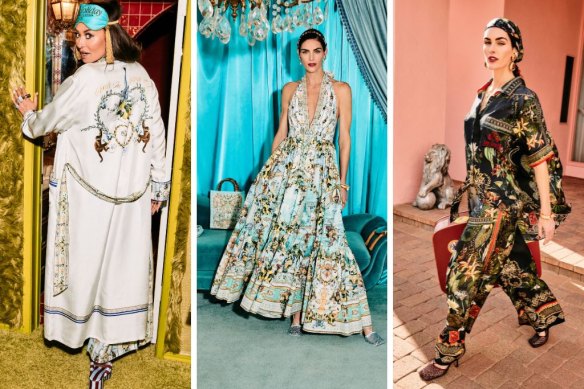
“When two creative worlds align, a unique synergy is born, sparking an emotional connection that allows fans to not only watch a story, but to wear a piece of it – to make it a part of their lives every day,” she says.
“In the past, there’s been fan fiction and TV conventions, which evolved into cosplay and LARPing [live action role playing]. If you think about it, fashion partnerships are a natural next step in that evolution – another avenue that allows us to find a new relationship with something we love.”
Loading
This kind of merch is subtly connected to a show, and Walker, from Retail Doctor Group, says it’s more appealing to style-conscious and affluent buyers, as the products blend seamlessly into people’s lives. “Instead of overt branding, merch now incorporates minimalist references.”
According to Walker, as long as streaming services and cultural moments continue to drive fandom culture, TV merch “will only grow in creativity, exclusivity and price”.
Make the most of your health, relationships, fitness and nutrition with our Live Well newsletter. Get it in your inbox every Monday.
Nell Geraets is a Culture and Lifestyle reporter at The Age and The Sydney Morning Herald.Connect via Twitter or email.
Loading
Discover more from World Byte News
Subscribe to get the latest posts sent to your email.
