





A record seven quarters of falling GDP per person has finally ended, with new figures showing the economy improving in late 2024.
A record seven quarters of falling GDP per person has finally ended, with new figures showing the economy improving in late 2024.
By Shane Wright
Updated March 5, 2025 — 12.10pmfirst published at 11.26am
Australia’s two-year GDP per capita recession is finally over after the Australian economy picked up steam in the final months of 2024 as people headed to the cricket and live music.
Figures from the Australian Bureau of Statistics released on Wednesday morning showed the economy expanded by 0.6 per cent in the December quarter, lifting annual growth to 1.3 per cent. It had slumped to just 0.8 per cent at the end of the September quarter.
It was the strongest quarter of growth since the final three months of 2022.
GDP per capita, which accounts for the size of the population, grew by 0.1 per cent. It ended seven consecutive falls in this key indicator, the worst run since the Great Depression in the 1930s.
The bureau’s head of national accounts, Katherine Keenan, said there had been growth across most of the economy.
Loading
“Modest growth was seen broadly across the economy this quarter. Both public and private spending contributed to the growth, supported by a rise in exports of goods and services,” she said.
Household spending lifted by 0.4 per cent in the quarter after being flat through the September quarter.
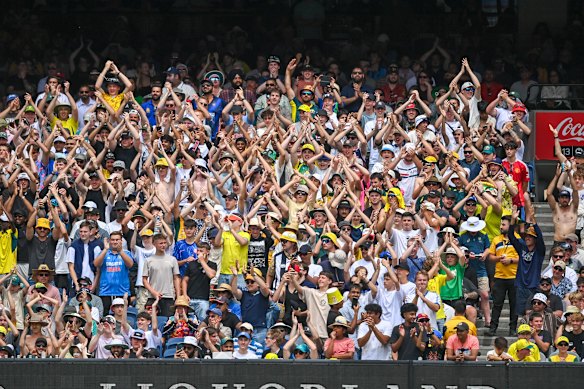
Spending on essentials – including rent and health – rose, but shoppers also lifted their expenditure on hospitality, including sporting and music events. That included the Australia-India Test series, which attracted large crowds in Adelaide and Melbourne through the December quarter.
Advertisement
Government spending growth eased to 0.7 per cent after sizeable increases in previous quarters. Most of the spending was on health, education and state government policing. Federal spending lifted on defence, the Pharmaceutical Benefits Scheme and aged care.
Private investment increased by 0.3 per cent in the quarter due to a rise in spending on engineering, including electricity distribution projects. But private spending on dwellings fell by 0.4 per cent.
Treasurer Jim Chalmers said the figures showed a solid rebound in growth.
“Consumption was a major contributor to the overall result this quarter, and the key reason why private final demand picked up,” he said.
“Consumption had stalled in the middle of last year due to higher interest rates, global economic uncertainty and cost-of-living pressures, and now it’s beginning to bounce back.”
Loading
By industry, the largest increase was for the agriculture sector, which enjoyed a 7.3 per cent bump in the quarter. This was due largely to higher levels of livestock production, particularly beef, which is being shipped to meet demand in drought-affected America.
A big harvest also lifted grain production.
At the state level, the fastest-growing jurisdiction in the quarter was the Northern Territory, with state final demand up by 1.6 per cent.
NSW and Victoria both grew by 0.6 per cent, but there were substantial differences in their growth drivers. Victorian general government spending fell by 0.1 per cent in the quarter, but public infrastructure expenditure lifted by 2.5 per cent, while private capital spending improved by 1.4 per cent.
In NSW, general government spending lifted by 1.5 per cent.
Cut through the noise of federal politics with news, views and expert analysis. Subscribers can sign up to our weekly Inside Politics newsletter.
Shane Wright – Shane is a senior economics correspondent for The Age and The Sydney Morning Herald.Connect via Twitter or email.
Loading
Discover more from World Byte News
Subscribe to get the latest posts sent to your email.
