Browsing: Tech

tech news

NVIDIA Experts Share Top 5 Tips for Standing Out in the AI Job Market​on May 2, 2025 at 3:00 pm

With graduation season approaching, a new cohort of students is embarking on next steps, aiming to use their passions and skills to make a real, tangible impact on the world. For many, this means — first and foremost — landing a job. According to a survey by Inside Higher Ed, more than 60% of students
Read ArticleWith graduation season approaching, a new cohort of students is embarking on next steps, aiming to use their passions and skills to make a real, tangible impact on the world. For many, this means — first and foremost — landing a job. According to a survey by Inside Higher Ed, more than 60% of students
Read Article  


With graduation season approaching, a new cohort of students is embarking on next steps, aiming to use their passions and skills to make a real, tangible impact on the world.

For many, this means — first and foremost — landing a job.

According to a survey by Inside Higher Ed, more than 60% of students are saying the rise of AI has affected their career plans. And in 2024, the World Economic Forum forecasted that global demand for AI and machine learning specialists will grow over the next several years by 40%.

As artificial intelligence advances at unparalleled speeds, it’s an exciting, opportune time to kickstart a career in the industry.

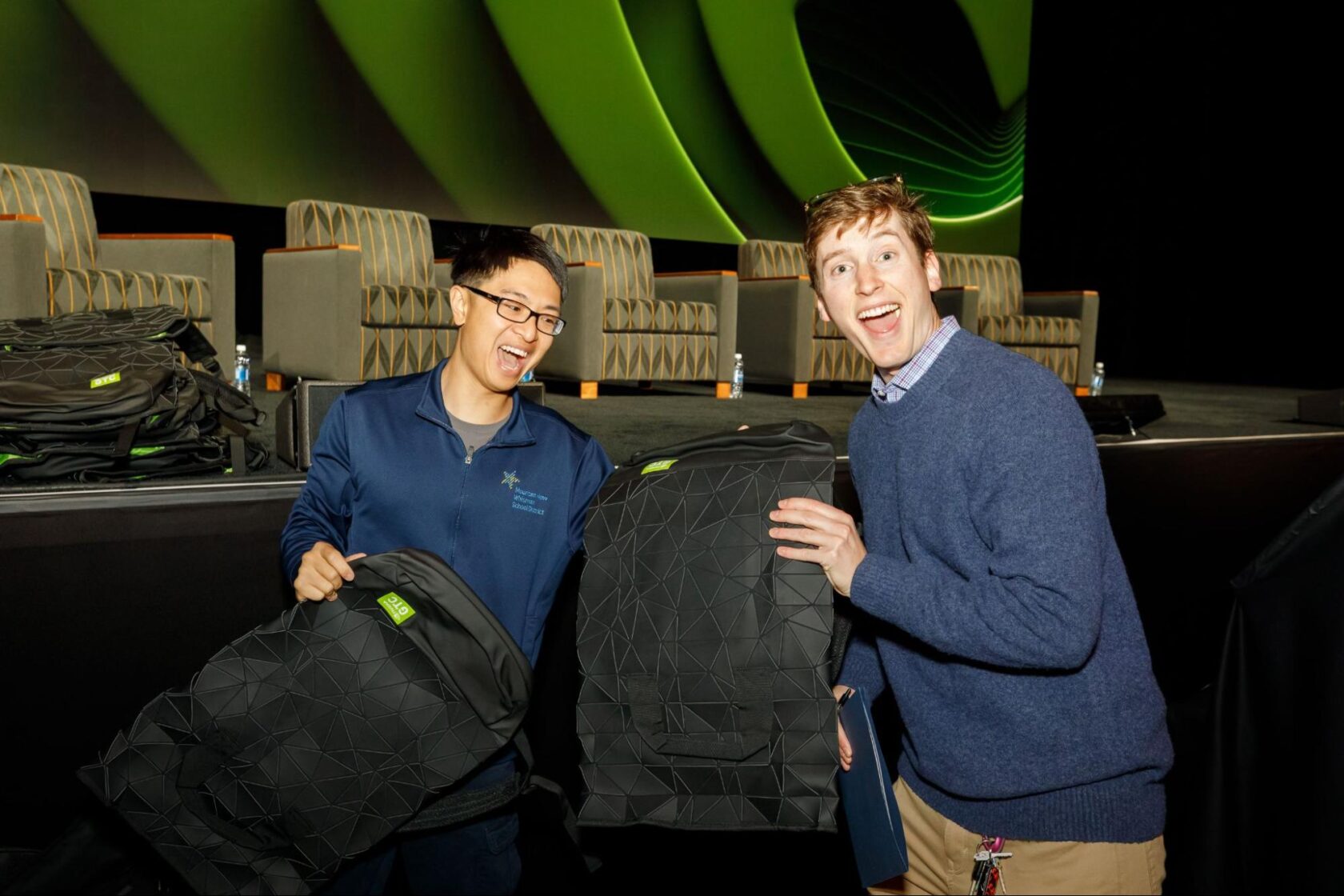
At the NVIDIA GTC global AI conference in March, panelists discussed how to kickstart a career in AI:

Read on for top tips from NVIDIA experts for students and recent grads looking to stand out in the AI job market.

1. Integrate Diverse Skills and Be Adaptable

Not everyone needs to have a computer science degree to work in AI.

A diverse educational and professional background can make people more adaptable and versatile — a valuable asset, especially in the rapidly evolving field of AI.
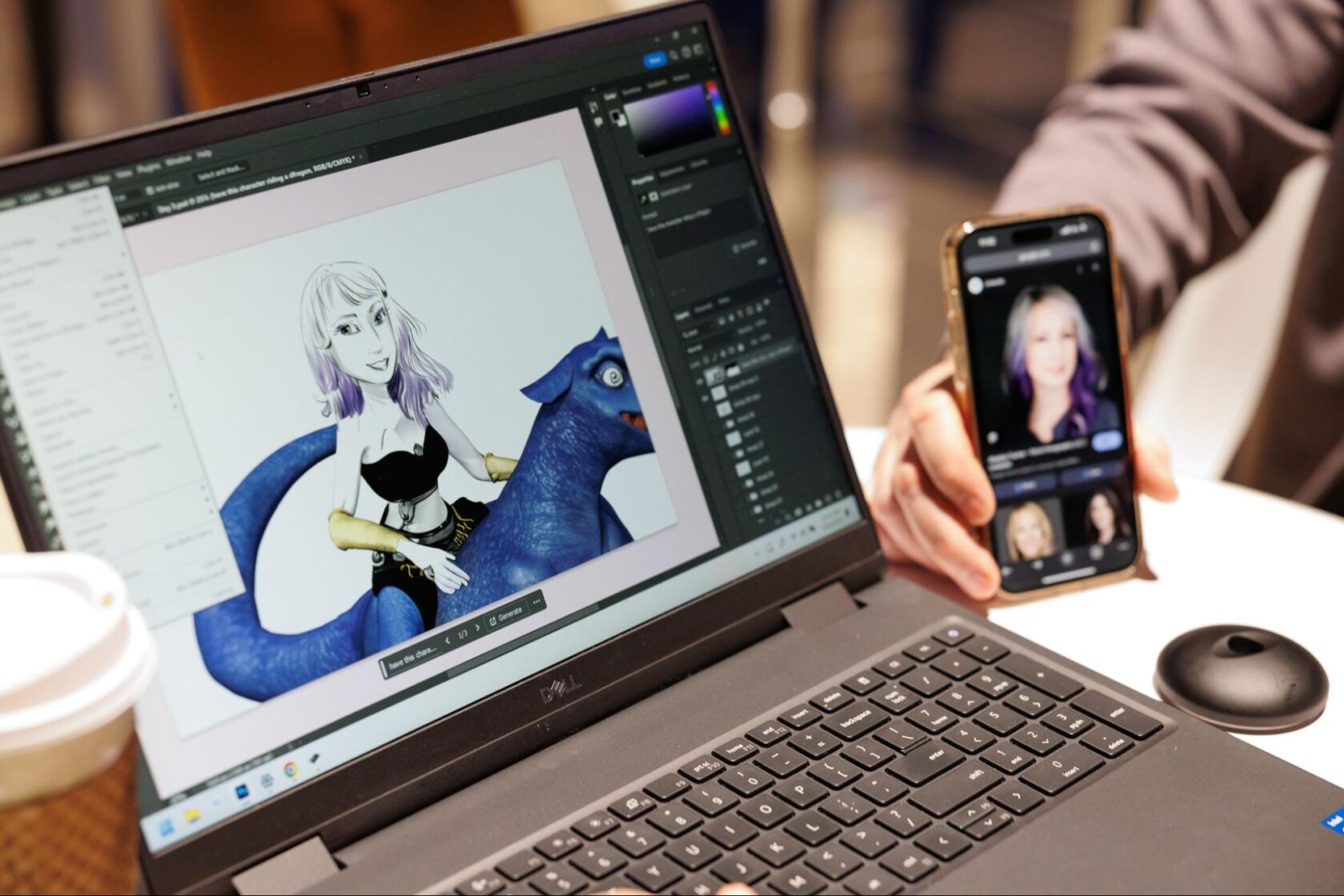
Whether a student has a studio art degree or a chemical engineering background, being an AI operator — knowing how to integrate AI into their workflows — can help them stand out from other candidates.

Sadie St. Lawerence, founder of Women in Data and CEO of the Human Machine Collaboration Institute, said during the GTC panel: “Don’t worry so much about necessarily the right skills — make sure you’re integrating the use of AI in your daily workflow.”
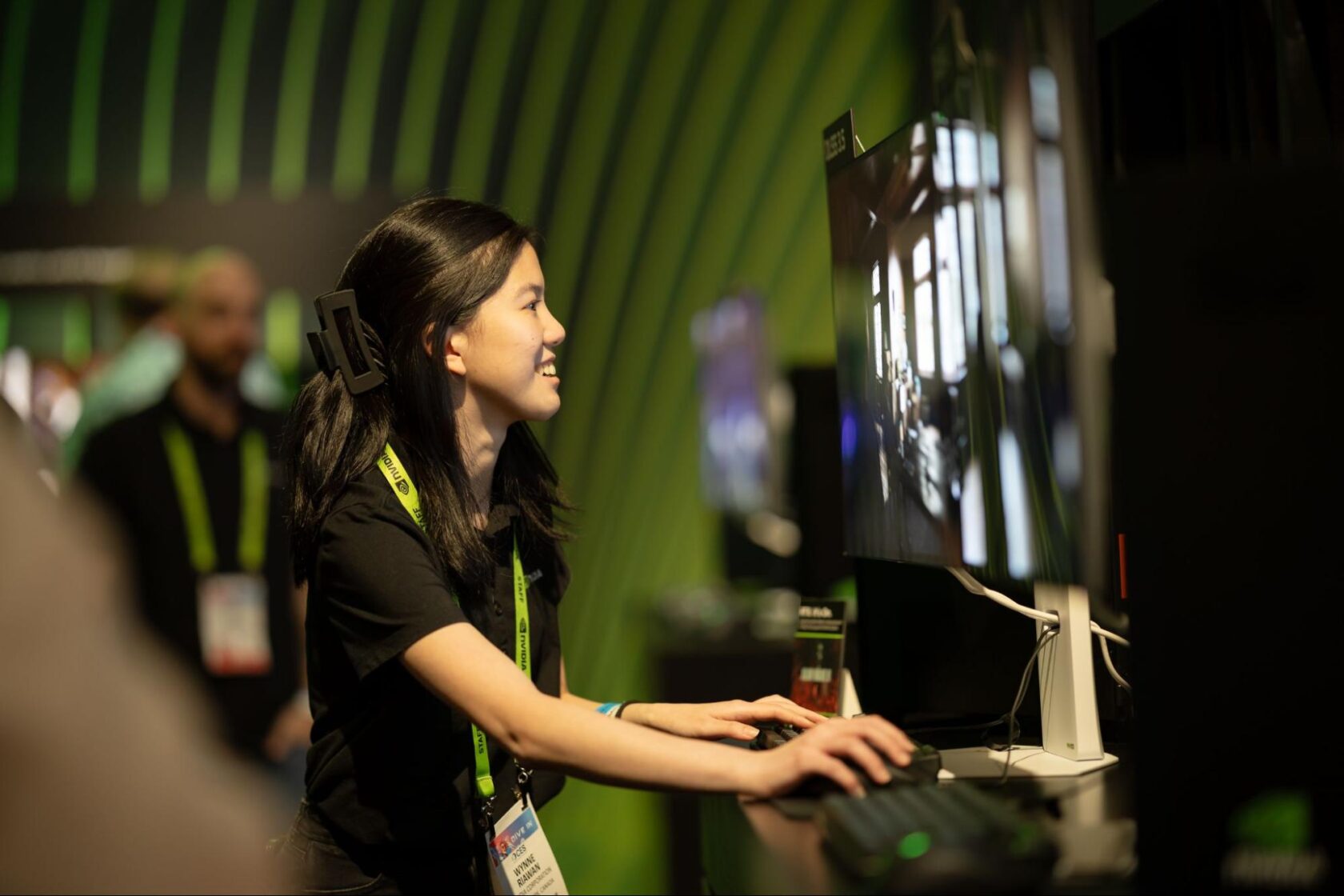
“AI allows you to branch outside your area of expertise,” added Carter Abdallah, senior developer technology engineer at NVIDIA. “AI can do some of the heavy lifting so nontechnical people can code, and technical people are now finding it valuable to lean into liberal arts education, so they can add human touches to their work in AI.”

Abdallah encouraged students to use AI as a tool to enhance and enable skills they might not have had access to before.

2. Find Your ‘Why’ and Align Passions

Eric Vargas, senior university recruiting manager at NVIDIA, said, “There isn’t necessarily such a thing as an ‘AI candidate,’ but there are sub-areas within AI, different domains and industries that are going to be affected by AI, which you’ll want to gain experience in, because that’s where companies are looking to implement AI.”
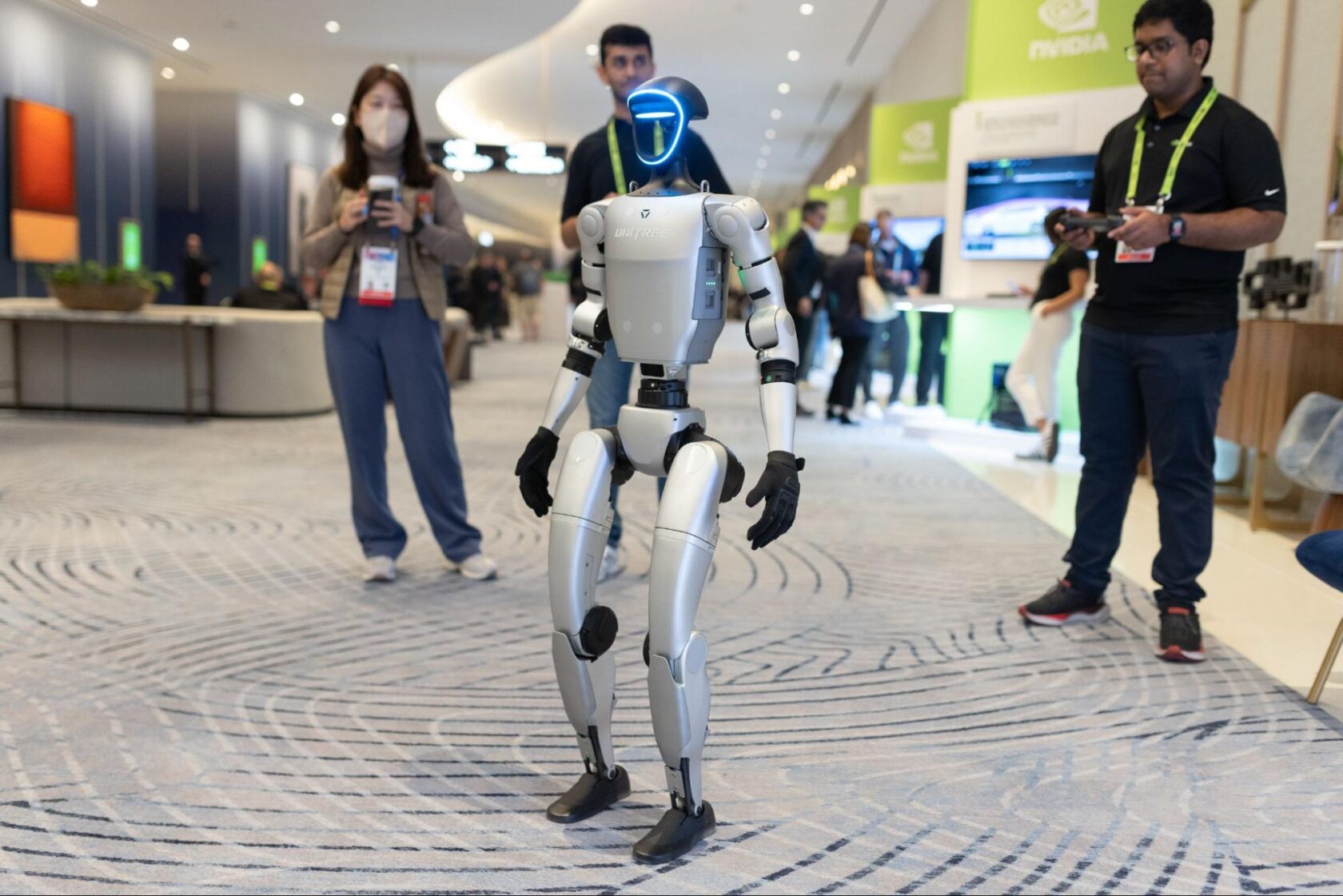
Autonomous vehicles, robotics, gaming and healthcare are just some of the slew of areas in which AI can be applied. Students should find the industry that most aligns with their passions and gain expertise in that field.

“Pick a problem that seems impossible to solve but that you’re passionate about,” added Saudia Jones, generative AI analyst at NVIDIA and a recent graduate from San Jose State University. “Connect with ‘why’ you’re driven by this, because that’s going to be the thing that leads you to overcome the challenges and innovate.”

Learn more about how land an internship at NVIDIA:

3. Use AI Responsibly

Use AI tools responsibly and maintain a human touch, Vargas advised, including when writing job applications, cover letters and responding to questions for a technical interview. This balance is crucial for building trust and ensuring ethical use of technology.

Trustworthy AI — an approach to AI development that prioritizes safety and transparency for the people who interact with it — is key to the industry.

For example, learn more about how David Martin, a technical project manager intern on the trustworthy AI team at NVIDIA, is channeling the power of artificial intelligence for social good.

Growing up deaf, Martin experienced the limitations of existing technologies, such as the accuracy of closed captioning on streaming platforms. At NVIDIA, his responsibilities include advising engineering teams that are working on sign language AI applications and supporting the development of ethical dataset curation tools.

This combination of showcasing one’s passion and using AI for good is key to standing out in the field.

4. Build a Network and Seek Mentorship

Networking and mentorship are essential for career growth in any industry.

“Building a network and seeking mentorship in the AI space has been crucial for my career growth,” St. Lawerence said. “I’ve learned so much from connecting with experienced professionals.”

Students can easily connect with industry professionals on platforms like LinkedIn, she said, which uses AI to help people during job searches by recommending key words to put on resumes for specific positions and identifying transferable skills that could apply to a role.

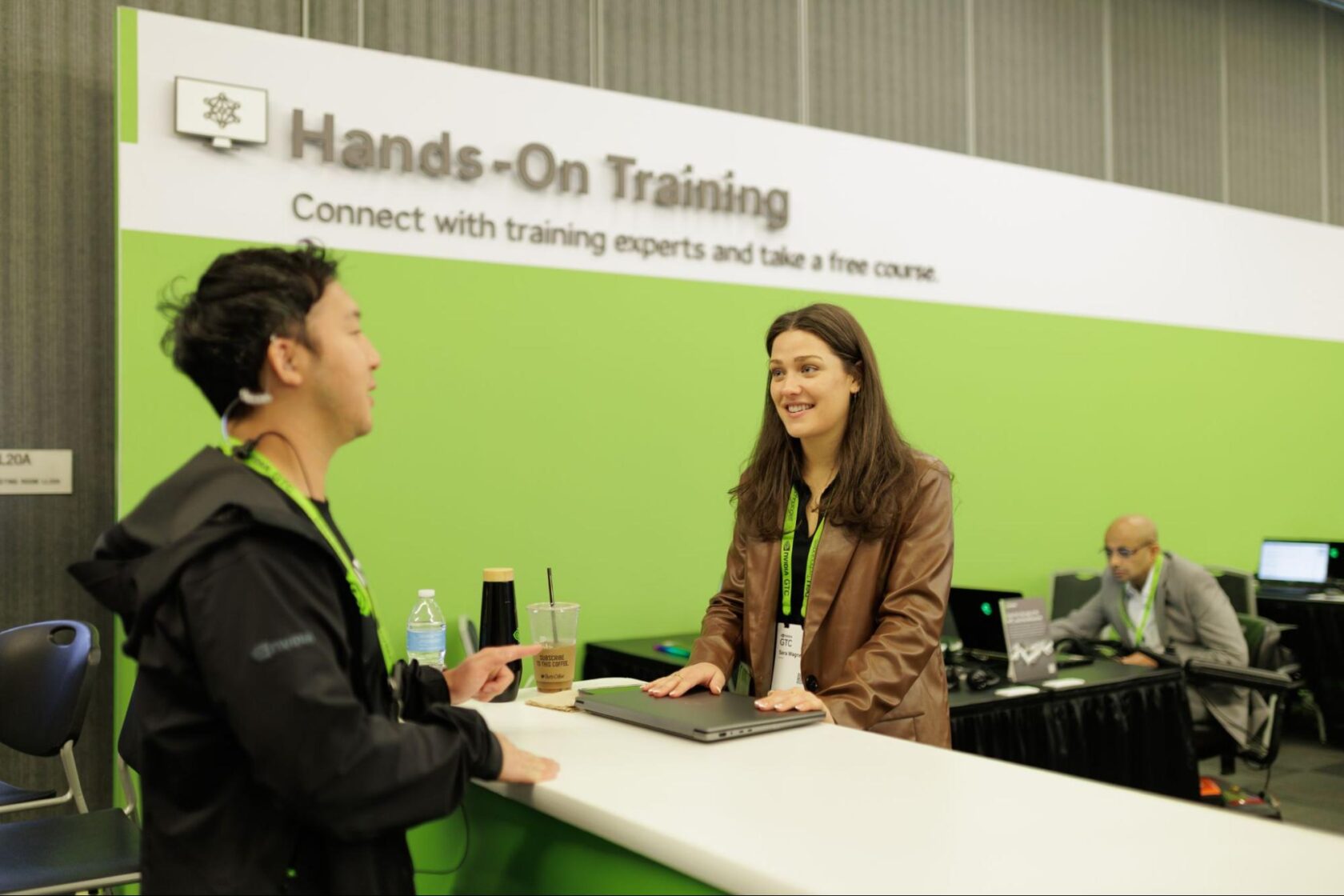
In addition, anyone can connect with experts and take training courses through the NVIDIA Deep Learning Institute, which offers in-demand skill development, hands-on experience and expert knowledge in AI, data science, accelerated computing and more.
5. Stand Out by Being Proactive

Let’s say a candidate has done all of the above — how can they set themselves apart from other applicants?

Carter said, “Identify a problem you can solve and take proactive steps to address it, even before being hired.”

Vargas agreed and said the top three things recruiters at NVIDIA look for are: 1) a demonstration of the technical skills required for the role, 2) subject-matter expertise and 3) projects that exhibit thinking outside of the box.

A student could stand out from other candidates by, for example, demonstrating a self-started robotics solution built with an NVIDIA Jetson developer kit, writing a technical article that gets many views across social media or starting an AI-related club on campus.

More Resources

A panel of pioneering AI researchers also discussed their career paths at GTC:

They highlighted that in research, too, practical experience, a demonstration of persistence and resilience, and an interdisciplinary approach to problem-solving are what give candidates an edge.
And for those already on their way with their AI job search, some interview tips and tricks from NVIDIA’s University Recruiting team include:

  • Before: Read through the job description and practice applying the required technical skills. Be prepared to articulate relevant experiences clearly and concisely. Make a list of five or more questions about the position, project and team.
  • During: Respond thoughtfully and enthusiastically to the interviewer’s questions. For technical interviews, talk through any thought processes at each step of the problem. Listen carefully to how the interviewer responds — they’ll often give clues when a candidate is on track or drop subtle hints if they’re straying from the solution.
  • After: Within 24 hours of the interview, send a thank-you note to the recruiter for the role — they’ll forward it to the interviewer. After 10 business days, candidates waiting for next steps can follow up with the recruiter to inquire about their status.

Explore NVIDIA GTC session playlists for students, as well as researchers and educators.


With graduation season approaching, a new cohort of students is embarking on next steps, aiming to use their passions and skills to make a real, tangible impact on the world. For many, this means — first and foremost — landing a job. According to a survey by Inside Higher Ed, more than 60% of students
Read Article
Wandercraft Begins Clinical Trials for Physical AI-Powered Personal Exoskeleton​on May 1, 2025 at 1:00 pm

For Nicolas Simon, advancing the field of robotics is a personal mission that could change his siblings’ lives. Two-thirds of Simon’s family members use wheelchairs due to mobility challenges related to Charcot-Marie-Tooth disease, an inherited genetic condition. As an engineering student and robotics club chair at France’s École Polytechnique, he saw the opportunity to build
Read ArticleFor Nicolas Simon, advancing the field of robotics is a personal mission that could change his siblings’ lives. Two-thirds of Simon’s family members use wheelchairs due to mobility challenges related to Charcot-Marie-Tooth disease, an inherited genetic condition. As an engineering student and robotics club chair at France’s École Polytechnique, he saw the opportunity to build
Read Article  


For Nicolas Simon, advancing the field of robotics is a personal mission that could change his siblings’ lives.

Two-thirds of Simon’s family members use wheelchairs due to mobility challenges related to Charcot-Marie-Tooth disease, an inherited genetic condition. As an engineering student and robotics club chair at France’s École Polytechnique, he saw the opportunity to build a new device that could help his brother and other relatives walk again.

His robotics startup, Wandercraft, builds mobility solutions for individuals with spinal cord injuries, stroke and other neuromuscular disorders — with the potential to support the estimated 80 million individuals worldwide who require wheelchairs for mobility.

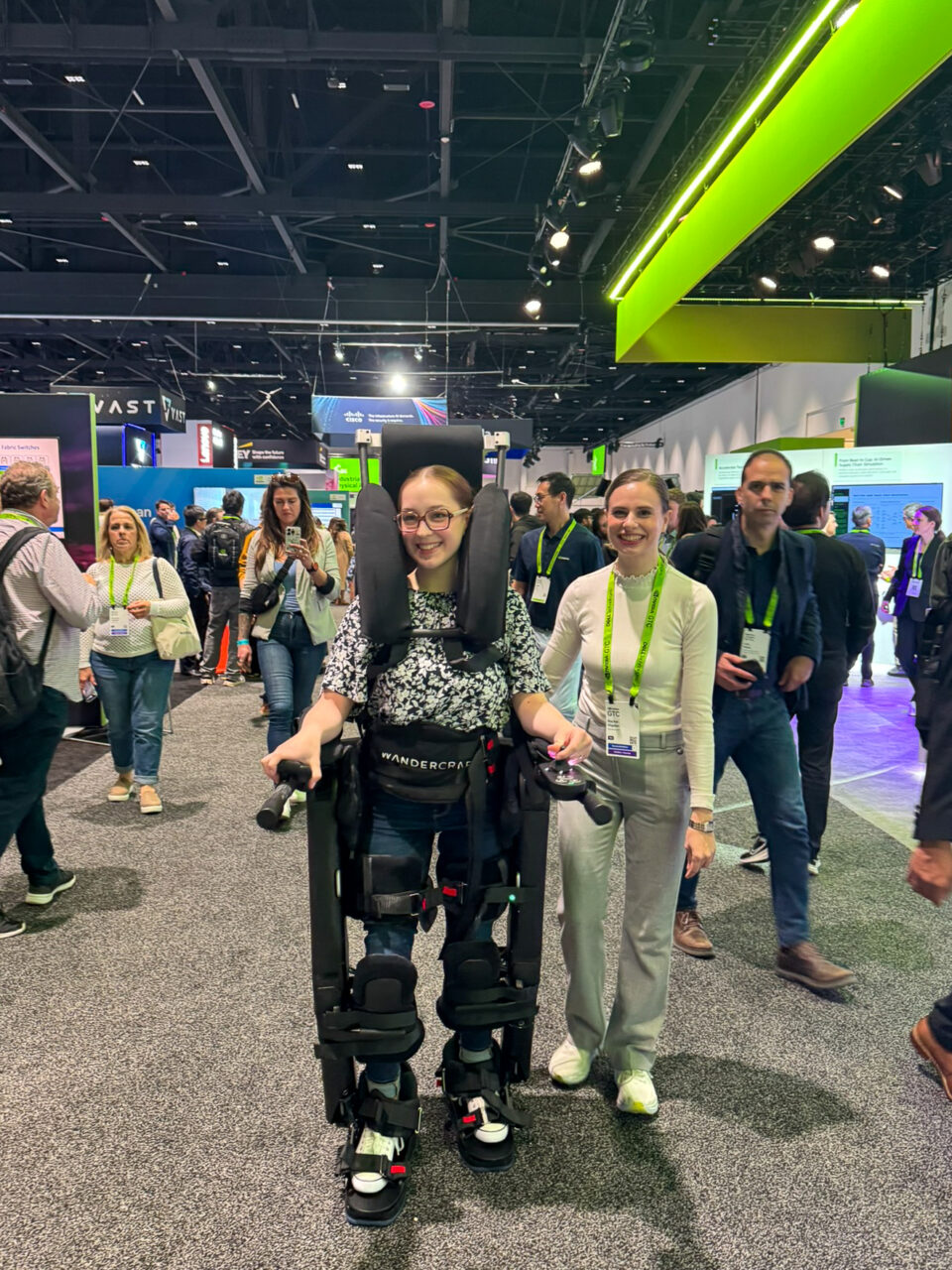
The company’s Personal Exoskeleton, currently in clinical trials, enables users to stand and walk with the support of AI-powered mechanisms for stability and movement. Users can control the robotic system with a joystick.

Simon founded the company in 2012 with Matthieu Masselin and Jean-Louis Constanza, whose son also has Charcot-Marie-Tooth disease. The team is accelerating its workflows with NVIDIA technologies — enabling Wandercraft to harness the latest simulation tools and AI infrastructure to bring new capabilities to its exoskeletons.

“It’s essential for the exoskeleton to be fast enough that it can be used in the real world,” said Simon. “By integrating NVIDIA AI into the device, we can someday enable users to walk at an average pace, cross the road and go up and down stairs.”

Advancing Development With Physical AI 

Wandercraft’s first exoskeleton, called Atalante X, is FDA-cleared and already in use as a neurological rehabilitation tool in over 100 clinical and research settings worldwide, with patients taking over one million steps per month. Approved for use in the European Union in 2019 and in the U.S. in 2022, the device has helped hundreds of patients regain mobility through physiotherapy.

The startup’s latest device, the Personal Exoskeleton, is aimed at everyday indoor and outdoor use. With clinical trials underway in New York and New Jersey, the Personal Exoskeleton integrates AI to continuously adapt to a user’s movements in real time, supporting smooth and stable walking across different surfaces, including concrete, carpet and tile.

“It’s very important for us to use physical AI to deliver a better device and a better experience for our users, so they can move through their daily lives smoothly and efficiently,” Simon said.

Woman walking through conference exhibit hall using AI exoskeleton
Laubach demonstrating the Personal Exoskeleton at NVIDIA GTC. Image credit: Wandercraft

In addition to helping users gain new levels of mobility at home and in their communities, the Personal Exoskeleton could also help reduce the health impacts of being seated all day — which include increased risk of cardiovascular, skin and digestive conditions.

Wandercraft is currently experimenting with NVIDIA Isaac Sim — a reference application built on NVIDIA Omniverse for simulating and testing AI-driven robotics solutions in physically based virtual environments — to accelerate its reinforcement learning pipeline. The company is also investigating the use of the NVIDIA Isaac for Healthcare developer framework for AI healthcare robotics and NVIDIA Jetson Thor, an on-robot edge computer built on the NVIDIA Blackwell architecture.

With these systems for physical AI training, simulation and runtime in place, Wandercraft will have a three-computer solution for its robotics development.

“The technology is there — you just have to build the device,” Simon said. “We take all the technology from the field of humanoid robotics, and we apply it to our exoskeleton. So now, the possibilities are endless.”

At the NVIDIA GTC global AI conference in March, Wandercraft demonstrated the prototype Personal Exoskeleton with the help of Caroline Laubach, a spinal stroke survivor and full-time wheelchair user. The exoskeleton system was also featured in last year’s Olympic and Paralympic Torch Relay.

Wandercraft aims to apply for FDA clearance for its Personal Exoskeleton immediately following completion of its clinical trial, with the goal of making it accessible to millions of wheelchair users in the U.S. with expected Medicare coverage. The company is currently recruiting additional participants for the clinical trial, which it aims to complete this year.

“With this technology, we can enable people to move around and access the environment of the city,” Simon said. “My hope is to see my device in the streets — of New York at first, but in every city in the U.S.”


For Nicolas Simon, advancing the field of robotics is a personal mission that could change his siblings’ lives. Two-thirds of Simon’s family members use wheelchairs due to mobility challenges related to Charcot-Marie-Tooth disease, an inherited genetic condition. As an engineering student and robotics club chair at France’s École Polytechnique, he saw the opportunity to build
Read Article

May the Cloud Be With You: GeForce NOW Unveils 21 New Games This Month​on May 1, 2025 at 1:00 pm

May brings more than just rainbows and sunshine — it’s also time for fresh adventures and epic battles. This GFN Thursday spotlights 20 can’t-miss games joining the cloud this month, with something for every kind of gamer. Gear up with the nine games available this week, on top of the launch of Rust’s Jungle Biome
Read ArticleMay brings more than just rainbows and sunshine — it’s also time for fresh adventures and epic battles. This GFN Thursday spotlights 20 can’t-miss games joining the cloud this month, with something for every kind of gamer. Gear up with the nine games available this week, on top of the launch of Rust’s Jungle Biome
Read Article  


May brings more than just rainbows and sunshine — it’s also time for fresh adventures and epic battles. This GFN Thursday spotlights 20 can’t-miss games joining the cloud this month, with something for every kind of gamer.

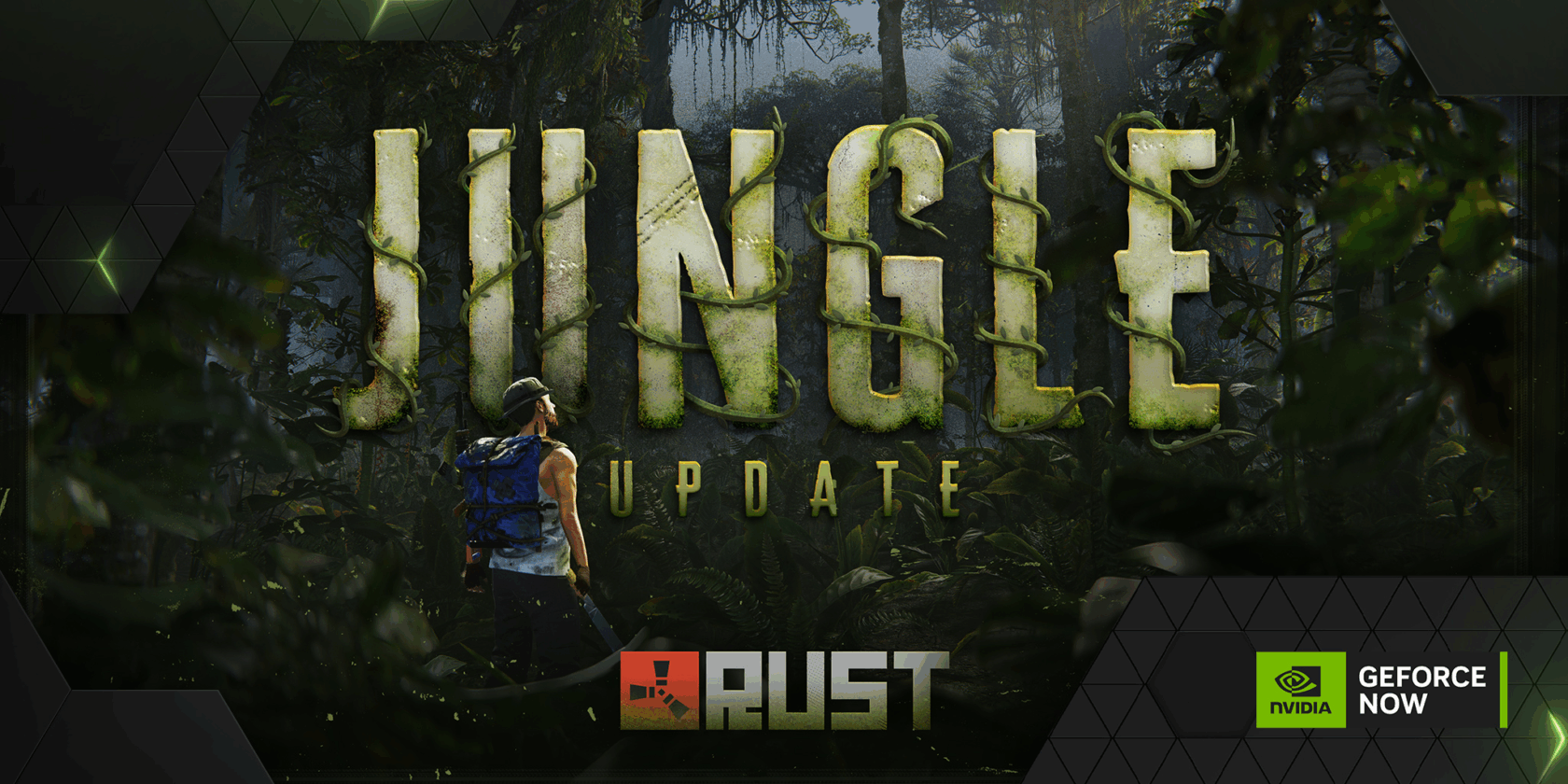
Gear up with the nine games available this week, on top of the launch of Rust’s Jungle Biome update.

Welcome to the Jungle

In Rust, a multiplayer survival game by Facepunch Studios, everyone starts off with only a rock and torch and must gather resources, build bases and fend off environmental threats and other players in a harsh, open-world setting. The game features intense player vs. player combat, dynamic alliances and frequent updates.

Jungle Rust update on GeForce NOW
Crocodiles, snakes and tigers — oh my!

The latest update introduces a new jungle biome: a lush but dangerous environment filled with crocodiles, snakes, tigers and other wildlife. Added features include new early-game weapons, like a blowpipe with venom darts, as well as unique mechanics, like regrowing jungle vines.

GeForce NOW members can experience the intense survival gameplay of Rust from the cloud. Whether on an underpowered PC, Mac, smartphone or smart TV, dive into the game’s open-world chaos with smooth performance and stunning visuals.

May-day Games

Haunted House Renovator on GeForce NOW
Spoooooky.

Check out Haunted House Renovator, new in the cloud for members to stream. Step into the shoes of a paranormal renovator to explore and restore haunted locations, all while dealing with mischievous spirits that can help or hinder. Whether players are exorcising spirits or taking a more forceful approach, the game offers a unique blend of ghost hunting and home-makeover fun — perfect for fans of both genres.

Look for the following games available to stream in the cloud this week:

  • Deadzone: Rogue (New release on Steam, April 29)
  • Haunted House Renovator (New release on Steam, April 30)
  • Far Cry 4 (New release on Xbox, available on PC Game Pass, April 30)
  • Anno 1800 (New release on Xbox, available on PC Game Pass, May 1)
  • Call of Duty: Modern Warfare 2 Remastered (New release on Xbox, available on PC Game Pass, May 1. Find it on GeForce NOW in the Call of Duty experience)
  • Blood Strike (Steam)
  • DREDGE (Xbox, available on the Microsoft Store)
  • LONESTAR (Steam)
  • Soulstone Survivors (Steam)

Learn how to stream supported Ubisoft games from PC Game Pass on GeForce NOW, including this week’s additions of Far Cry 4 and Anno 1800.

Here’s what to expect for the rest of May:

  • Survival Machine (New release on Steam, May 7)
  • Revenge of the Savage Planet (New release on Steam and Xbox, available on PC Game Pass, May 8)
  • Spirit of the North 2 (New release on Steam, May 8)
  • The Precinct (New release on Steam, May 13)
  • DOOM: The Dark Ages (New release on Steam, Battle.net and Xbox, available on PC Game Pass, May 15)
  • Blacksmith Master (New release on Steam, May 15)
  • 9 Kings (New release on Steam, May 19)
  • RoadCraft (New release on Steam, May 20)
  • Monster Train 2 (New release on Steam, May 21)
  • Survive the Fall (New release Steam, May 21)
  • Blades of Fire (New release on Epic Games Store, May 22)
  • Tokyo Xtreme Racer (Steam)
  • The Last Spell (Steam)
  • War Robots: Frontiers (Steam)
  • Torque Drift 2 (Epic Games Store)

April Showers Bring More Games

In addition to the 21 games announced last month, 13 more joined the GeForce NOW library:

  • Forever Skies (New release on Steam, April 14)
  • Hunt: Showdown 1896 (New release on Xbox, available on PC Game Pass, April 15)
  • Crime Scene Cleaner (New release on Xbox, available on PC Game Pass, April 17)
  • The Elder Scrolls IV: Oblivion Remastered (New release on Steam and Xbox, available on PC Game Pass, April 22)
  • Ace Attorney Investigations Collection (Steam and Xbox, available on the Microsoft Store)
  • Ace Attorney Investigations Collection Demo (Steam and Xbox, available on the Microsoft Store)
  • Dead Rising Deluxe Remaster Demo (Steam)
  • Diablo III (Xbox, available on PC Game Pass)
  • Gedonia 2 (Steam) 
  • MARVEL vs. CAPCOM Fighting Collection: Arcade Classics (Steam)
  • Path of Exile 2 (Epic Games Store)
  • Sands of Aura (Epic Games Store)
  • Sultan’s Game (Steam)

What are you planning to play this weekend? Let us know on X or in the comments below.


May brings more than just rainbows and sunshine — it’s also time for fresh adventures and epic battles. This GFN Thursday spotlights 20 can’t-miss games joining the cloud this month, with something for every kind of gamer. Gear up with the nine games available this week, on top of the launch of Rust’s Jungle Biome
Read Article

Control the Composition of AI-Generated Images With the NVIDIA AI Blueprint for 3D-Guided Generative AI​on April 30, 2025 at 1:00 pm

AI-powered image generation has progressed at a remarkable pace — from early examples of models creating images of humans with too many fingers to now producing strikingly photorealistic visuals. Even with such leaps, one challenge remains: achieving creative control. Creating scenes using text has gotten easier, no longer requiring complex descriptions — and models have
Read ArticleAI-powered image generation has progressed at a remarkable pace — from early examples of models creating images of humans with too many fingers to now producing strikingly photorealistic visuals. Even with such leaps, one challenge remains: achieving creative control. Creating scenes using text has gotten easier, no longer requiring complex descriptions — and models have
Read Article  


AI-powered image generation has progressed at a remarkable pace — from early examples of models creating images of humans with too many fingers to now producing strikingly photorealistic visuals. Even with such leaps, one challenge remains: achieving creative control.

Creating scenes using text has gotten easier, no longer requiring complex descriptions — and models have improved alignment to prompts. But describing finer details like composition, camera angles and object placement with text alone is hard, and making adjustments is even more complex. Advanced workflows using ControlNets — tools that enhance image generation by providing greater control over the output — offer solutions, but their setup complexity limits broader accessibility.

To help overcome these challenges and fast-track access to advanced AI capabilities, NVIDIA at the CES trade show earlier this year announced the NVIDIA AI Blueprint for 3D-guided generative AI for RTX PCs. This sample workflow includes everything needed to start generating images with full composition control. Users can download the new Blueprint today.

Harness 3D to Control AI-Generated Images

The NVIDIA AI Blueprint for 3D-guided generative AI controls image generation by using a draft 3D scene in Blender to provide a depth map to the image generator — FLUX.1-dev, from Black Forest Labs — which together with a user’s prompt generates the desired images.

The depth map helps the image model understand where things should be placed. The advantage of this technique is that it doesn’t require highly detailed objects or high-quality textures, since they’ll be converted to grayscale. And because the scenes are in 3D, users can easily move objects around and change camera angles.

Under the hood of the blueprint is ComfyUI, a powerful tool that allows creators to chain generative AI models in interesting ways. For example, the ComfyUI Blender plug-in lets users connect Blender to ComfyUI. Plus, an NVIDIA NIM microservice lets users deploy the FLUX.1-dev model and run it at the best performance on GeForce RTX GPUs, tapping into the NVIDIA TensorRT software development kit and optimized formats like FP4 and FP8. The AI Blueprint for 3D-guided generative AI requires an NVIDIA GeForce RTX 4080 GPU or higher.

A Prebuilt Foundation for Generative AI Workflows

The blueprint for 3D-guided generative AI includes everything necessary for getting started with an advanced image generation workflow: Blender, ComfyUI, the Blender plug-ins to connect the two, the FLUX.1-dev NIM microservice and the ComfyUI nodes required to run it. For AI artists, it also comes with an installer and detailed deployment instructions.

The blueprint offers a structured way to dive into image generation, providing a working pipeline that can be tailored to specific needs. Step-by-step documentation, sample assets and a preconfigured environment provide a solid foundation that makes the creative process more manageable and the results more powerful.

For AI developers, the blueprint can act as a foundation for building similar pipelines or expanding existing ones. It comes with source code, sample data, documentation and a working sample for getting started.

Real-Time Generation Powered by RTX AI 

AI Blueprints run on NVIDIA RTX AI PCs and workstations, harnessing recent performance breakthroughs from the NVIDIA Blackwell architecture.

The FLUX.1-dev NIM microservice included in the blueprint for 3D-guided generative AI is optimized with TensorRT and quantized to FP4 precision for Blackwell GPUs, enabling more than doubled inference speeds over native PyTorch FP16.

For users on NVIDIA Ada Lovelace generation GPUs, the FLUX.1-dev NIM microservice comes with FP8 variants, also accelerated by TensorRT. These improvements make high-performance workflows more accessible for rapid iteration and experimentation. Quantization also helps run models with less VRAM. With FP4, for instance, model sizes are reduced by more than 2x compared with FP16.

Customize and Create With RTX AI

There are 10 NIM microservices currently available for RTX, supporting use cases spanning image and language generation to speech AI and computer vision — with more blueprints and services on the way.

Available now at https://build.nvidia.com/nvidia/genai-3d-guided, AI Blueprints and NIM microservices provide powerful foundations for those ready to create, customize and push the boundaries of generative AI on RTX PCs and workstations.

Each week, the RTX AI Garage blog series features community-driven AI innovations and content for those looking to learn more about NIM microservices and AI Blueprints, as well as building AI agents, creative workflows, digital humans, productivity apps and more on AI PCs and workstations.

Plug in to NVIDIA AI PC on Facebook, Instagram, TikTok and X — and stay informed by subscribing to the RTX AI PC newsletter.

Follow NVIDIA Workstation on LinkedIn and X.

See notice regarding software product information.


AI-powered image generation has progressed at a remarkable pace — from early examples of models creating images of humans with too many fingers to now producing strikingly photorealistic visuals. Even with such leaps, one challenge remains: achieving creative control. Creating scenes using text has gotten easier, no longer requiring complex descriptions — and models have
Read Article

From Kitchen to Drive-Thru: How Yum! Brands Is Accelerating Restaurant Innovation With AI​on April 30, 2025 at 4:00 pm

The quick-service restaurant (QSR) industry is being reinvented by AI. For example, Yum! Brands — the world’s largest restaurant company and parent company of KFC, Taco Bell, Pizza Hut and Habit Burger & Grill — and NVIDIA announced their partnership at the NVIDIA GTC global AI conference last month, with the goal of deploying NVIDIA-powered
Read ArticleThe quick-service restaurant (QSR) industry is being reinvented by AI. For example, Yum! Brands — the world’s largest restaurant company and parent company of KFC, Taco Bell, Pizza Hut and Habit Burger & Grill — and NVIDIA announced their partnership at the NVIDIA GTC global AI conference last month, with the goal of deploying NVIDIA-powered
Read Article  


The quick-service restaurant (QSR) industry is being reinvented by AI.

For example, Yum! Brands — the world’s largest restaurant company and parent company of KFC, Taco Bell, Pizza Hut and Habit Burger & Grill — and NVIDIA announced their partnership at the NVIDIA GTC global AI conference last month, with the goal of deploying NVIDIA-powered AI solutions in 500 restaurants this year.

Joe Park, chief digital and technology officer at Yum! Brands, Inc. and president of Byte by Yum!, joined the NVIDIA AI podcast to share how the company is further accelerating AI deployment with NVIDIA AI.

Yum! Brands’ AI-first strategy aims to enhance every aspect of the restaurant experience, from the kitchen to customer interactions. Park discussed how Yum! Brands uses machine learning to optimize sales forecasts and inventory management, solving the costly problem of food waste and stockouts.

AI can also help with kitchen management. Imagine a local pizzeria getting dozens of calls in a short time and needing to plan which orders to start first so the customers can get their pizzas as fresh as possible.

“We use AI to solve for that,” said Park. “We can collect all kinds of different inputs and apply machine learning to figure out which customers’ pizzas to make now versus later, or which ones could be picked up by the delivery driver.”

With more than 61,000 restaurants operating globally under the Yum! Brands banner, efficiency at scale is always a priority. So, too, is keeping things simple for restaurant managers and team members. To that end, Yum! Brands recently launched Byte by Yum!, a proprietary AI-powered platform that integrates many technologies QSRs rely on.

Beyond AI-accelerated ordering, Yum! is also testing computer vision to analyze drive-thru traffic and explore new use cases for AI to perceive, alert and adjust staffing, with the goal of optimizing service speed. The team is also excited about Voice AI for order taking, including some unique edge use cases.

“If you think about a Baja blast, a chalupa, a gordita — words that aren’t found in Webster’s English dictionary — partnering with NVIDIA has helped us a tremendous amount because we’ve been able to train models with our own custom words and vernacular,” Park explained, referring to common orders at Taco Bell.

“AI at the drive-thru window increases accuracy and speed of order-taking, and helps make team members’ jobs easier,” Park added.

Time Stamps

03:51 – Park discusses how technology and AI are transforming the QSR industry.

06:58 – Yum! Brands’ AI use cases, including sales forecasting and inventory management.

15:07 – Inside the introduction of the Byte by Yum! AI-powered restaurant technology platform.

20:47 – Park’s advice for getting started on the AI journey.

You Might Also Like… 

Roboflow Helps Unlock Computer Vision for Every Kind of AI Builder

Roboflow’s mission is to make the world programmable through computer vision. By simplifying computer vision development, they help bridge the gap between AI and people looking to harness it. Cofounder and CEO Joseph Nelson discusses how Roboflow empowers users in manufacturing, healthcare and automotive to solve complex problems with visual AI.

Firsthand’s Jon Heller Shares How AI Agents Enhance Consumer Journeys in Retail

Jon Heller, co-CEO and founder of Firsthand, discusses how the company’s Brand Agents are transforming the retail landscape by personalizing customer journeys, converting marketing interactions into valuable research data and enhancing the customer experience with hyper-personalized insights and recommendations.

AI Agents Take Digital Experiences to the Next Level in Gaming and Beyond

AI agents with advanced perception and cognition capabilities are making digital experiences more dynamic and personalized across industries. Inworld AI’s Chris Covert discusses how intelligent digital humans are reshaping interactive experiences, from gaming to healthcare.


The quick-service restaurant (QSR) industry is being reinvented by AI. For example, Yum! Brands — the world’s largest restaurant company and parent company of KFC, Taco Bell, Pizza Hut and Habit Burger & Grill — and NVIDIA announced their partnership at the NVIDIA GTC global AI conference last month, with the goal of deploying NVIDIA-powered
Read Article

NVIDIA Sets Conference Call for First-Quarter Financial Results​on April 30, 2025 at 9:00 pm

SANTA CLARA, Calif., April 30, 2025 — NVIDIA will host a conference call on Wednesday, May 28, at 2 p.m. PT (5 p.m. ET) to discuss its financial results for the first quarter of fiscal year…SANTA CLARA, Calif., April 30, 2025 — NVIDIA will host a conference call on Wednesday, May 28, at 2 p.m. PT (5 p.m. ET) to discuss its financial results for the first quarter of fiscal year…  


SANTA CLARA, Calif., April 30, 2025 — NVIDIA will host a conference call on Wednesday, May 28, at 2 p.m. PT (5 p.m. ET) to discuss its financial results for the first quarter of fiscal year 2026, which ended April 27, 2025.

The call will be webcast live (in listen-only mode) on investor.nvidia.com. The company’s prepared remarks will be followed by a Q&A session, which will be limited to questions from financial analysts and institutional investors.

Ahead of the call, NVIDIA will provide written commentary on its first-quarter results from Colette Kress, the company’s executive vice president and chief financial officer. This material will be posted to investor.nvidia.com immediately after the company’s results are publicly announced at approximately 1:20 p.m. PT.

The webcast will be recorded and available for replay until the company’s conference call to discuss financial results for its second quarter of fiscal year 2026.


SANTA CLARA, Calif., April 30, 2025 — NVIDIA will host a conference call on Wednesday, May 28, at 2 p.m. PT (5 p.m. ET) to discuss its financial results for the first quarter of fiscal year…