
Browsing: Tech

tech news

Thousands of NVIDIA Grace Blackwell GPUs Now Live at CoreWeave, Propelling Development for AI Pioneers​on April 15, 2025 at 6:00 pm

Semper neque lacinia semper vestibulum rutrum scelerisque purus.Semper neque lacinia semper vestibulum rutrum scelerisque purus.  


CoreWeave today became one of the first cloud providers to bring NVIDIA GB200 NVL72 systems online for customers at scale, and AI frontier companies Cohere, IBM and Mistral AI are already using them to train and deploy next-generation AI models and applications.

CoreWeave, the first cloud provider to make NVIDIA Grace Blackwell generally available, has already shown incredible results in MLPerf benchmarks with NVIDIA GB200 NVL72 — a powerful rack-scale accelerated computing platform designed for reasoning and AI agents. Now, CoreWeave customers are gaining access to thousands of NVIDIA Blackwell GPUs.

“We work closely with NVIDIA to quickly deliver to customers the latest and most powerful solutions for training AI models and serving inference,” said Mike Intrator, CEO of CoreWeave. “With new Grace Blackwell rack-scale systems in hand, many of our customers will be the first to see the benefits and performance of AI innovators operating at scale.”
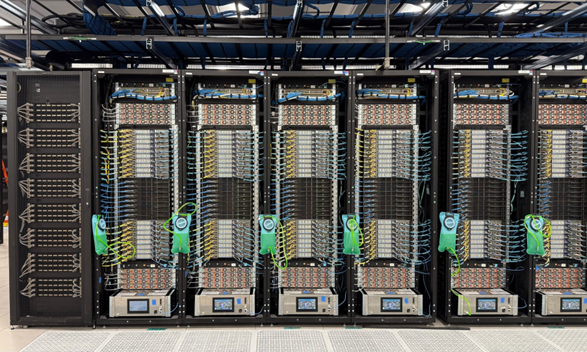
Thousands of NVIDIA Blackwell GPUs are now turning raw data into intelligence at unprecedented speed, with many more coming online soon.

The ramp-up for customers of cloud providers like CoreWeave is underway. Systems built on NVIDIA Grace Blackwell are in full production, transforming cloud data centers into AI factories that manufacture intelligence at scale and convert raw data into real-time insights with speed, accuracy and efficiency.

Leading AI companies around the world are now putting GB200 NVL72’s capabilities to work for AI applications, agentic AI and cutting-edge model development.

Personalized AI Agents

Cohere is using its Grace Blackwell Superchips to help develop secure enterprise AI applications powered by leading-edge research and model development techniques. Its enterprise AI platform, North, enables teams to build personalized AI agents to securely automate enterprise workflows, surface real-time insights and more.

With NVIDIA GB200 NVL72 on CoreWeave, Cohere is already experiencing up to 3x more performance in training for 100 billion-parameter models compared with previous-generation NVIDIA Hopper GPUs — even without Blackwell-specific optimizations.

With further optimizations taking advantage of GB200 NVL72’s large unified memory, FP4 precision and a 72-GPU NVIDIA NVLink domain — where every GPU is connected to operate in concert — Cohere is getting dramatically higher throughput with shorter time to first and subsequent tokens for more performant, cost-effective inference.

“With access to some of the first NVIDIA GB200 NVL72 systems in the cloud, we are pleased with how easily our workloads port to the NVIDIA Grace Blackwell architecture,” said Autumn Moulder, vice president of engineering at Cohere. “This unlocks incredible performance efficiency across our stack — from our vertically integrated North application running on a single Blackwell GPU to scaling training jobs across thousands of them. We’re looking forward to achieving even greater performance with additional optimizations soon.”

AI Models for Enterprise 

IBM is using one of the first deployments of NVIDIA GB200 NVL72 systems, scaling to thousands of Blackwell GPUs on CoreWeave, to train its next-generation Granite models, a series of open-source, enterprise-ready AI models. Granite models deliver state-of-the-art performance while maximizing safety, speed and cost efficiency. The Granite model family is supported by a robust partner ecosystem that includes leading software companies embedding large language models into their technologies.

Granite models provide the foundation for solutions like IBM watsonx Orchestrate, which enables enterprises to build and deploy powerful AI agents that automate and accelerate workflows across the enterprise.

CoreWeave’s NVIDIA GB200 NVL72 deployment for IBM also harnesses the IBM Storage Scale System, which delivers exceptional high-performance storage for AI. CoreWeave customers can access the IBM Storage platform within CoreWeave’s dedicated environments and AI cloud platform.

“We are excited to see the acceleration that NVIDIA GB200 NVL72 can bring to training our Granite family of models,” said Sriram Raghavan, vice president of AI at IBM Research. “This collaboration with CoreWeave will augment IBM’s capabilities to help build advanced, high-performance and cost-efficient models for powering enterprise and agentic AI applications with IBM watsonx.”

Compute Resources at Scale

Mistral AI is now getting its first thousand Blackwell GPUs to build the next generation of open-source AI models.

Mistral AI, a Paris-based leader in open-source AI, is using CoreWeave’s infrastructure, now equipped with GB200 NVL72, to speed up the development of its language models. With models like Mistral Large delivering strong reasoning capabilities, Mistral needs fast computing resources at scale.

To train and deploy these models effectively, Mistral AI requires a cloud provider that offers large, high-performance GPU clusters with NVIDIA Quantum InfiniBand networking and reliable infrastructure management. CoreWeave’s experience standing up NVIDIA GPUs at scale with industry-leading reliability and resiliency through tools such as CoreWeave Mission Control met these requirements.

“Right out of the box and without any further optimizations, we saw a 2x improvement in performance for dense model training,” said Thimothee Lacroix, cofounder and chief technology officer at Mistral AI. “What’s exciting about NVIDIA GB200 NVL72 is the new possibilities it opens up for model development and inference.”

A Growing Number of Blackwell Instances

In addition to long-term customer solutions, CoreWeave offers instances with rack-scale NVIDIA NVLink across 72 NVIDIA Blackwell GPUs and 36 NVIDIA Grace CPUs, scaling to up to 110,000 GPUs with NVIDIA Quantum-2 InfiniBand networking.

These instances, accelerated by the NVIDIA GB200 NVL72 rack-scale accelerated computing platform, provide the scale and performance needed to build and deploy the next generation of AI reasoning models and agents.


Semper neque lacinia semper vestibulum rutrum scelerisque purus.
Everywhere, All at Once: NVIDIA Drives the Next Phase of AI Growth​on April 15, 2025 at 6:00 pm

Every company and country wants to grow and create economic opportunity — but they need virtually limitless intelligence to do so. Working with its ecosystem partners, NVIDIA this week is underscoring its work advancing reasoning, AI models and compute infrastructure to manufacture intelligence in AI factories — driving the next phase of growth in the
Read ArticleEvery company and country wants to grow and create economic opportunity — but they need virtually limitless intelligence to do so. Working with its ecosystem partners, NVIDIA this week is underscoring its work advancing reasoning, AI models and compute infrastructure to manufacture intelligence in AI factories — driving the next phase of growth in the
Read Article  


Every company and country wants to grow and create economic opportunity — but they need virtually limitless intelligence to do so. Working with its ecosystem partners, NVIDIA this week is underscoring its work advancing reasoning, AI models and compute infrastructure to manufacture intelligence in AI factories — driving the next phase of growth in the U.S. and around the world.

Yesterday, NVIDIA announced it will manufacture AI supercomputers in the U.S. for the first time. Within the next four years, the company plans with its partners to produce up to half a trillion dollars of AI infrastructure in the U.S.

Building NVIDIA AI supercomputers in the U.S. for American AI factories is expected to create opportunities for hundreds of thousands of people and drive trillions of dollars in growth over the coming decades. Some of the NVIDIA Blackwell compute engines at the heart of those AI supercomputers are already being produced at TSMC fabs in Arizona.

NVIDIA announced today that NVIDIA Blackwell GB200 NVL72 rack-scale systems are now available from CoreWeave for customers to train next-generation AI models and run applications at scale. CoreWeave has thousands of NVIDIA Grace Blackwell processors available now to train and deploy the next wave of AI.

Beyond hardware innovation, NVIDIA also pioneers AI software to create more efficient and intelligent models.

Marking the latest in those advances, the NVIDIA Llama Nemotron Ultra model was recognized today by Artificial Analysis as the world’s most accurate open-source reasoning model for scientific and complex coding tasks. It’s also now ranked among the top reasoning models in the world.

NVIDIA’s engineering feats serve as the foundation of it all. A team of NVIDIA engineers won first place in the AI Mathematical Olympiad, competing against 2,200 teams to solve complex mathematical reasoning problems, which are key to advancing scientific discovery, disciplines and domains. The same post-training techniques and open datasets from NVIDIA’s winning effort in the math reasoning competition were applied in training the Llama Nemotron Ultra model.

The world’s need for intelligence is virtually limitless, and NVIDIA’s AI platform is helping meet that need — everywhere, all at once.


Every company and country wants to grow and create economic opportunity — but they need virtually limitless intelligence to do so. Working with its ecosystem partners, NVIDIA this week is underscoring its work advancing reasoning, AI models and compute infrastructure to manufacture intelligence in AI factories — driving the next phase of growth in the
Read Article

Into the Omniverse: How Digital Twins Are Scaling Industrial AI​on April 16, 2025 at 1:00 pm

OpenUSD and the Mega Omniverse Blueprint enable robot fleet simulations in industrial facility digital twins.OpenUSD and the Mega Omniverse Blueprint enable robot fleet simulations in industrial facility digital twins.  


Editor’s note: This post is part of Into the Omniverse, a series focused on how developers, 3D practitioners, and enterprises can transform their workflows using the latest advances in OpenUSD and NVIDIA Omniverse.

As industrial and physical AI streamline workflows, businesses are looking for ways to most effectively harness these technologies.

Scaling AI in industrial settings — like factories and other manufacturing facilities — presents unique challenges, such as fragmented data pipelines, siloed tools and the need for real-time, high-fidelity simulations.

The Mega NVIDIA Omniverse Blueprint — available in preview on build.nvidia.com — helps address these challenges by providing a scalable reference workflow for simulating multi-robot fleets in industrial facility digital twins, including those built with the NVIDIA Omniverse platform.

Industrial AI leaders — including Accenture, Foxconn, Kenmec, KION and Pegatron — are now using the blueprint to accelerate physical AI adoption and build autonomous systems that efficiently perform actions in industrial settings.

Built on the Universal Scene Description (OpenUSD) framework, the blueprint enables seamless data interoperability, real-time collaboration and AI-driven decision-making by unifying diverse data sources and improving simulation fidelity.

Industrial Leaders Adopt the Mega Blueprint

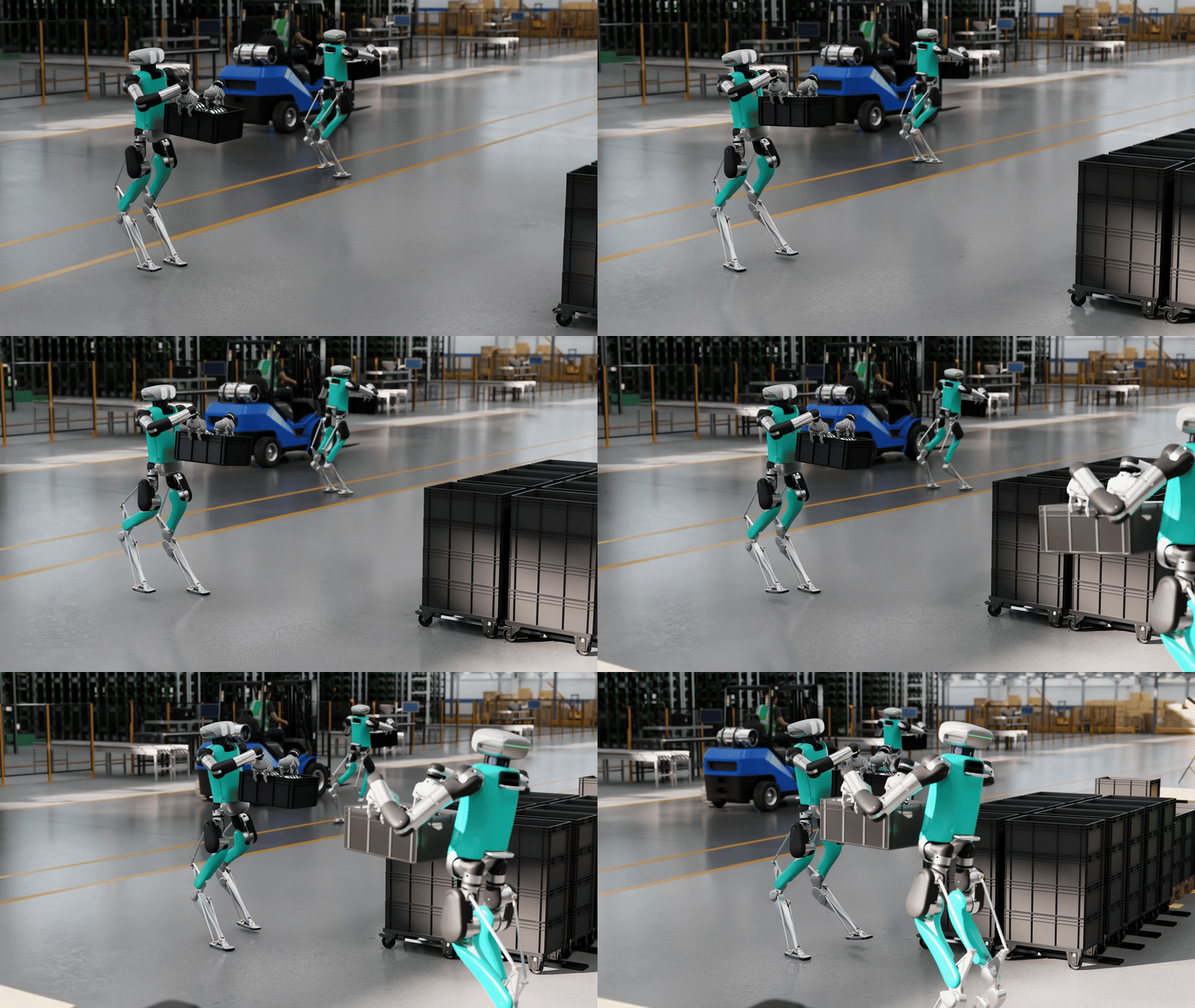
At Hannover Messe, the world’s largest industrial trade show that took place in Germany earlier this month, Accenture and Schaeffler, a leading motion technology company, showcased the adoption of the Mega blueprint to test robot fleets, including general-purpose humanoid robots, like Digit from Agility Robotics, performing material handling in kitting and commissioning areas.

Video courtesy of  Schaeffler, Accenture, Agility Robotics
KION, a supply chain solutions company, with Accenture are now using Mega to optimize warehouse and distribution processes.

At the NVIDIA GTC global AI conference in March, Accenture and Foxconn representatives discussed the impacts of introducing Mega into their industrial AI workflows.

Accelerating Industrial AI With Mega 

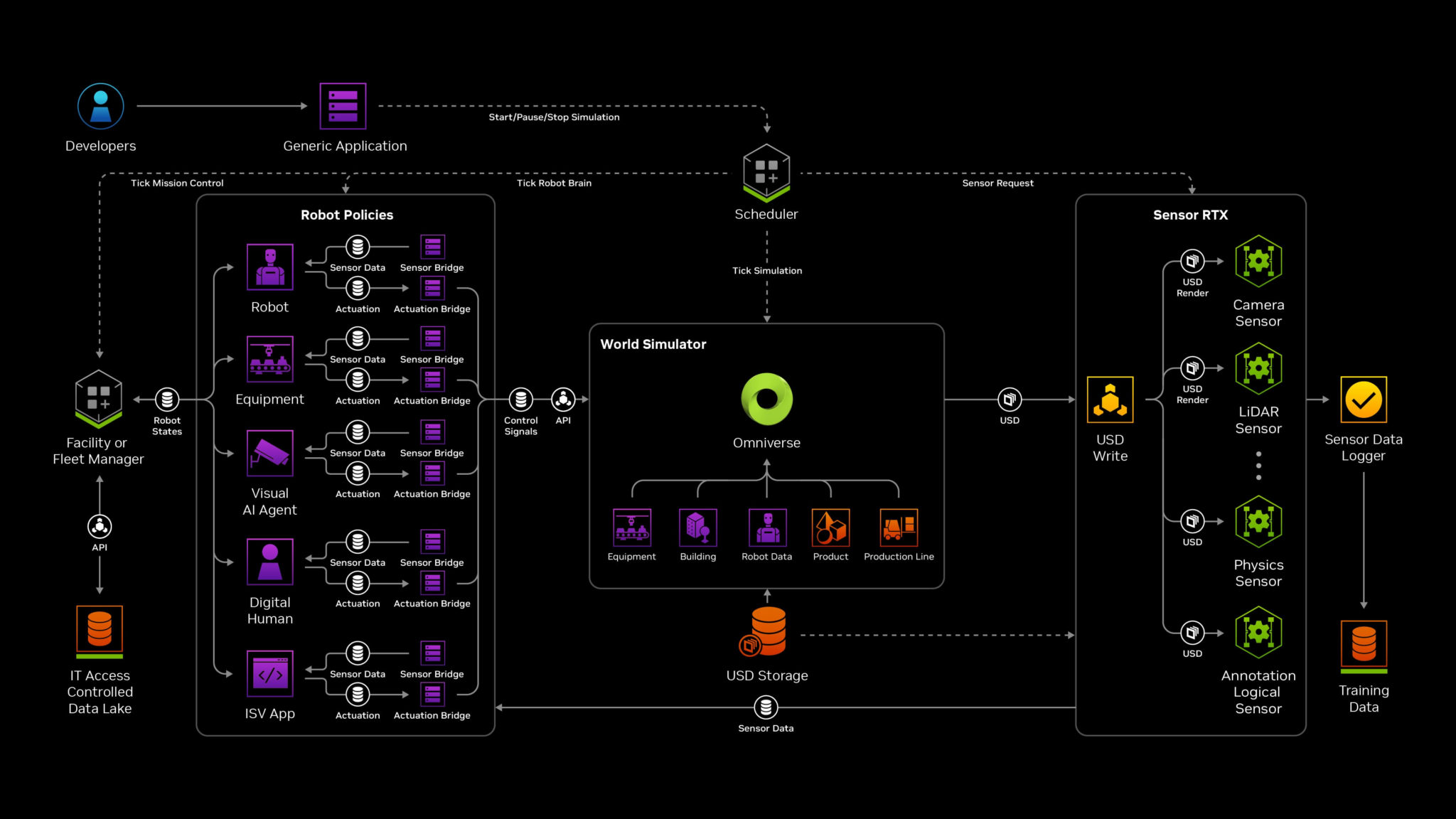
Mega NVIDIA Omniverse Blueprint architecture diagram

With the Mega blueprint, developers can accelerate physical AI workflows through:

  • Robot Fleet Simulation: Test and train diverse robot fleets in a safe, virtual environment to ensure they work seamlessly together.
  • Digital Twins: Use digital twins to simulate and optimize autonomous systems before physical deployment.
  • Sensor Simulation and Synthetic Data Generation: Generate realistic sensor data to ensure robots can accurately perceive and respond to their real-world environment.
  • Facility and Fleet Management Systems Integration: Connect robot fleets with management systems for efficient coordination and optimization.
  • Robot Brains as Containers: Use portable, plug-and-play modules for consistent robot performance and easier management.
  • World Simulator With OpenUSD: Simulate industrial facilities in highly realistic virtual environments using NVIDIA Omniverse and OpenUSD.
  • Omniverse Cloud Sensor RTX APIs: Ensure accurate sensor simulation with NVIDIA Omniverse Cloud application programming interfaces to create detailed virtual replicas of industrial facilities.
  • Scheduler: Manage complex tasks and data dependencies with a built-in scheduler for smooth and efficient operations.
  • Video Analytics AI Agents: Integrate AI agents built with the NVIDIA AI Blueprint for video search and summarization (VSS), leveraging NVIDIA Metropolis, to enhance operational insights.

Dive deeper into the Mega blueprint architecture on the NVIDIA Technical Blog.

Industrial AI is also being accelerated by the latest Omniverse Kit SDK 107 release, including major updates for robotics application development and enhanced simulation capabilities such as RTX Real-Time 2.0.

Get Plugged Into the World of OpenUSD

Learn more about OpenUSD and industrial AI by watching sessions from GTC, now available on demand, and by watching how ecosystem partners like Pegatron and others are pushing their industrial automation further, faster.

Join NVIDIA at COMPUTEX, running May 19-23 in Taipei, to discover the latest breakthroughs in AI. Watch NVIDIA founder and CEO Jensen Huang’s keynote on Sunday, May 18, at 8:00 p.m. PT.

Discover why developers and 3D practitioners are using OpenUSD and learn how to optimize 3D workflows with the new self-paced “Learn OpenUSD” curriculum for 3D developers and practitioners, available for free through the NVIDIA Deep Learning Institute.

For more resources on OpenUSD, explore the Alliance for OpenUSD forum and the AOUSD website.

Plus, tune in to the “OpenUSD Insiders” livestream taking place today at 11:00 a.m. PT to hear more about the Mega NVIDIA Omniverse Blueprint. Additionally, don’t miss next week’s livestream on April 26 at 11:00 a.m. PT, to hear Accenture discuss how they’re using the blueprint to build Omniverse digital twins for training and testing industrial AI’s robot brains.

Stay up to date by subscribing to NVIDIA news, joining the community and following NVIDIA Omniverse on Instagram, LinkedIn, Medium and X.

Featured image courtesy of:

Left and Top Right: Accenture, KION Group

Middle: Accenture, Agility Robotics, Schaeffler

Bottom Right: Foxconn


OpenUSD and the Mega Omniverse Blueprint enable robot fleet simulations in industrial facility digital twins.

Thousands of NVIDIA Grace Blackwell GPUs Now Live at CoreWeave, Propelling Development for AI Pioneers​on April 15, 2025 at 6:00 pm

Semper neque lacinia semper vestibulum rutrum scelerisque purus.Semper neque lacinia semper vestibulum rutrum scelerisque purus.  


CoreWeave today became one of the first cloud providers to bring NVIDIA GB200 NVL72 systems online for customers at scale, and AI frontier companies Cohere, IBM and Mistral AI are already using them to train and deploy next-generation AI models and applications.

CoreWeave, the first cloud provider to make NVIDIA Grace Blackwell generally available, has already shown incredible results in MLPerf benchmarks with NVIDIA GB200 NVL72 — a powerful rack-scale accelerated computing platform designed for reasoning and AI agents. Now, CoreWeave customers are gaining access to thousands of NVIDIA Blackwell GPUs.

“We work closely with NVIDIA to quickly deliver to customers the latest and most powerful solutions for training AI models and serving inference,” said Mike Intrator, CEO of CoreWeave. “With new Grace Blackwell rack-scale systems in hand, many of our customers will be the first to see the benefits and performance of AI innovators operating at scale.”

Thousands of NVIDIA Blackwell GPUs are now turning raw data into intelligence at unprecedented speed, with many more coming online soon.

The ramp-up for customers of cloud providers like CoreWeave is underway. Systems built on NVIDIA Grace Blackwell are in full production, transforming cloud data centers into AI factories that manufacture intelligence at scale and convert raw data into real-time insights with speed, accuracy and efficiency.

Leading AI companies around the world are now putting GB200 NVL72’s capabilities to work for AI applications, agentic AI and cutting-edge model development.

Personalized AI Agents

Cohere is using its Grace Blackwell Superchips to help develop secure enterprise AI applications powered by leading-edge research and model development techniques. Its enterprise AI platform, North, enables teams to build personalized AI agents to securely automate enterprise workflows, surface real-time insights and more.

With NVIDIA GB200 NVL72 on CoreWeave, Cohere is already experiencing up to 3x more performance in training for 100 billion-parameter models compared with previous-generation NVIDIA Hopper GPUs — even without Blackwell-specific optimizations.

With further optimizations taking advantage of GB200 NVL72’s large unified memory, FP4 precision and a 72-GPU NVIDIA NVLink domain — where every GPU is connected to operate in concert — Cohere is getting dramatically higher throughput with shorter time to first and subsequent tokens for more performant, cost-effective inference.

“With access to some of the first NVIDIA GB200 NVL72 systems in the cloud, we are pleased with how easily our workloads port to the NVIDIA Grace Blackwell architecture,” said Autumn Moulder, vice president of engineering at Cohere. “This unlocks incredible performance efficiency across our stack — from our vertically integrated North application running on a single Blackwell GPU to scaling training jobs across thousands of them. We’re looking forward to achieving even greater performance with additional optimizations soon.”

AI Models for Enterprise 

IBM is using one of the first deployments of NVIDIA GB200 NVL72 systems, scaling to thousands of Blackwell GPUs on CoreWeave, to train its next-generation Granite models, a series of open-source, enterprise-ready AI models. Granite models deliver state-of-the-art performance while maximizing safety, speed and cost efficiency. The Granite model family is supported by a robust partner ecosystem that includes leading software companies embedding large language models into their technologies.

Granite models provide the foundation for solutions like IBM watsonx Orchestrate, which enables enterprises to build and deploy powerful AI agents that automate and accelerate workflows across the enterprise.

CoreWeave’s NVIDIA GB200 NVL72 deployment for IBM also harnesses the IBM Storage Scale System, which delivers exceptional high-performance storage for AI. CoreWeave customers can access the IBM Storage platform within CoreWeave’s dedicated environments and AI cloud platform.

“We are excited to see the acceleration that NVIDIA GB200 NVL72 can bring to training our Granite family of models,” said Sriram Raghavan, vice president of AI at IBM Research. “This collaboration with CoreWeave will augment IBM’s capabilities to help build advanced, high-performance and cost-efficient models for powering enterprise and agentic AI applications with IBM watsonx.”

Compute Resources at Scale

Mistral AI is now getting its first thousand Blackwell GPUs to build the next generation of open-source AI models.

Mistral AI, a Paris-based leader in open-source AI, is using CoreWeave’s infrastructure, now equipped with GB200 NVL72, to speed up the development of its language models. With models like Mistral Large delivering strong reasoning capabilities, Mistral needs fast computing resources at scale.

To train and deploy these models effectively, Mistral AI requires a cloud provider that offers large, high-performance GPU clusters with NVIDIA Quantum InfiniBand networking and reliable infrastructure management. CoreWeave’s experience standing up NVIDIA GPUs at scale with industry-leading reliability and resiliency through tools such as CoreWeave Mission Control met these requirements.

“Right out of the box and without any further optimizations, we saw a 2x improvement in performance for dense model training,” said Thimothee Lacroix, cofounder and chief technology officer at Mistral AI. “What’s exciting about NVIDIA GB200 NVL72 is the new possibilities it opens up for model development and inference.”

A Growing Number of Blackwell Instances

In addition to long-term customer solutions, CoreWeave offers instances with rack-scale NVIDIA NVLink across 72 NVIDIA Blackwell GPUs and 36 NVIDIA Grace CPUs, scaling to up to 110,000 GPUs with NVIDIA Quantum-2 InfiniBand networking.

These instances, accelerated by the NVIDIA GB200 NVL72 rack-scale accelerated computing platform, provide the scale and performance needed to build and deploy the next generation of AI reasoning models and agents.


Semper neque lacinia semper vestibulum rutrum scelerisque purus.

Isomorphic Labs Rethinks Drug Discovery With AI​on April 16, 2025 at 4:00 pm

Isomorphic Labs is reimagining the drug discovery process with an AI-first approach. At the heart of this work is a new way of thinking about biology. Max Jaderberg, chief AI officer, and Sergei Yakneen, chief technology officer at Isomorphic Labs joined the AI Podcast to explain why they look at biology as an information processing
Read ArticleIsomorphic Labs is reimagining the drug discovery process with an AI-first approach. At the heart of this work is a new way of thinking about biology. Max Jaderberg, chief AI officer, and Sergei Yakneen, chief technology officer at Isomorphic Labs joined the AI Podcast to explain why they look at biology as an information processing
Read Article  


Isomorphic Labs is reimagining the drug discovery process with an AI-first approach. At the heart of this work is a new way of thinking about biology.

Max Jaderberg, chief AI officer, and Sergei Yakneen, chief technology officer at Isomorphic Labs joined the AI Podcast to explain why they look at biology as an information processing system.

“We’re building generalizable AI models capable of learning from the entire universe of protein and chemical interactions,” Jaderberg said. “This fundamentally breaks from the target-specific, siloed approach of conventional drug development.”

Isomorphic isn’t just working to optimize existing drug design workflows but completely rethinking how drugs are discovered — moving away from traditional methods that have historically been slow and inefficient.

By modeling cellular processes with AI, Isomorphic’s teams can predict molecular interactions with exceptional accuracy. Their advanced AI models enable scientists to computationally simulate how potential therapeutics interact with their targets in complex biological systems. Using AI to reduce dependence on wet lab experiments accelerates the drug discovery pipeline and creates possibilities for addressing previously untreatable conditions.

And that’s just the beginning.

Isomorphic Labs envisions a future of precision medicine, where treatments are tailored to an individual’s unique molecular and genetic makeup. While regulatory hurdles and technical challenges remain, Jaderberg and Yakneen are optimistic and devoted to balancing ambitious innovation with scientific rigor.

“We’re committed to proving our technology through real-world pharmaceutical breakthroughs,” said Jaderberg.

Time Stamps

1:14 – How AI is boosting the drug discovery process.

17:25 – Biology as a computational system.

19:50 – Applications of AlphaFold 3 in pharmaceutical research.

23:05 – The future of precision and preventative medicine.

You Might Also Like… 

NVIDIA’s Jacob Liberman on Bringing Agentic AI to Enterprises

Agentic AI enables developers to create intelligent multi-agent systems that reason, act and execute complex tasks with a degree of autonomy. Jacob Liberman, director of product management at NVIDIA, joined the NVIDIA AI Podcast to explain how agentic AI bridges the gap between powerful AI models and practical enterprise applications.

Roboflow Helps Unlock Computer Vision for Every Kind of AI Builder

Roboflow’s mission is to make the world programmable through computer vision. By simplifying computer vision development, the company helps bridge the gap between AI and the people looking to harness it. Cofounder and CEO Joseph Nelson discusses how Roboflow empowers users in manufacturing, healthcare and automotive to solve complex problems with visual AI.

How World Foundation Models Will Advance Physical AI With NVIDIA’s Ming-Yu Liu

AI models that can accurately simulate and predict outcomes in physical, real-world environments will enable the next generation of physical AI systems. Ming-Yu Liu, vice president of research at NVIDIA and an IEEE Fellow, explains the significance of world foundation models — powerful neural networks that can simulate physical environments.


Isomorphic Labs is reimagining the drug discovery process with an AI-first approach. At the heart of this work is a new way of thinking about biology. Max Jaderberg, chief AI officer, and Sergei Yakneen, chief technology officer at Isomorphic Labs joined the AI Podcast to explain why they look at biology as an information processing
Read Article

Into the Omniverse: How Digital Twins Are Scaling Industrial AI​on April 16, 2025 at 1:00 pm

OpenUSD and the Mega Omniverse Blueprint enable robot fleet simulations in industrial facility digital twins.OpenUSD and the Mega Omniverse Blueprint enable robot fleet simulations in industrial facility digital twins.  


Editor’s note: This post is part of Into the Omniverse, a series focused on how developers, 3D practitioners, and enterprises can transform their workflows using the latest advances in OpenUSD and NVIDIA Omniverse.

As industrial and physical AI streamline workflows, businesses are looking for ways to most effectively harness these technologies.

Scaling AI in industrial settings — like factories and other manufacturing facilities — presents unique challenges, such as fragmented data pipelines, siloed tools and the need for real-time, high-fidelity simulations.

The Mega NVIDIA Omniverse Blueprint — available in preview on build.nvidia.com — helps address these challenges by providing a scalable reference workflow for simulating multi-robot fleets in industrial facility digital twins, including those built with the NVIDIA Omniverse platform.

Industrial AI leaders — including Accenture, Foxconn, Kenmec, KION and Pegatron — are now using the blueprint to accelerate physical AI adoption and build autonomous systems that efficiently perform actions in industrial settings.

Built on the Universal Scene Description (OpenUSD) framework, the blueprint enables seamless data interoperability, real-time collaboration and AI-driven decision-making by unifying diverse data sources and improving simulation fidelity.

Industrial Leaders Adopt the Mega Blueprint

At Hannover Messe, the world’s largest industrial trade show that took place in Germany earlier this month, Accenture and Schaeffler, a leading motion technology company, showcased the adoption of the Mega blueprint to test robot fleets, including general-purpose humanoid robots, like Digit from Agility Robotics, performing material handling in kitting and commissioning areas.

Video courtesy of  Schaeffler, Accenture, Agility Robotics

KION, a supply chain solutions company, with Accenture are now using Mega to optimize warehouse and distribution processes.

At the NVIDIA GTC global AI conference in March, Accenture and Foxconn representatives discussed the impacts of introducing Mega into their industrial AI workflows.

Accelerating Industrial AI With Mega 

Mega NVIDIA Omniverse Blueprint architecture diagram

With the Mega blueprint, developers can accelerate physical AI workflows through:

  • Robot Fleet Simulation: Test and train diverse robot fleets in a safe, virtual environment to ensure they work seamlessly together.
  • Digital Twins: Use digital twins to simulate and optimize autonomous systems before physical deployment.
  • Sensor Simulation and Synthetic Data Generation: Generate realistic sensor data to ensure robots can accurately perceive and respond to their real-world environment.
  • Facility and Fleet Management Systems Integration: Connect robot fleets with management systems for efficient coordination and optimization.
  • Robot Brains as Containers: Use portable, plug-and-play modules for consistent robot performance and easier management.
  • World Simulator With OpenUSD: Simulate industrial facilities in highly realistic virtual environments using NVIDIA Omniverse and OpenUSD.
  • Omniverse Cloud Sensor RTX APIs: Ensure accurate sensor simulation with NVIDIA Omniverse Cloud application programming interfaces to create detailed virtual replicas of industrial facilities.
  • Scheduler: Manage complex tasks and data dependencies with a built-in scheduler for smooth and efficient operations.
  • Video Analytics AI Agents: Integrate AI agents built with the NVIDIA AI Blueprint for video search and summarization (VSS), leveraging NVIDIA Metropolis, to enhance operational insights.

Dive deeper into the Mega blueprint architecture on the NVIDIA Technical Blog.

Industrial AI is also being accelerated by the latest Omniverse Kit SDK 107 release, including major updates for robotics application development and enhanced simulation capabilities such as RTX Real-Time 2.0.

Get Plugged Into the World of OpenUSD

Learn more about OpenUSD and industrial AI by watching sessions from GTC, now available on demand, and by watching how ecosystem partners like Pegatron and others are pushing their industrial automation further, faster.

Join NVIDIA at COMPUTEX, running May 19-23 in Taipei, to discover the latest breakthroughs in AI. Watch NVIDIA founder and CEO Jensen Huang’s keynote on Sunday, May 18, at 8:00 p.m. PT.

Discover why developers and 3D practitioners are using OpenUSD and learn how to optimize 3D workflows with the new self-paced “Learn OpenUSD” curriculum for 3D developers and practitioners, available for free through the NVIDIA Deep Learning Institute.

For more resources on OpenUSD, explore the Alliance for OpenUSD forum and the AOUSD website.

Plus, tune in to the “OpenUSD Insiders” livestream taking place today at 11:00 a.m. PT to hear more about the Mega NVIDIA Omniverse Blueprint. Additionally, don’t miss next week’s livestream on April 26 at 11:00 a.m. PT, to hear Accenture discuss how they’re using the blueprint to build Omniverse digital twins for training and testing industrial AI’s robot brains.

Stay up to date by subscribing to NVIDIA news, joining the community and following NVIDIA Omniverse on Instagram, LinkedIn, Medium and X.

Featured image courtesy of:

Left and Top Right: Accenture, KION Group

Middle: Accenture, Agility Robotics, Schaeffler

Bottom Right: Foxconn


OpenUSD and the Mega Omniverse Blueprint enable robot fleet simulations in industrial facility digital twins.

Spring Into Action With 11 New Games on GeForce NOW​on April 17, 2025 at 1:00 pm

As the days grow longer and the flowers bloom, GFN Thursday brings a fresh lineup of games to brighten the week. Dive into thrilling hunts and dark fantasy adventures with the arrivals of titles like Hunt: Showdown 1896 — now available on Xbox and PC Game Pass — and Mandragora: Whispers of the Witch Tree
Read ArticleAs the days grow longer and the flowers bloom, GFN Thursday brings a fresh lineup of games to brighten the week. Dive into thrilling hunts and dark fantasy adventures with the arrivals of titles like Hunt: Showdown 1896 — now available on Xbox and PC Game Pass — and Mandragora: Whispers of the Witch Tree
Read Article  


As the days grow longer and the flowers bloom, GFN Thursday brings a fresh lineup of games to brighten the week.

Dive into thrilling hunts and dark fantasy adventures with the arrivals of titles like Hunt: Showdown 1896 — now available on Xbox and PC Game Pass and Mandragora: Whispers of the Witch Tree on GeForce NOW. Whether chasing bounties in the Colorado Rockies or battling chaos in a cursed land, players will gain unforgettable experiences with these games in the cloud.

Plus, roll with the punches in Capcom’s MARVEL vs. CAPCOM Fighting Collection: Arcade Classics, part of 11 games GeForce NOW is adding to its cloud gaming library — featuring over 2,000 titles playable with GeForce RTX 4080 performance.

Spring Into Gaming Anywhere

With the arrivals of Hunt: Showdown 1896 and Mandragora: Whispers of the Witch Tree in the cloud, GeForce NOW members can take their gaming journeys anywhere, from the wild frontiers of the American West to the shadowy forests of a dark fantasy realm.

Hunt Showdown 1896 on GeForce NOW
It’s the wild, wild west.

Hunt: Showdown 1896 transports players to the untamed Rockies, where danger lurks behind every pine and in every abandoned mine. PC Game Pass members — and those who own the game on Xbox — can stream the action instantly. Whether players are tracking monstrous bounties solo or teaming with friends, the game’s tense player vs. player vs. environment action and new map, Mammon’s Gulch, are ideal for springtime exploration.

Jump into the hunt from the living room, in the backyard or even on the go — no high-end PC required with GeForce NOW.

Mandragora on GeForce NOW
Every whisper is a warning.

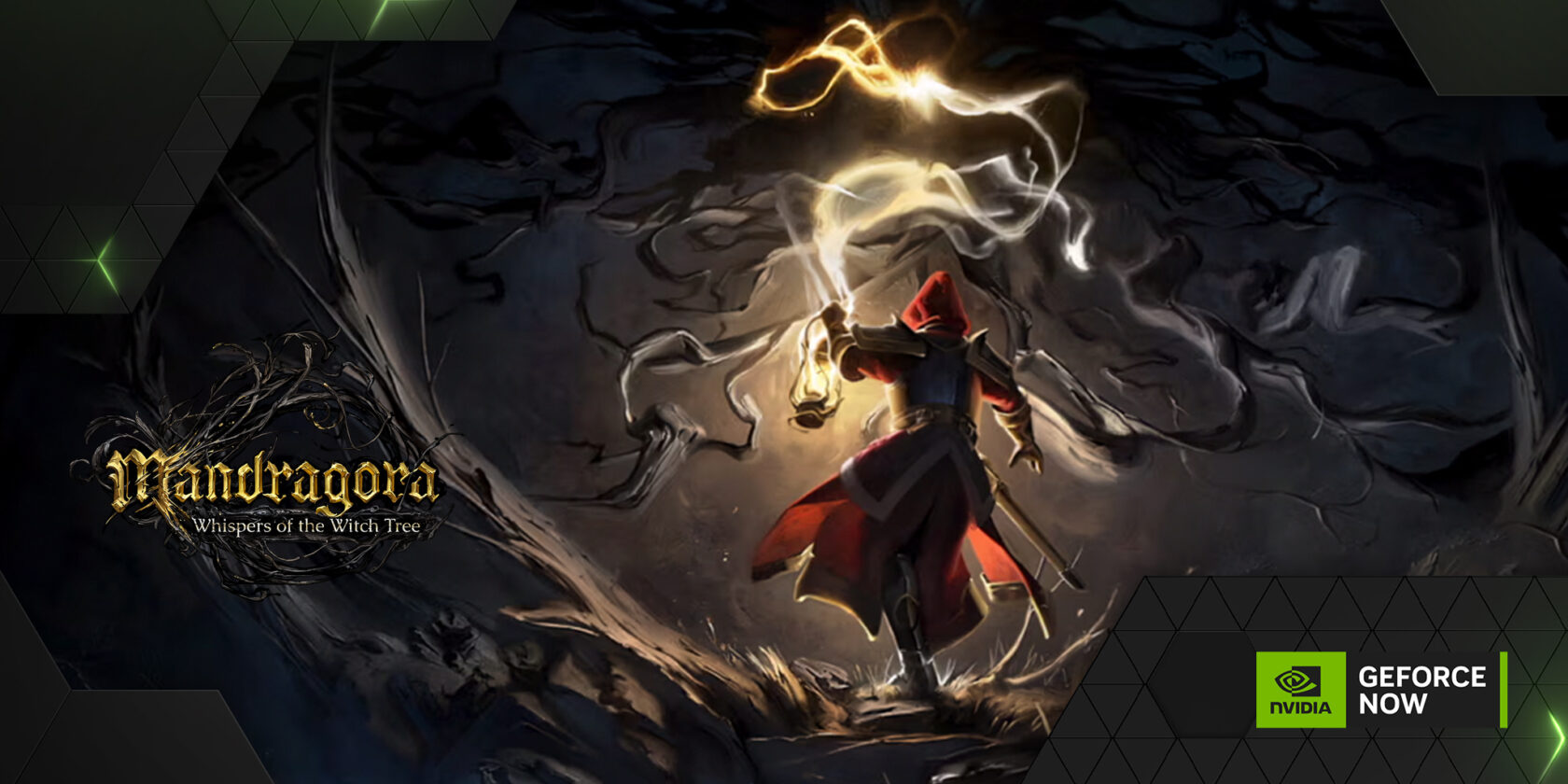
Step into a beautifully hand-painted world teetering on the edge of chaos in Mandragora: Whispers of the Witch Tree. As an Inquisitor, battle nightmarish creatures and uncover secrets beneath the budding canopies of Faelduum. With deep role-playing game mechanics and challenging combat, Mandragora is ideal for players seeking a fresh adventure this season. GeForce NOW members can continue their quest wherever spring takes them — including on their laptops, tablets and smartphones.

Time for New Games

Marvel VS. Capcom on GeForce NOW
Everyone’s shouting from the excitement of being in the cloud.

Catch MARVEL vs. CAPCOM Fighting Collection: Arcade Classics in the cloud this week. In this legendary collection of arcade classics from the fan-favorite Marvel and Capcom crossover games, dive into an action-packed lineup of seven titles, including heavy hitters X-MEN vs. STREET FIGHTER and MARVEL vs. CAPCOM 2 New Age of Heroes, as well as THE PUNISHER. 

Each game in the collection can be played online or in co-op mode. Whether new or returning to the series from their arcade days, players of all levels can together enjoy these timeless classics in the cloud.

Look for the following games available to stream in the cloud this week:

  • Forever Skies (New release on Steam, available April 14)
  • Night Is Coming (New release on Steam, available April 14)
  • Hunt: Showdown 1896 (New release on Xbox, available on PC Game Pass April 15)
  • Crime Scene Cleaner (New release on Xbox, available on PC Game Pass April 17)
  • Mandragora: Whispers of the Witch Tree (New release on Steam, available April 17)
  • Tempest Rising (New release on Steam, Advanced Access starts April 17)
  • Aimlabs (Steam)
  • Blue Prince (Steam, Xbox)
  • ContractVille (Steam)
  • Gedonia 2 (Steam) 
  • MARVEL vs. CAPCOM Fighting Collection: Arcade Classics (Steam)
  • Path of Exile 2 (Epic Games Store)

What are you planning to play this weekend? Let us know on X or in the comments below.


As the days grow longer and the flowers bloom, GFN Thursday brings a fresh lineup of games to brighten the week. Dive into thrilling hunts and dark fantasy adventures with the arrivals of titles like Hunt: Showdown 1896 — now available on Xbox and PC Game Pass — and Mandragora: Whispers of the Witch Tree
Read Article

Isomorphic Labs Rethinks Drug Discovery With AI​on April 16, 2025 at 4:00 pm

Isomorphic Labs is reimagining the drug discovery process with an AI-first approach. At the heart of this work is a new way of thinking about biology. Max Jaderberg, chief AI officer, and Sergei Yakneen, chief technology officer at Isomorphic Labs joined the AI Podcast to explain why they look at biology as an information processing
Read ArticleIsomorphic Labs is reimagining the drug discovery process with an AI-first approach. At the heart of this work is a new way of thinking about biology. Max Jaderberg, chief AI officer, and Sergei Yakneen, chief technology officer at Isomorphic Labs joined the AI Podcast to explain why they look at biology as an information processing
Read Article  


Isomorphic Labs is reimagining the drug discovery process with an AI-first approach. At the heart of this work is a new way of thinking about biology.

Max Jaderberg, chief AI officer, and Sergei Yakneen, chief technology officer at Isomorphic Labs joined the AI Podcast to explain why they look at biology as an information processing system.

“We’re building generalizable AI models capable of learning from the entire universe of protein and chemical interactions,” Jaderberg said. “This fundamentally breaks from the target-specific, siloed approach of conventional drug development.”

Isomorphic isn’t just working to optimize existing drug design workflows but completely rethinking how drugs are discovered — moving away from traditional methods that have historically been slow and inefficient.

By modeling cellular processes with AI, Isomorphic’s teams can predict molecular interactions with exceptional accuracy. Their advanced AI models enable scientists to computationally simulate how potential therapeutics interact with their targets in complex biological systems. Using AI to reduce dependence on wet lab experiments accelerates the drug discovery pipeline and creates possibilities for addressing previously untreatable conditions.

And that’s just the beginning.

Isomorphic Labs envisions a future of precision medicine, where treatments are tailored to an individual’s unique molecular and genetic makeup. While regulatory hurdles and technical challenges remain, Jaderberg and Yakneen are optimistic and devoted to balancing ambitious innovation with scientific rigor.

“We’re committed to proving our technology through real-world pharmaceutical breakthroughs,” said Jaderberg.

Time Stamps

1:14 – How AI is boosting the drug discovery process.

17:25 – Biology as a computational system.

19:50 – Applications of AlphaFold 3 in pharmaceutical research.

23:05 – The future of precision and preventative medicine.

You Might Also Like… 

NVIDIA’s Jacob Liberman on Bringing Agentic AI to Enterprises

Agentic AI enables developers to create intelligent multi-agent systems that reason, act and execute complex tasks with a degree of autonomy. Jacob Liberman, director of product management at NVIDIA, joined the NVIDIA AI Podcast to explain how agentic AI bridges the gap between powerful AI models and practical enterprise applications.

Roboflow Helps Unlock Computer Vision for Every Kind of AI Builder

Roboflow’s mission is to make the world programmable through computer vision. By simplifying computer vision development, the company helps bridge the gap between AI and the people looking to harness it. Cofounder and CEO Joseph Nelson discusses how Roboflow empowers users in manufacturing, healthcare and automotive to solve complex problems with visual AI.

How World Foundation Models Will Advance Physical AI With NVIDIA’s Ming-Yu Liu

AI models that can accurately simulate and predict outcomes in physical, real-world environments will enable the next generation of physical AI systems. Ming-Yu Liu, vice president of research at NVIDIA and an IEEE Fellow, explains the significance of world foundation models — powerful neural networks that can simulate physical environments.


Isomorphic Labs is reimagining the drug discovery process with an AI-first approach. At the heart of this work is a new way of thinking about biology. Max Jaderberg, chief AI officer, and Sergei Yakneen, chief technology officer at Isomorphic Labs joined the AI Podcast to explain why they look at biology as an information processing
Read Article

AI Bites Back: Researchers Develop Model to Detect Malaria Amid Venezuelan Gold Rush​on April 17, 2025 at 4:00 pm

Gold prospecting in Venezuela has led to a malaria resurgence, but researchers have developed AI to take a bite out of the problem. In Venezuela’s Bolivar state, deforestation for gold mining in waters has disturbed mosquito populations, which are biting miners and infecting them with the deadly parasite. Venezuela was certified as malaria-free in 1961
Read ArticleGold prospecting in Venezuela has led to a malaria resurgence, but researchers have developed AI to take a bite out of the problem. In Venezuela’s Bolivar state, deforestation for gold mining in waters has disturbed mosquito populations, which are biting miners and infecting them with the deadly parasite. Venezuela was certified as malaria-free in 1961
Read Article  


Gold prospecting in Venezuela has led to a malaria resurgence, but researchers have developed AI to take a bite out of the problem.

In Venezuela’s Bolivar state, deforestation for gold mining in waters has disturbed mosquito populations, which are biting miners and infecting them with the deadly parasite.

Venezuela was certified as malaria-free in 1961 by the World Health Organization. It’s estimated that worldwide there were 263 million cases of malaria and 597,000 deaths in 2023, according to the WHO.

In the Venezuelan outbreak, the area affected is rural and has limited access to medical clinics, so detection with microscopy by trained professionals is lacking.

But researchers at the intersection of medicine and technology have tapped AI and NVIDIA GPUs to come up with a solution. They recently published a paper in Nature, describing the development of a convolutional neural network (CNN) for automatically detecting malaria parasites in blood samples.

“At some point in Venezuela, malaria was almost eradicated,” said 25-year-old Diego Ramos-Briceño, who has a bachelor’s in engineering that he earned while also pursuing a doctorate in medicine. “I believe it was around 135,000 cases last year.”

Identifying Malaria Parasites in Blood Samples

The researchers — Ramos-Briceño, Alessandro Flammia-D’Aleo, Gerardo Fernández-López, Fhabián Carrión-Nessi and David Forero-Peña — used the CNN to identify Plasmodium falciparum and Plasmodium vivax in thick blood smears, achieving 99.51% accuracy.

To develop the model, the team acquired a dataset of 5,941 labeled thick blood smear microscope images from the Chittagong Medical College Hospital, in Bangladesh. They processed this dataset to create nearly 190,000 labeled images.

“What we wanted for the neural network to learn is the morphology of the parasite, so from out of the nearly 6,000 microscope level images, we extracted every single parasite, and from all that data augmentation and segmentation, we ended up having almost 190,000 images for model training,” said Ramos-Briceño.

The model comes as traditional microscopy methods are also challenged by limitations in accuracy and consistency, according to the research paper.

Harnessing Gaming GPUs and CUDA for Model Training, Inference

To run model training, the malaria paper’s team tapped into an RTX 3060 GPU from a computer science teacher mentoring their research.

“We used PyTorch Lightning with NVIDIA CUDA acceleration that enabled us to do efficient parallel computation that significantly sped up the matrix operations and the preparations of the neural network compared with what a CPU would have done,” said Ramos-Briceño.

For inference, malaria determinations from blood samples can be made within several seconds, he said, using such GPUs.

Clinics lacking trained microscopists could use the model and introduce their own data for transfer learning so that the model performs optimally with the types of images they submit, handling the lighting conditions and other factors, he said.

“For communities that are far away from the urban setting, where there’s more access to resources, this could be a way to approach the malaria problem,” said Ramos-Briceño.


Gold prospecting in Venezuela has led to a malaria resurgence, but researchers have developed AI to take a bite out of the problem. In Venezuela’s Bolivar state, deforestation for gold mining in waters has disturbed mosquito populations, which are biting miners and infecting them with the deadly parasite. Venezuela was certified as malaria-free in 1961
Read Article

Spring Into Action With 11 New Games on GeForce NOW​on April 17, 2025 at 1:00 pm

As the days grow longer and the flowers bloom, GFN Thursday brings a fresh lineup of games to brighten the week. Dive into thrilling hunts and dark fantasy adventures with the arrivals of titles like Hunt: Showdown 1896 — now available on Xbox and PC Game Pass — and Mandragora: Whispers of the Witch Tree
Read ArticleAs the days grow longer and the flowers bloom, GFN Thursday brings a fresh lineup of games to brighten the week. Dive into thrilling hunts and dark fantasy adventures with the arrivals of titles like Hunt: Showdown 1896 — now available on Xbox and PC Game Pass — and Mandragora: Whispers of the Witch Tree
Read Article  


As the days grow longer and the flowers bloom, GFN Thursday brings a fresh lineup of games to brighten the week.

Dive into thrilling hunts and dark fantasy adventures with the arrivals of titles like Hunt: Showdown 1896 — now available on Xbox and PC Game Pass and Mandragora: Whispers of the Witch Tree on GeForce NOW. Whether chasing bounties in the Colorado Rockies or battling chaos in a cursed land, players will gain unforgettable experiences with these games in the cloud.

Plus, roll with the punches in Capcom’s MARVEL vs. CAPCOM Fighting Collection: Arcade Classics, part of 11 games GeForce NOW is adding to its cloud gaming library — featuring over 2,000 titles playable with GeForce RTX 4080 performance.

Spring Into Gaming Anywhere

With the arrivals of Hunt: Showdown 1896 and Mandragora: Whispers of the Witch Tree in the cloud, GeForce NOW members can take their gaming journeys anywhere, from the wild frontiers of the American West to the shadowy forests of a dark fantasy realm.

Hunt Showdown 1896 on GeForce NOW
It’s the wild, wild west.

Hunt: Showdown 1896 transports players to the untamed Rockies, where danger lurks behind every pine and in every abandoned mine. PC Game Pass members — and those who own the game on Xbox — can stream the action instantly. Whether players are tracking monstrous bounties solo or teaming with friends, the game’s tense player vs. player vs. environment action and new map, Mammon’s Gulch, are ideal for springtime exploration.

Jump into the hunt from the living room, in the backyard or even on the go — no high-end PC required with GeForce NOW.

Mandragora on GeForce NOW
Every whisper is a warning.

Step into a beautifully hand-painted world teetering on the edge of chaos in Mandragora: Whispers of the Witch Tree. As an Inquisitor, battle nightmarish creatures and uncover secrets beneath the budding canopies of Faelduum. With deep role-playing game mechanics and challenging combat, Mandragora is ideal for players seeking a fresh adventure this season. GeForce NOW members can continue their quest wherever spring takes them — including on their laptops, tablets and smartphones.

Time for New Games

Marvel VS. Capcom on GeForce NOW
Everyone’s shouting from the excitement of being in the cloud.

Catch MARVEL vs. CAPCOM Fighting Collection: Arcade Classics in the cloud this week. In this legendary collection of arcade classics from the fan-favorite Marvel and Capcom crossover games, dive into an action-packed lineup of seven titles, including heavy hitters X-MEN vs. STREET FIGHTER and MARVEL vs. CAPCOM 2 New Age of Heroes, as well as THE PUNISHER. 

Each game in the collection can be played online or in co-op mode. Whether new or returning to the series from their arcade days, players of all levels can together enjoy these timeless classics in the cloud.

Look for the following games available to stream in the cloud this week:

  • Forever Skies (New release on Steam, available April 14)
  • Night Is Coming (New release on Steam, available April 14)
  • Hunt: Showdown 1896 (New release on Xbox, available on PC Game Pass April 15)
  • Crime Scene Cleaner (New release on Xbox, available on PC Game Pass April 17)
  • Mandragora: Whispers of the Witch Tree (New release on Steam, available April 17)
  • Tempest Rising (New release on Steam, Advanced Access starts April 17)
  • Aimlabs (Steam)
  • Blue Prince (Steam, Xbox)
  • ContractVille (Steam)
  • Gedonia 2 (Steam) 
  • MARVEL vs. CAPCOM Fighting Collection: Arcade Classics (Steam)
  • Path of Exile 2 (Epic Games Store)

What are you planning to play this weekend? Let us know on X or in the comments below.


As the days grow longer and the flowers bloom, GFN Thursday brings a fresh lineup of games to brighten the week. Dive into thrilling hunts and dark fantasy adventures with the arrivals of titles like Hunt: Showdown 1896 — now available on Xbox and PC Game Pass — and Mandragora: Whispers of the Witch Tree
Read Article

AI Bites Back: Researchers Develop Model to Detect Malaria Amid Venezuelan Gold Rush​on April 17, 2025 at 4:00 pm

Gold prospecting in Venezuela has led to a malaria resurgence, but researchers have developed AI to take a bite out of the problem. In Venezuela’s Bolivar state, deforestation for gold mining in waters has disturbed mosquito populations, which are biting miners and infecting them with the deadly parasite. Venezuela was certified as malaria-free in 1961
Read ArticleGold prospecting in Venezuela has led to a malaria resurgence, but researchers have developed AI to take a bite out of the problem. In Venezuela’s Bolivar state, deforestation for gold mining in waters has disturbed mosquito populations, which are biting miners and infecting them with the deadly parasite. Venezuela was certified as malaria-free in 1961
Read Article  


Gold prospecting in Venezuela has led to a malaria resurgence, but researchers have developed AI to take a bite out of the problem.

In Venezuela’s Bolivar state, deforestation for gold mining in waters has disturbed mosquito populations, which are biting miners and infecting them with the deadly parasite.

Venezuela was certified as malaria-free in 1961 by the World Health Organization. It’s estimated that worldwide there were 263 million cases of malaria and 597,000 deaths in 2023, according to the WHO.

In the Venezuelan outbreak, the area affected is rural and has limited access to medical clinics, so detection with microscopy by trained professionals is lacking.

But researchers at the intersection of medicine and technology have tapped AI and NVIDIA GPUs to come up with a solution. They recently published a paper in Nature, describing the development of a convolutional neural network (CNN) for automatically detecting malaria parasites in blood samples.

“At some point in Venezuela, malaria was almost eradicated,” said 25-year-old Diego Ramos-Briceño, who has a bachelor’s in engineering that he earned while also pursuing a doctorate in medicine. “I believe it was around 135,000 cases last year.”

Identifying Malaria Parasites in Blood Samples

The researchers — Ramos-Briceño, Alessandro Flammia-D’Aleo, Gerardo Fernández-López, Fhabián Carrión-Nessi and David Forero-Peña — used the CNN to identify Plasmodium falciparum and Plasmodium vivax in thick blood smears, achieving 99.51% accuracy.

To develop the model, the team acquired a dataset of 5,941 labeled thick blood smear microscope images from the Chittagong Medical College Hospital, in Bangladesh. They processed this dataset to create nearly 190,000 labeled images.

“What we wanted for the neural network to learn is the morphology of the parasite, so from out of the nearly 6,000 microscope level images, we extracted every single parasite, and from all that data augmentation and segmentation, we ended up having almost 190,000 images for model training,” said Ramos-Briceño.

The model comes as traditional microscopy methods are also challenged by limitations in accuracy and consistency, according to the research paper.

Harnessing Gaming GPUs and CUDA for Model Training, Inference

To run model training, the malaria paper’s team tapped into an RTX 3060 GPU from a computer science teacher mentoring their research.

“We used PyTorch Lightning with NVIDIA CUDA acceleration that enabled us to do efficient parallel computation that significantly sped up the matrix operations and the preparations of the neural network compared with what a CPU would have done,” said Ramos-Briceño.

For inference, malaria determinations from blood samples can be made within several seconds, he said, using such GPUs.

Clinics lacking trained microscopists could use the model and introduce their own data for transfer learning so that the model performs optimally with the types of images they submit, handling the lighting conditions and other factors, he said.

“For communities that are far away from the urban setting, where there’s more access to resources, this could be a way to approach the malaria problem,” said Ramos-Briceño.


Gold prospecting in Venezuela has led to a malaria resurgence, but researchers have developed AI to take a bite out of the problem. In Venezuela’s Bolivar state, deforestation for gold mining in waters has disturbed mosquito populations, which are biting miners and infecting them with the deadly parasite. Venezuela was certified as malaria-free in 1961
Read Article