




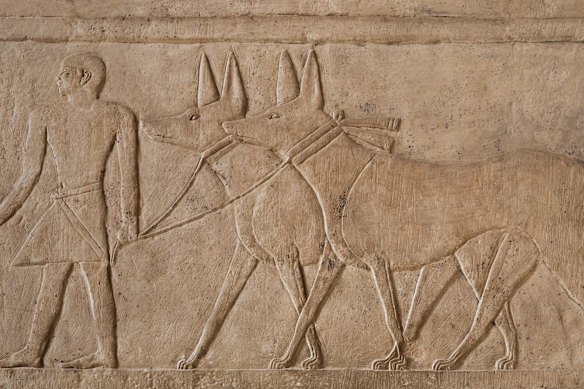
The ancients are known for their love of cats and ibises, but they took their love of greyhounds to the grave.
The ancients are known for their love of cats and ibises, but they took their love of greyhounds to the grave.
By Nick Dent
May 9, 2025 — 3.45pm
It sounds like a scene from an Indiana Jones movie.
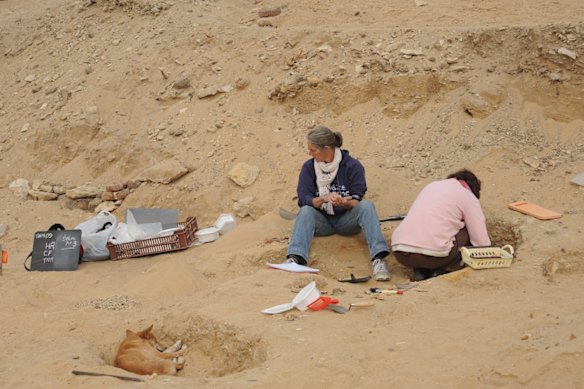
Macquarie University PhD candidate Mary Hartley was excavating at the Saqqara necropolis, south of Cairo, in 2007.
Hartley’s group had been allocated the New Kingdom tombs near the Teti pyramid cemeteries.
“When we opened the burial chambers,” she said, “the chambers were absolutely chock-a-block full, from the floor to the ceiling, with dog bones.”
The remains of more than 7 million dogs had been left in the catacombs. What Hartley and her colleagues had uncovered was evidence of mass animal sacrifice, most likely to the god Anubis.
“Anubis was probably associated with protection and guardianship. People could go out and buy a dog, place it in the temple, and offer it as a votive offering and ask for something in return.”
We’re familiar with the idea that the ancient Egyptians loved their cats, but they were also very keen on their canines (not to mention ibises).
The Queensland Museum’s Discovering Ancient Egypt exhibition includes a mummified dog skull.
Advertisement
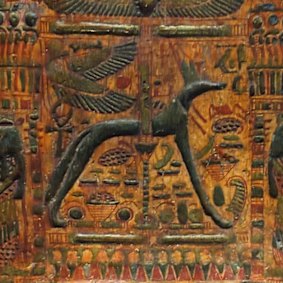
Prompted by this, as well as hieroglyphics and imagery of Anubis on mummy cases, Hartley has been invited to Brisbane at the weekend to deliver a ticketed public lecture titled Hounds of Ancient Egypt.
Hartley said burial practices in pre-dynastic Egypt showed an early breed of greyhound was valued as a hunter and a guard animal for autonomous communities clustered along the Nile.
“The first documented burial that I found in my research comes from just after 4000BC, and that’s a lovely burial of a human in a little wooden coffin, in which you can still see the remains of this little dog had been placed at the foot of the coffin,” she said.
“And about 3500 or 3200BC, you start to see cemeteries being made, and this is when you start to see dogs placed in them at the north, at the south, at the east, and at the west.
“The dogs protected flocks, or they protected communities, and they wanted to continue this in the afterlife.”
The problem for dogs began, Hartley said, around the funerary practices during the Late Period, about 640BC, as religious practices that had been available only to the elites became available to the masses.
“When we opened the burial chambers the chambers were absolutely chock-a-block full, from the floor to the ceiling, with dog bones.”
“You get this vast increase in people wanting to buy a dog, a votive dog, and place it in the temple.”
Hartley’s research suggests priests would breed and sell dogs (usually common mixed-breed dogs) to worshippers expressly as votive offerings.
“As soon as you have a moneymaking thing, you get people who are prepared to do horrible things to animals, for the sake of money,” she said.
Hartley’s lecture on Saturday is recommended for history buffs older than 16.
“Hopefully, it won’t be a talk that’ll make people dreary and miserable,” Hartley said.
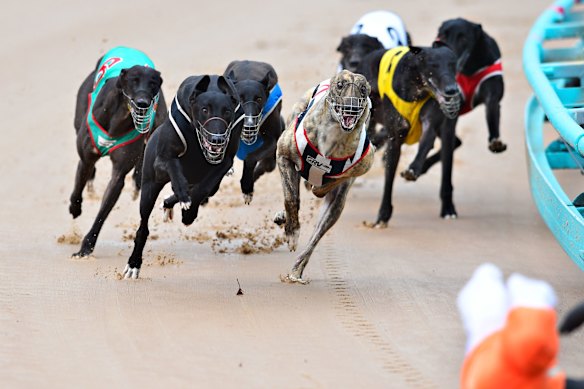
Following the lecture, an independent adoption agency, Love a Greyhound, will bring half a dozen dogs available to adopt for a meet and greet in the Museum’s Dinosaur Garden.
The fact that greyhounds were popular many thousands of years ago is startling, given debates around greyhound racing in Queensland.
The official opening of the new “home of Queensland greyhound racing”, The Q in Ipswich, is scheduled for June 8, but animal welfare group the Coalition for Greyhound Protection alleges that five greyhounds have already died at the facility.
The industry has been under a spotlight since a 2015 Four Corners report that revealed practices such as live baiting and euthanasia for retired racing dogs.
Dr Mary Hartley presents Hounds of Ancient Egypt at the Theatre, Queensland Museum Kurilpa, on Saturday, May 10 at 2pm.
Discover more from World Byte News
Subscribe to get the latest posts sent to your email.
