





Benjamin Netanyahu’s office says US envoy Steve Witkoff suggested an extension after getting the impression more time was needed for talks on a permanent ceasefire.
Benjamin Netanyahu’s office says US envoy Steve Witkoff suggested an extension after getting the impression more time was needed for talks on a permanent ceasefire.
March 2, 2025 — 10.31am
Cairo: Israel’s government said early on Sunday that it supported a proposal to extend the first phase of the ceasefire in Gaza through Ramadan and Passover, though Hamas has insisted on negotiating the truce’s second phase instead.
The statement by Prime Minister Benjamin Netanyahu’s office came minutes after the first phase ended, and as talks have begun on starting the second phase that’s aimed at ending the war and seeing all remaining living hostages in Gaza returned home.
The statement gives new details on what Israel described as a US proposal: a ceasefire extension through to Passover, or April 20. On the first day, half the hostages, alive and dead, would be released. The rest would be released if agreement were reached on a permanent ceasefire.
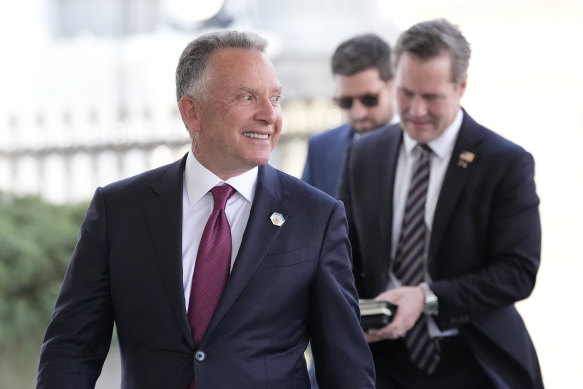
The statement said it was proposed after US envoy Steve Witkoff got “the impression that at this stage there was no possibility of bridging the positions of the parties to end the war, and that more time was needed for talks on a permanent ceasefire”.
There was no immediate comment from Hamas, which had earlier rejected an Israeli proposal to extend the ceasefire’s first phase by 42 days – doubling its length – saying it goes against the truce agreement, a member of the group who requested anonymity to discuss the closed-door negotiations said.
Officials from Israel and mediators Qatar, Egypt and the United States have been involved in negotiations on starting the ceasefire’s second phase in Cairo. But Basem Naim, a member of Hamas’ political bureau, told the Associated Press there had been “no progress” before Israeli negotiators returned home on Friday. Hamas did not attend, but its position has been represented through Egyptian and Qatari mediators.
Loading
Under the ceasefire deal’s terms, fighting should not resume while negotiations are under way on phase two.
Israel’s new statement said it could return to fighting “if it believes that the negotiations are ineffective”, and it noted Hamas’ refusal to accept the proposal for an extension of the first phase.
Advertisement
However, “if Hamas changes its position, Israel will immediately enter into negotiations on all the details of the Witkoff plan”, the statement said.
Before Israel’s new statement, an Egyptian official involved in the talks spoke on condition of anonymity to discuss the negotiations. The official said Hamas, Qatar and Egypt wanted to continue with the existing ceasefire deal, and they rejected Israel’s proposal to extend the ceasefire for four weeks with a release of hostages every Saturday without officially entering negotiations on the second phase.
The Egyptian official said the US wanted to start negotiations on the second phase but called for hostage releases during the negotiations. Hamas insisted on a full implementation of the ceasefire terms.
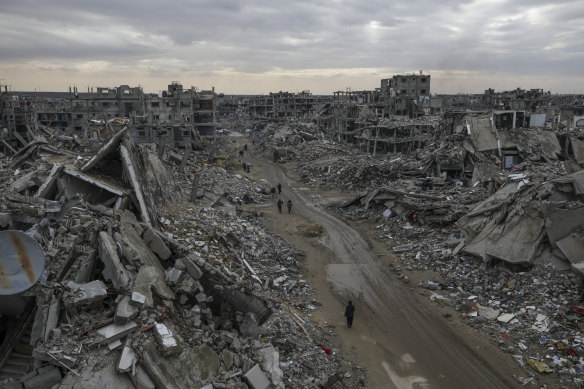
The first phase, which paused 15 months of fighting in Gaza, saw the release of 33 hostages, including eight bodies, in exchange for nearly 2000 Palestinian prisoners. Hundreds of thousands of people returned home to northern Gaza, aid into the territory increased, and Israeli forces withdrew to buffer zones.
Hamas started the war with its October 7, 2023 attack that left 1200 dead in Israel, mostly civilians, and took some 250 people hostage. Since then, Israel’s military offensive has killed more than 48,000 Palestinians, according to Gaza health officials.
According to Israel, 32 of the 59 hostages still in Gaza are dead.
Loading
The two sides agreed to the three-phase ceasefire deal in January, with talks on the second phase meant to start the first week of February. Israelis rallied on Saturday night to urge their government to continue the deal.
Hamas has reaffirmed its “full commitment to implementing all terms of the agreement in all its stages and details” and called on the international community to pressure Israel to immediately proceed to the second phase.
Other challenges complicate the ceasefire’s future. Israel has said Hamas cannot be involved in governing Gaza after the war. Netanyahu has also ruled out any role in Gaza for the Western-backed Palestinian Authority, dominated by Hamas’ main rival, Fatah.
Hamas leader Mohamed Darwish on Saturday reiterated the group was willing to hand over power to a Palestinian national consensus government or an Egypt-proposed body of technocrats not aligned with Hamas or Fatah. His comments came in an open letter to next week’s summit of Arab leaders in Cairo. Hamas has dismissed Israel’s suggestion that its leadership go into exile.
AP
Get a note directly from our foreign correspondents on what’s making headlines around the world. Sign up for our weekly What in the World newsletter.
Loading
Discover more from World Byte News
Subscribe to get the latest posts sent to your email.
