





Kipp Freeman is deaf and has just started pre-primary without anyone in the classroom to translate for him. His parents have been forced to take time out of their jobs to make sure their son doesn’t fall behind.
Kipp Freeman is deaf and has just started pre-primary without anyone in the classroom to translate for him. His parents have been forced to take time out of their jobs to make sure their son doesn’t fall behind.
Four-year-old Kipp Freeman has just started pre-primary in Esperance. He joins thousands of other children across Western Australia – but his learning needs are different.
He is deaf, and needs someone who can speak Auslan to translate what is being said by his classmates and teachers.
But although Kipp has been given full-time funding for an education assistant in the classroom who can translate for him, after a drawn-out fight to get it, no one has taken on the job.
Kipp started school on Wednesday last week without the proper support, despite the role of his assistant being advertised for months.
His mother, Sarah Brophy, and her partner Damian are instead the ones who have been filling in, taking time off work to stand in front of the classroom so Kipp can learn.
“We’re both shift workers. Damian’s a paramedic and I’m an emergency nurse, and I’ve had to cancel my shifts so that I can be at school to interpret,” she said.
“It puts a huge strain on the family and our financial situation.”
She said part of the problem was being in a regional area.
“It may force our hands that we have to sell our house, uproot our lives and move somewhere we don’t particularly want to be to for our son to get an education,” Brophy said.
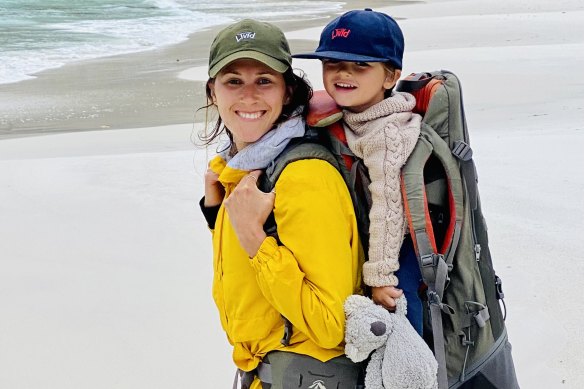
“We’re going to have to do the maths on whether we can stay for this year or whether we need to move midway through the year so that we can both get back to work and support our family.”
She said the alternative would be finding a place for Kipp at a deaf education centre in Perth, with the shortages in those who can speak Auslan extending into the metropolitan area too.
“I don’t really think that’s right either, that disabled children are forced to learn in separate centres. Their families should have the same choice as anyone else,” Brophy said.
“There’s a huge demand for interpreters, especially in child care and education, so we have an entire generation of deaf children who are missing out on having equal access to education as their hearing peers.”
The fight to get full-time funding in the first place was tough, with the Department of Education initially only offering an education assistant to Kipp three days per week.
Brophy went to the local school first in an attempt to change that decision, with staff saying their hands were tied, then tried the department’s regional operations manager in Esperance.
They told her the funding had been decided and she would have to wait until Kipp started year 1.
“I find it difficult to have conversations about money, when really it’s about my son having equal access to the curriculum.”
Sarah Brophy
Believing that to be unacceptable, Brophy pushed for the case to be taken further.
It ended up in the hands of the department’s director general’s office, which overruled the initial decision.
“I should not have had to have those conversations at such a high level as the parent of the child,” Brophy said.
“That’s a really poor process.
“There are so many kids out there who are getting poor resources, poor funding, and their parents feel they have to accept it.
“I find it really difficult to have these conversations with the Education Department about money, when really the conversation is about my son having equal access to the curriculum.”
Department of Education statewide services executive director Martin Clery said they did not keep central records regarding the number of interpreters required by individual schools.
He said staffing decisions, which included finding an interpreter, were made at the local level.
“Options available to schools having difficulty contracting interpreting services though these channels include contracting a qualified freelance Auslan interpreter, and requesting video conference interpreting services from the service provider,” he said.
Brophy said she still hoped to find someone for the role Kipp needed.
“He’s told me that he doesn’t want me in the room, and I don’t want that either. I want him to develop that social confidence and that independence,” she said.
“They’re also setting up foundations for Kipp’s next decade of schooling in pre-primary. If he can’t develop those skills then next year is not looking so great, and the year after, that’s looking even worse.
“It has huge detrimental effects going forward, and your ability to play catch-up becomes harder and harder.”
Start the day with a summary of the day’s most important and interesting stories, analysis and insights. Sign up for our Morning Edition newsletter.
Discover more from World Byte News
Subscribe to get the latest posts sent to your email.
