





The government’s proposed amendments to the anti-vilification bill address the main concerns from the Opposition and religious groups.
The government’s proposed amendments to the anti-vilification bill address the main concerns from the Opposition and religious groups.
- Exclusive
- Politics
- Victoria
- Victorian Parliament
By Chip Le Grand
February 18, 2025 — 10.06am
Bigots charged with criminal vilification under the Victorian government’s proposed hate laws will no longer be able to rely on a defence of political purpose to avoid conviction and jail.
The government agreed to drop the defence after concerns were raised by Jewish and Islamic community groups that the “genuine political purpose” exemption drafted into plans to toughen Victoria’s protections against vilification would green-light hate speech rather than legislate against it.
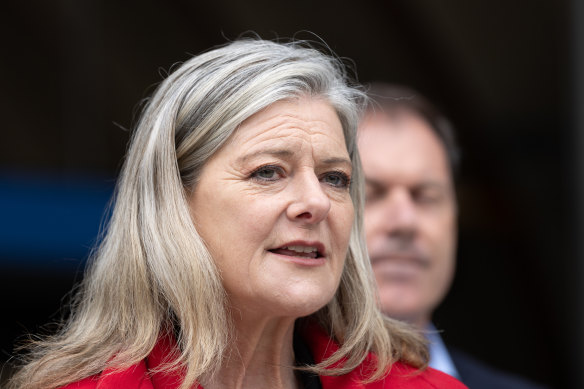
In a letter to community, religious and LGBTQ groups, provided to The Age, Attorney-General Sonya Kilkenny flagged that the government would move two substantial amendments to the Anti-Vilification and Social Cohesion Bill to be debated in parliament on Tuesday.
The first would remove a clause that provides a broad defence against a new criminal offence of inciting serious vilification if the accused can show they “engaged in the conduct for a genuine political purpose”.
Loading
In the letter, Kilkenny said this clause was not intended to excuse hateful speech. “For absolute clarity, the government will remove it,” she wrote.
The second government amendment, in response to the Catholic Archdiocese of Melbourne and other religious groups, will expand a proposed religious purpose exemption to include proselytising and preaching.
A more explicit religious carve-out will indemnify speech that “includes, but is not limited to, worship, observance, practice, teaching proselytising and preaching”.
The expanded provision will give church groups greater comfort that their members will be protected at both the pulpit and, more broadly, in the community when talking about matters to do with sex, gender and gender identity.
Advertisement
Kilkenny said the government always intended that proselytising would be covered by the religious purpose exemption.
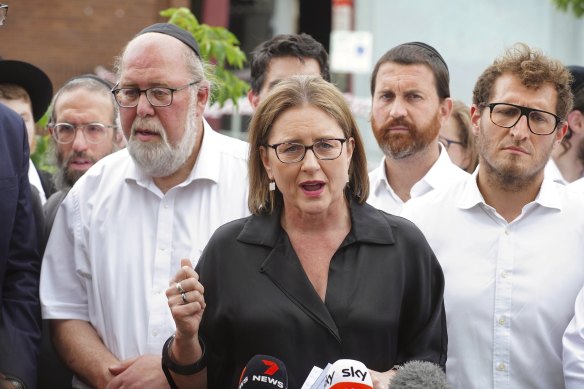
Premier Jacinta Allan publicly flagged the changes to the bill on Tuesday morning.
The legislation, if passed, will expand the state’s existing anti-vilification framework, which currently lists race and religion as protected attributes, to include disability, gender identity, sex, sex characteristics, sexual orientation and personal association.
It would make serious vilification – such as incitement of hatred or physical threats – offences punishable by up to five years’ jail.
The proposed amendments address the main concerns from the Jewish Community Council of Victoria, Zionism Victoria, the Zionist Federation of Australia, and the Executive Council of Australian Jewry, which sent a joint letter to state MPs two weeks ago.
Loading
The amendments will also ease fears among the Catholic Church, made clear by Archbishop of Melbourne Peter Comensoli in previous comments to The Age, that the original draft legislation would erode freedom of religious expression.
But the changes are likely to open a new argument with civil libertarians.
Prominent human rights barrister Greg Barns believes the removal of the political purpose defence will make the laws vulnerable to a High Court challenge. The Australian Christian Lobby, which believes expanded anti-vilification laws will be used by activists to harass their members, is staunchly opposed to the legislation.
The amendments will reframe the parliamentary politics surrounding the legislation by shifting pressure onto the opposition to support the bill and potentially expose divisions in the Liberal Party over questions of gender and identity.
When the bill was last debated, the Coalition refused to support it unless the government dropped the political purpose defence.
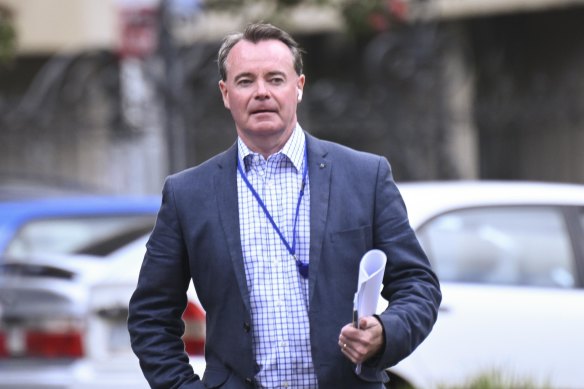
“Why would a bill that is designed to try and turn down the temperature in our streets give a green light to appalling, abhorrent behaviour?” shadow attorney-general Michael O’Brien said. “Why would it give a leave pass to hateful, bigoted people by saying, ‘As long as you call it a political reason, you can do what you like’?”
O’Brien said the Coalition supported the expansion of protected attributes. “Some of these people are very vulnerable, and sadly, they are very vulnerable to prejudicial conduct, to hateful conduct, and they deserve the protection of the law.”
Former Labor MP Will Fowles, who now sits as an independent, said the unamended bill moved him to vote against the government for the first time since he was elected to parliament.
“We cannot allow hate speech to find shelter in Labor’s anti-vilification bill,” he said.
The bill, which has its origins in a private members bill introduced by then-independent MP Fiona Patten five years ago, has recently taken on additional political significance as the government’s legislative response to a rise in antisemitism, which culminated in last year’s firebombing of the Adass Israel synagogue in Ripponlea.
Kilkenny, in an impassioned speech to parliament when the bill was earlier debated, implored the opposition to support the legislation.
“Do not pass up this opportunity to put in place laws to deliver a framework for the benefit of all Victorians,” she said. “Do not ignore them. They are asking for our help.”
Get alerts on significant breaking news as it happens. Sign up for our Breaking News Alert.
Chip Le Grand leads our state politics reporting team. He previously served as the paper’s chief reporter and is a journalist of 30 years’ experience.Connect via email.
Loading
Discover more from World Byte News
Subscribe to get the latest posts sent to your email.
