





Australia’s inflation rate has fallen to its lowest level in more than three years, paving the way for the Reserve Bank to deliver an interest rate cut in February.
Australia’s inflation rate has fallen to its lowest level in more than three years, paving the way for the Reserve Bank to deliver an interest rate cut in February.
By Shane Wright and Millie Muroi
January 29, 2025 — 11.11am
Australia’s inflation rate has fallen to its lowest level in more than three years, paving the way for the Reserve Bank to deliver an interest rate cut in February.
The Australian Bureau of Statistics on Wednesday reported that through the final three months of 2024, consumer prices climbed by 0.2 per cent. This took the annual rate to 2.4 per cent, down from 2.8 per cent in the 12 months to the end of September.
It’s the lowest inflation result since the March quarter of 2021, and lower than the 2.5 per cent economists had been expecting.
The result was due partly to the federal government’s electricity subsidies, but prices for a range of other goods and services also eased. The cost of building new homes actually fell by 0.2 per cent in the quarter, taking the annual rate of growth down to 2.9 per cent. It peaked at almost 21 per cent in mid-2022.
The closely watched measure of underlying inflation rose by 0.5 per cent in the quarter, the lowest rate since mid-2021. The annual underlying inflation rate dropped to 3.2 per cent.
Betashares chief economist David Bassanese said the figures confirmed inflation was lower than expected by the Reserve Bank.
“There’s no question the economy deserves an interest rate cut to ease the restrictiveness of current policy settings. I anticipate the Reserve Bank will welcome these inflation results and reward hard-pressed households and mortgage holders with an interest rate cut at the February 17-18 policy meeting,” he said.
Rents rose by 0.6 per cent in the quarter, after a 1.6 per cent climb in the September quarter. This took annual rent growth down to 6.4 per cent, driven in part by the federal government’s increase in Commonwealth Rent Assistance.
Advertisement
The result for the quarter is substantially lower than what had been expected by the Reserve Bank which holds its first meeting of the year on February 17 and 18. In November, the bank said it expected underlying inflation to be at 3.4 per cent in the December quarter.
The bureau’s head of prices statistics, Michelle Marquardt, said the 0.2 per cent quarterly increase, after a similar lift in the September quarter, was the lowest lift in inflation since the depths of the COVID pandemic.
She said non-discretionary inflation – price rises of necessities – fell to 1.8 per cent, while for discretionary goods it was 3.2 per cent.
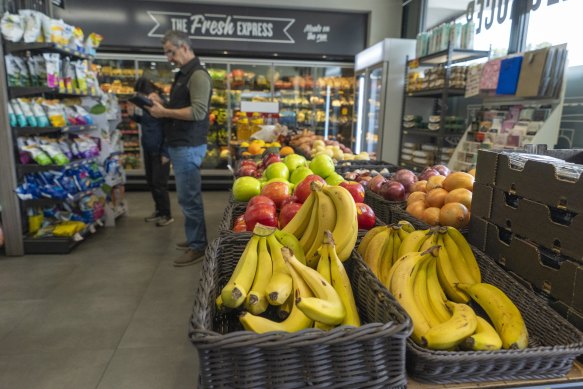
Overall food prices rose by 0.2 per cent in the quarter to be up by 3 per cent over the past year. Higher-priced lamb, bread products and takeaway foods continued to add to food costs, but there was a 3.3 per cent fall in the prices of fruit and vegetables due to better growing conditions for berries, grapes and salad vegetables.
The 3.2 per cent rise in discretionary goods and services – those considered “optional” purchases – was driven by higher domestic holiday travel and accommodation as people took school holiday trips.
“Non-discretionary inflation was lower than discretionary inflation for the first time in nearly four years,” said Marquardt.
Loading
The fall in global oil prices continues to ease the pressure on motorists, with petrol prices now 7.9 per cent lower than a year ago.
Services inflation, which has remained persistently high in recent years, slipped from 4.6 per cent in September to 4.3 per cent in the December quarter.
However, an ongoing pressure on households has been soaring insurance prices. The bureau noted another 1.1 per cent in the quarter, but it was the smallest quarterly increase since mid-2022. Over the past year, financial service prices have climbed by 5.4 per cent, due largely to an 11 per cent jump in insurance costs.
Among the capital cities, overall consumer prices in Sydney, Adelaide and Darwin fell by 0.1 per cent in the quarter. Sydney’s annual inflation rate is now 2.4 per cent while in Melbourne it is 2.5 per cent. The lowest inflation rate among the nation’s capitals is 1.5 per cent in Hobart.
More to come.
Cut through the noise of federal politics with news, views and expert analysis. Subscribers can sign up to our weekly Inside Politics newsletter.
Shane Wright – Shane is a senior economics correspondent for The Age and The Sydney Morning Herald.Connect via Twitter or email.
Millie Muroi is the economics writer at The Sydney Morning Herald and The Age, based in Canberra. She was formerly the banking writer based in Sydney.Connect via Twitter or email.
Loading
Discover more from World Byte News
Subscribe to get the latest posts sent to your email.
