





Our reviewers
Our reviewers
By John Shand
Updated March 4, 2025 — 1.41pmfirst published at 11.31am
MUSIC
MARIZA
Sydney Opera House Concert Hall, March 3
Reviewed by JOHN SHAND
★★★★
The lights go down, and Luis Guerreiro’s dazzling Portuguese guitar splinters the silence. Mariza first appears as a silhouette, only her platinum hair and sparkly gown catching the dim light. Then she unleashes the phenomenon that’s her contralto voice, a voice that may have darkened slightly in the 18 years since she was last in Sydney but that’s lost none of its ear-pinning power. This time, the Mozambique-born Portuguese singer, who has taken Lisbon’s fado music to new audiences around the world, was chattier than I recall, telling us how she began singing in her parents’ taverna when she was five and that her first album, recorded 26 years ago, was intended as a gift for her father, not a commercial release.
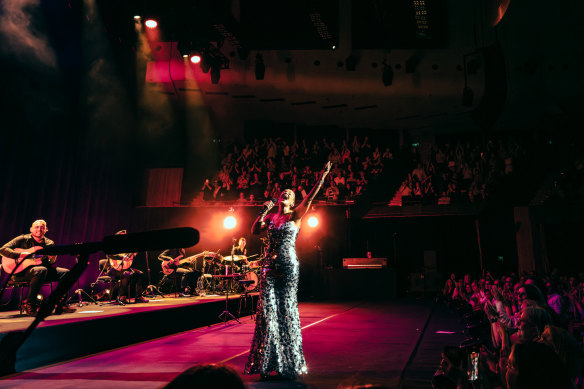
The world had other ideas.
Mariza immediately hits an intensity most singers aspire to reach at their concert’s pinnacle, and then she sustains it for song after song. Sometimes, it could seem as if all the sadness and despair in the world had been given voice or as if she were conjuring up the ghosts of all who have ever suffered. Meanwhile, her willowy arms and saucer eyes emphasised every note, compounding every emotion.
She could discard her microphone and still fill the Concert Hall with her voice, making one suspect that, despite the exemplary sound quality, she and her quintet were slightly over-amplified.
And what a band.
Besides Guerreiro (who was here 18 years ago), Carlos Phelipe Ferreira played equally dazzling acoustic guitar, and Gabriel Salles contributed sparse, apposite bass. Joao Frade’s accordion offered a contrasting, swirling sonic world to the guitars, with its unusually rich low notes particularly evident in the introduction to Meu Fado Meu, and drummer Mario Costa coloured and dramatised the music with a hybrid kit offering a wealth of sounds, which his virtuosity expanded further.
Loading
But the band’s primary purpose was to launch Mariza’s spearing voice, to let her bare her heart on songs such as Beijo de Saudade (roughly Kiss of Longing), fado being Portugal’s blues or flamenco. Its slow tempos underline the desolation often present in the lyrics and in the singing of the likes of Mariza and her great predecessor, Amalia Rodrigues, to whom she again paid tribute.
Advertisement
When she has veered closer to pop music on her records, the songs can sometimes seem emotionally limp compared with those in the fado tradition or with those reflecting her Mozambican roots. Yet in concert there’s no sense of this because her commitment is unwavering and her presence compelling, while her band lends to every song the kind of authority that a great orchestra does to classical music.
Besides, she knows the importance of lightening the mood with her occasional party pieces, such as the enthusiastically received encore, Maria Joana. The spell was only broken – and repeatedly so – by those audience members who rudely and fatuously insisted on filming her.
MUSIC
GREEEN DAY
Engie Stadium, March 3
Reviewed by MICHAEL RUFFLES
★★★★
American Idiot has no right to feel this urgent. The song is 20 years old but could have been written last weekend after recent Oval Office antics.
As a mission statement and piece of punk-rock it is as blunt as it is blistering, and Green Day delivered it in searing style on a Monday night in suburban Sydney.
The California trio, expanded for live purposes, played a smattering of hits along with classic albums Dookie (1994) and American Idiot (2004) in full.
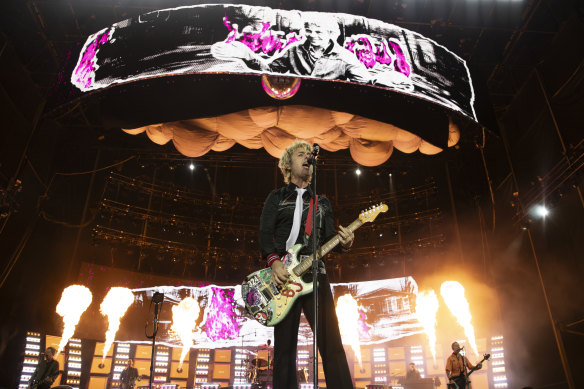
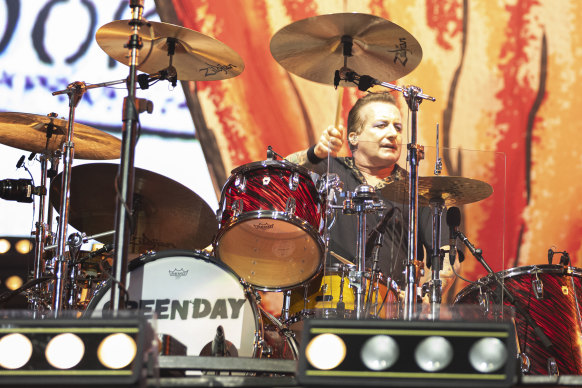
The first comes closest to outright nostalgia bait as men of a certain age bounce around to slacker anthems of their youth; Billie Joe Armstrong a cheeky and charismatic punk pixie, Mike Dirnt taunting with the bass intro to masturbation masterpiece Longview, Tre Cool bringing flair and leopard prints behind the drums.
Under a giant cartoon mushroom cloud from the album cover, Green Day barely pauses for breath during the angsty and relentless Dookie leg: the more alternative, almost poppy When I Come Around stands out in the crowd as a jaunty singalong. It ended on a high note with Tre Cool sauntering about the stage to an orchestral version of hidden final track All by Myself.
Bringing the set into the 21st century was the rousing Know Your Enemy, complete with an onstage fan going appropriately wild, and the arena-pleasing anti-war anthem 21 Guns.
However, American Idiot is the band’s crowning achievement. The hour-long punk opera opus describes a disenchanted generation worried about war, government intrusion and mass media manipulation. It’s as chilling and thrilling now as it was in the Dubya years, and Armstrong injects a rejection of “the MAGA agenda” to the opening title track and references to Ukraine and the Middle East in the rambunctious multi-part Jesus of Suburbia.
“This is for Ukraine,” Armstrong declares before launching into Holiday, the Armageddon-tinged protest song that itself goes off like a bomb.
With Boulevard of Broken Dreams and Wake Me Up When September Ends, the band turns from punk brats to genuine rock stars and even after all these years the band finds ways to make them seem fresh and moving.
Let us pray that 20 years on the songs are just as exhilarating but a lot less chilling. Can I get another amen?
John Shand has written about music and theatre since 1981 in more than 30 publications, including for Fairfax Media since 1993. He is also a playwright, author, poet, librettist, drummer and winner of the 2017 Walkley Arts Journalism AwardConnect via Twitter.
Loading
Discover more from World Byte News
Subscribe to get the latest posts sent to your email.
