





Keep up to date on today’s top stories with the national news blog.
Keep up to date on today’s top stories with the national news blog.
Peter Dutton is due to speak to the media at 2pm AEDT. We’ll bring you live updates, and you can watch the stream below.
New Delhi: The Dalai Lama’s successor will be born outside China, the spiritual leader of Tibetan Buddhism says in a new book, raising the stakes in a dispute with Beijing over control of the Himalayan region he fled more than six decades ago.
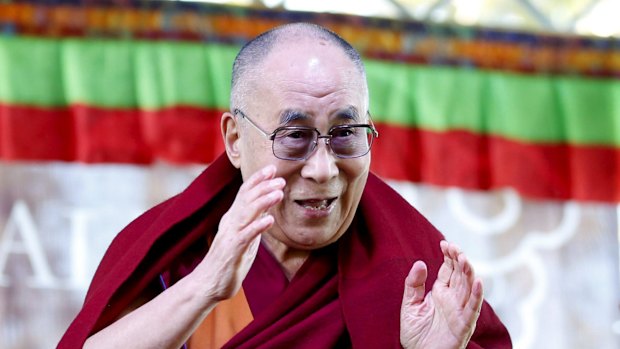
Tibetans worldwide want the institution of the Dalai Lama to continue after the 89-year-old’s death, he writes in Voice for the Voiceless, which is being released on Tuesday. He had previously said the line of spiritual leaders might end with him.
His book marks the first time the Dalai Lama has specified that his successor would be born in the “free world”, which he describes as outside China. He has previously said only that he could reincarnate outside Tibet, possibly in India where he lives in exile.
Reuters
A medical transport helicopter crashed in Mississippi in the United States on Monday (Tuesday AEDT), killing a pilot and two hospital workers on board, officials said.
The helicopter was returning to Columbus from a patient transport when it crashed in Madison County about 12.30pm, killing everyone on board, the University of Mississippi Medical Centre’s vice chancellor for health affairs, Dr LouAnn Woodward, told a press conference.
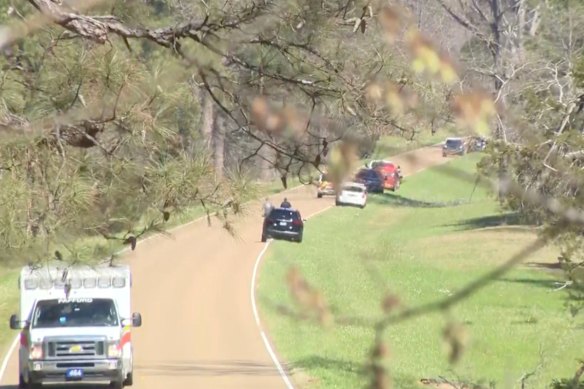
“The entire medical centre family is heartbroken over this,” Woodward said.
This was the first crash in the 29 years that the AirCare emergency services have been operational, according to a statement from the university. The school did not offer a reason for the crash but said the Federal Aviation Administration and other authorities were investigating.
Families of the three victims have been notified, but authorities didn’t release names to protect privacy.
AP
Squatters living in formerly vacant, water-damaged homes will be forcibly evicted as the clean-up begins from the latest spate of floods.
NSW Premier Chris Minns vowed to evict “overseas visitors, tourists, backpackers” taking advantage of condemned properties left empty after being included in a state buyback scheme for Lismore homes after the 2022 floods.
“We bought those houses so that we could keep communities safe … and to have squatters move in off the back of that is completely unacceptable,” he told reporters on Tuesday.

“The housing problems are not going to be solved by moving people into flood-prone land. We have to draw a line in the sand here, and that means demolishing those houses and ensuring that we can get on with life in the Northern Rivers.”
About 40 people had been living in eight flood-ravaged homes near Lismore city centre, and the premier said previous eviction notices had been served to no avail.
The squatters had tried to jump the queue to access social housing during talks with government officials about leaving the properties, Minns added. The homes would be replaced by green space after the demolition, he said.
Locals say the homes were occupied by people at the forefront of the local housing crisis, which had forced many residents to live in their cars.
AAP
After the “best briefing the state’s had in a little while”, Queensland Premier David Crisafulli confirmed the worst is over as flooded rivers begin to recede after days of heavy rain.
“I want this community, and I want the broader region, and indeed all of the state, [to] know that we are determined to make sure that there is zero daylight between response and recovery,” Crisafulli told the assembled media.
Three-quarters of power outages have been resolved, and there were no flood emergency calls overnight, the premier reported.
Crisafulli praised the more than 1000 SES personnel in the field, including many volunteers from interstate.
“The swift-water rescues were the difference between life and death for some areas … They gave people hope in a really difficult time.”
The Reserve Bank’s cut in interest rates and growing confidence about the economic outlook has driven consumer sentiment to its highest level in three years.
In positive news for Anthony Albanese, who is likely to call an election within weeks, the Westpac-Melbourne Institute measure of consumer confidence improved by 4 per cent in March, with the number of optimists now almost level with the number of pessimists. Over the past year, confidence has lifted by 13.6 per cent.
The RBA cut official interest rates in mid-February while measures of inflation have continued to ease. The most recent national accounts showed the strongest quarter of economic growth since late 2022.

Westpac’s head of Australian macro-forecasting, Matthew Hassan, said consumer sentiment had regained momentum in recent weeks.
“The RBA’s decision to cut interest rates in February and a further easing in cost-of-living pressures have provided a clear lift,” he said.
Hassan noted that while confidence was generally improving, consumers were increasingly uneasy about global events, particularly the economic threat posed by US President Donald Trump’s tariff plans.
He said 15.4 per cent of those surveyed could recall news on “international conditions”, with 82 per cent assessing them as unfavourable.
“While it is not the most pressing concern, the US ‘tariff war’ and deteriorating relations with some of its allies is clearly unsettling,” he said.
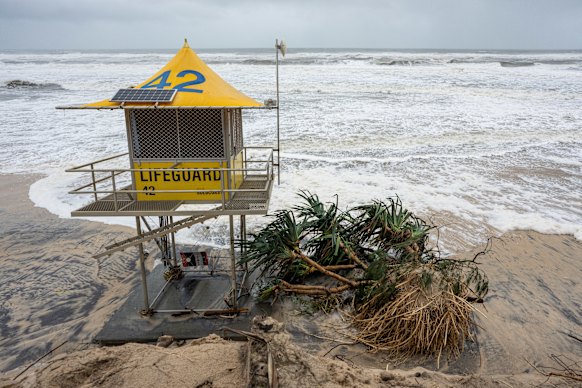
The golden sands of the Surfers Paradise coastline have been gouged away by ex-tropical cyclone Alfred, leaving behind sheer two-metre cliffs where the beach normally slopes down towards the surf.

Public steps onto the beach have been roped off in many key access points along the urban foreshore as the clean-up takes precedence.
But Gold Coast residents are getting on with life. The sun is out, and the foreshore promenade is alive with joggers, dog walkers and even tourists.

The Brisbane Times’ live coverage of the flooding situation in Queensland continues. Head here to keep updated.
The Australian share market fell sharply on Tuesday morning after US stocks were hammered overnight amid rising anxiety that the Trump administration’s tariffs and government firings will torpedo growth and start a recession in the world’s largest economy.
The ASX opened 101.6 points, or 1.3 per cent lower, to 7860.70 points as of 10.15am AEDT following a plunge on Wall Street as volatility across global markets triggered by Donald Trump’s tariffs on major trading partners extends into its third week.
More than $30 billion was wiped off the ASX in early trade – the market wreckage comes after a weekend that saw Trump suggest that the American economy is set to slow after he sidestepped a question in a Fox News interview on Sunday.
Asked whether he thought a recession was imminent, Trump said: “I hate to predict things like that. There is a period of transition because what we’re doing is very big.”
The change in language from the election campaign, when he promised tariffs on day one that would pay for tax cuts without disrupting growth, has sparked a frenzied repricing of risk assets.
Tesla tumbled 15.4 per cent, widening its loss this year to 41 per cent. AI chip giant Nvidia lost 5.1 per cent and has erased more than $US1 trillion in market value in two months. Bloomberg’s index of the Magnificent Seven tech stocks – which also includes Google’s parent Alphabet and Amazon, Apple, Meta and Microsoft — tumbled 5.4 per cent and is now down more than 15 per cent in 2025.
With Bloomberg
While no one likes to cast their minds back to the pandemic, a damning new report has found government at every level failed to consider or protect human rights during Australia’s COVID response, with domestic violence victims, renters, casual workers and at-risk groups bearing the brunt of the impact.
The Human Rights Commission has released a report based on the experiences of 5000 Australians affected by border closures, school disruptions, vaccine mandates, lockdowns, quarantine and other health restrictions.
The report detailed a series of traumatic experiences, including a woman forced to give birth to her stillborn son alone because her husband was refused entry to the hospital, and drew attention to the disproportionate impact restrictions had on families unable to say goodbye to their dying loved ones and residents of public housing towers subject to a “severe” lockdown in Melbourne in 2021.
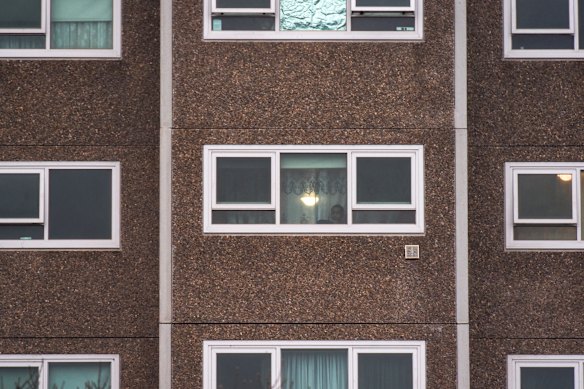
Human Rights Commissioner Lorraine Finlay said while Australia’s pandemic response saved lives, it came at a significant cost. She urged governments to strike a balance between individual freedoms and health responses in future disasters.
Finlay says the experiences of those whose human rights went unprotected should “never be ignored or repeated”.
All governments have been urged to adopt an Emergency Response Framework that mandates human rights as a priority, currently under development.
AAP with Josefine Ganko
Keeping with Tony Burke’s interview on ABC’s News Breakfast, while mounting a political argument that the Coalition inflamed tensions around the investigation into the Dural caravan, Burke was keen to point out that we “shouldn’t discount the lived experiences of people experiencing antisemitism”.
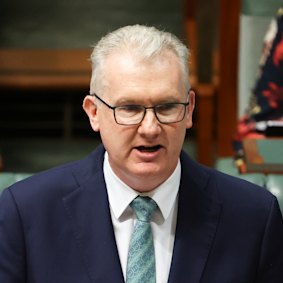
On Monday, police revealed the caravan loaded with explosives was not part of an antisemitic terrorist plot, but instead a “con job” set up by organised crime figures for personal gain.
Burke said that even though arrests had been made, it doesn’t change what the Jewish community is facing.
“I wish [antisemitic attacks] weren’t happening at all, now that we know what it is, at least it is not from a deep-seated hatred within the Australian community. But it hasn’t changed the fact that antisemitism is real,” he said.
“You can’t turn a blind eye to the way people might be treated in the street to other forms of bigotry, to people being reluctant to be publicly true to their own identity, to their own faith, because they’re worried about what bigotry might come their way.”
Discover more from World Byte News
Subscribe to get the latest posts sent to your email.
