





Premier Li Qiang’s work report to parliament on Wednesday outlined growth targets, defence spending, plans for AI dominance and “Taiwan reunification”.
Premier Li Qiang’s work report to parliament on Wednesday outlined growth targets, defence spending, plans for AI dominance and “Taiwan reunification”.
- Breaking
- World
- Asia
- Inside China
By Lisa Visentin
March 5, 2025 — 1.04pm
Beijing: China will ramp up spending to kick-start its sluggish economy and counter the pressure applied by US President Donald Trump’s tariff war, in the process creating its highest budget deficit in 30 years.
The plan was announced in Chinese Premier Li Qiang’s annual work report to parliament at the opening of the country’s rubber-stamp parliament on Wednesday.
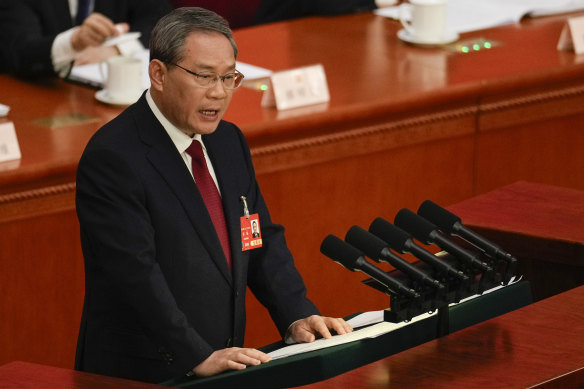
Li also adopted a tougher line on Taiwan, saying the country would “firmly advance” the push for “reunification”.
“We will firmly advance the cause of China’s reunification and work with our fellow Chinese in Taiwan to realise the glorious cause of the rejuvenation of the Chinese nation,” Li wrote in the report.
It is the second year in a row that the report has dropped the reference to the goal of “peaceful reunification” with Taiwan, which the Chinese Communist Party claims as its own territory despite never having governed the democratic island.
Li announced a GDP growth target of around 5 per cent, maintaining the party’s expectations from last year in the face of a ratcheting trade feud with America, as he laid out the country’s economic blueprint at the opening of the legislature at The Great Hall of the People in Beijing.

Addressing almost 3000 party delegates at the National People’s Congress, Li’s report revealed the country’s top priority for 2025 was “victoriously boosting consumption” and stimulating domestic demand. It signals the concern among Communist Party leadership about the stubbornly stagnant consumer confidence following the pandemic-era property market collapse, which has hammered household wealth and dragged down the domestic economy.
“Achieving this year’s targets will not be easy, and we must make arduous efforts to meet them,”
Li, the second most senior Chinese official, told the congress.
Advertisement
“We will firmly implement the strategy of expanding domestic demand, strengthen the domestic economy and drive its expansion, and broaden international co-operation through further opening up, so as to promote greater mutual reinforcement and higher-standard positive interplay between domestic and international economic flows,” Li said.
Loading
Li said the government deficit had been increased to 5.66 trillion yuan ($1.24 trillion), up from 1.6 trillion yuan over last year’s budget figure.
As the second top order priority, the report listed China’s goal of advancing its high-tech sector, reinforcing Beijing’s ambition to eclipse the US in the race for global dominance of artificial intelligence.
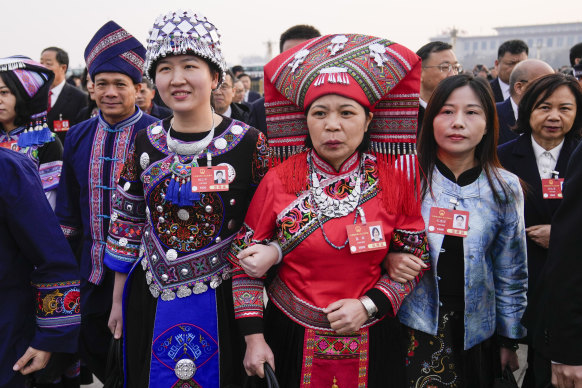
The congress comprises almost 3000 delegates from across the country who descend on the capital for a week-long sitting each year to sign off on bills and policies already approved by CCP leadership, in what is a tightly scripted and staged-managed affair.
Together with the sitting of the country’s top political advisory body – the Chinese People’s Political Consultative Conference, which meets at the same time – the annual gathering known as the “two sessions” adds a veneer of democratic participation to the CCP’s one-party governance, which vests almost total power in President Xi Jinping.
The delivery of the work report is a closely watched event that will be scrutinised by officials, analysts and academic experts in Washington and other political capitals for signals from Xi and party leadership about their plans and ambitions.
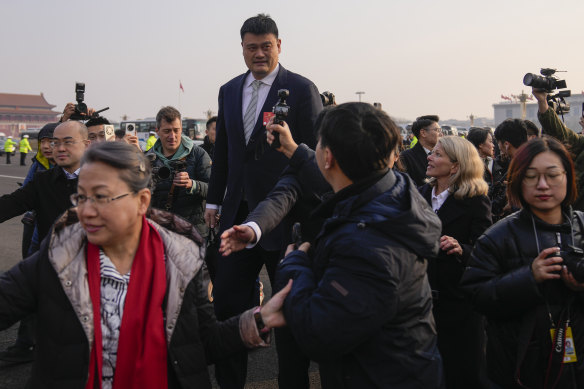
The report will also be unpacked in Canberra, given the dependence of Australia’s economy on China’s economic growth. China is Australia’s largest trading partner and buys nearly a third of all Australian exports, so a depressed domestic demand has the potential to wreak havoc for Australian exporters and the broader economy.
This year’s gathering began a day after Trump doubled his tariffs on Chinese imports to 20 per cent, triggering an immediate backlash from Beijing, which fired back with its own package of measures including tariffs of up to 15 per cent on poultry, meat and a range of farm products.
More to come.
Get a note directly from our foreign correspondents on what’s making headlines around the world. Sign up for the weekly What in the World newsletter here.
Lisa Visentin is the North Asia correspondent for The Sydney Morning Herald and The Age. She was previously a federal political reporter based in Canberra.Connect via Twitter.
Loading
Discover more from World Byte News
Subscribe to get the latest posts sent to your email.
