





The publisher of The Saturday Paper and the Quarterly Essay has offered its writers a 50/50 split if they allow their work to be used to train artificial intelligence.
The publisher of The Saturday Paper and the Quarterly Essay has offered its writers a 50/50 split if they allow their work to be used to train artificial intelligence.
By Hannah Hammoud
Updated March 5, 2025 — 12.56pmfirst published at 10.38am
The publisher of The Saturday Paper and the Quarterly Essay is facing criticism after asking its authors to consent to their works being used to train artificial intelligence.
In an addendum to a contract seen by this masthead, Melbourne-based publisher Black Inc. has requested its writers grant it the “right to reproduce or use, adapt, and exploit the work in connection with the development of any software program, including, without limitation, training, testing, validation and deployment of a machine learning or generative artificial intelligence system”.
Black Inc. is part of the Schwartz Media group, owned by Morry Schwartz, which also produces The Monthly. Some prominent authors Black Inc. has published over the years include Helen Garner, Stan Grant and David Marr.
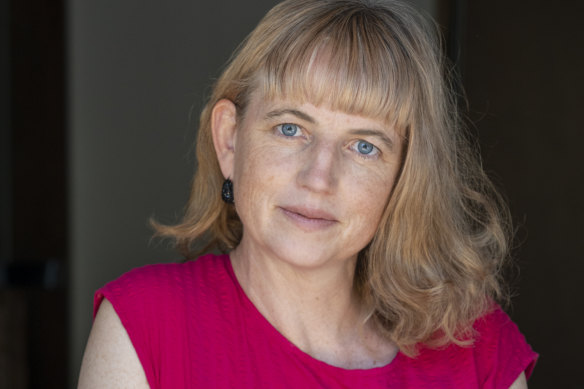
Australian author Laura Jean McKay said she received the addendum to her original contract on Friday and was given just three business days to decide whether to opt into a third-party agreement with an unnamed AI company.
“Usually, a DocuSign with a publisher is a very exciting moment … so I was very surprised to open this up and find that it was an adjustment to my contract with them, which stated that I would basically be signing over my book to be training large-language models for AI.”
McKay’s book, Holiday in Cambodia, was published by Black Inc. in 2013.
“[The document] read like it was written by AI frankly … [and] right at the end of the DocuSign was a little statement that said, ‘We hope you will want to join us in this new frontier, but we also understand if you prefer to opt-out. In that case, don’t do anything.’”
The deal proposes a 50/50 split of net receipts between the publisher and the author.
Advertisement
Black Inc. said in a statement on Wednesday that all revenue from the proposed agreement would be shared and stressed it was an opt-in arrangement.
“The demand for high-quality, curated content for AI is growing rapidly, and at Black Inc. we are committed to approaching this opportunity with both fairness and simplicity,” the statement read.
“When I say we’re being asked to sign our own death warrants, I mean that … predictions are that we won’t need novels and novelists any more.”
Laura Jean McKay
“To this end, we have sought permission from writers to sub-license their work. Writers have been asked if they wish to opt into future agreements.
“No such agreements have been entered into. Rather, Black Inc. is seeking permission to negotiate agreements, to strike terms deemed reasonable by the publisher with reputable AI companies.
Black Inc. said it has “every incentive” to strike agreements that benefit both the writer and publisher.
Loading
“We believe authors should be credited and compensated appropriately and that safeguards are necessary to protect ownership rights in response to increasing industrial automation.”
But McKay said she is concerned that authors may feel pressured to sign due to career fears, especially newer writers without industry experience.
“If this was 2013, and I was just bringing out my first book, I wouldn’t have known what to do. I didn’t have an agent then; I was absolutely green in the industry. I was terrified of publishers,” she said.
“When I say we’re being asked to sign our own death warrants, I mean that effectively, projections and predictions are that we won’t need novels and novelists any more.
“The job that I have, the work that I do is becoming obsolete … and so I’m being asked to sign a document that will hand over my work to train something that is going to completely replace me, not just in creative work, but in every industry that I work in.”

Insidious situation
Media, Entertainment and Arts Alliance chief executive Erin Madeley said authors should exercise “extreme caution” when approached to give consent for their work to be used by AI.
“Big Tech has been stealing the work of Australian artists, creators and entertainers to train their AI models, and this has created an insidious situation where businesses like Black Inc. feel they have no choice but to attempt to licence their authors’ content to prevent it being stolen,” she said.
Loading
“This is why we urgently need a comprehensive AI Act in Australia to regulate the use of AI, as the consequences of this theft affect all of us, ultimately degrading our culture and further eroding trust and confidence in our institutions.”
Madeley said if authors do agree to opt into the agreement, then the full benefits from the deal should go to the original creator.
“Companies like Black Inc. no doubt feel the competitive pressures of an industry where AI theft of writing and literary work undercuts their business. But caving in to Big Tech is no solution,” she said.
“Australia needs to stand up to Big Tech and introduce an AI Act as a matter of urgency to prevent this race to the bottom.”
Australian Society of Authors (ASA) chief executive Lucy Hayward said that while Black Inc. has made the arrangement opt in, the publisher is seeking broad rights without providing authors enough information to make an informed decision.
Companies like Black Inc. no doubt feel the competitive pressures of an industry where AI theft of writing and literary work undercuts their business. But caving in to Big Tech is no solution.
Erin Madeley, MEAA
“We support licensing. We need a licensing regime, an appropriate one to replace what has happened overseas, which is rampant, uncontrolled use of authors’ work for AI training without permission and without payment,” she said.
Hayward said the proposed 50/50 revenue split is unfair to authors, adding that the publisher’s role justifies no more than a 25 per cent share.
“There is work involved in negotiating these deals, and Black Inc. should receive fair payment for the work that they do … but the work that is actually valuable to the AI companies is the author’s work – it’s the text,” she said.
“We don’t understand why there was such a rush. Why wouldn’t you give an author time to evaluate it if you’re coming to them in good faith?
“Authors are the backbone of the publishing industry. It is on their intellectual property that publishers’ businesses are built, and that work really does need to be respected.”
The Booklist is a weekly newsletter for book lovers from Jason Steger. Get it delivered every Friday.
Hannah Hammoud is a reporter at The Age.Connect via Twitter or email.
Loading
Discover more from World Byte News
Subscribe to get the latest posts sent to your email.
