





Drawing inspiration from her mother’s life story, Oswald’s book is a sprawling whole-of-life tale.
Drawing inspiration from her mother’s life story, Oswald’s book is a sprawling whole-of-life tale.
By Kylie Northover
March 11, 2025 — 11.00pm
Older women protagonists often tend to fall into two categories in books and particularly on screen – either as a comic device (it’s funny because they’re forgetful!) or as the zany character (it’s funny because they swear or dress like someone younger!).
Debra Oswald’s new book is told from the perspective of a 100-year-old woman looking back over her life, but her protagonist is neither of these things. “Ugh, ‘quirky’,” Oswald, creator of TV series Offspring, and acclaimed playwright and author says. “No!”
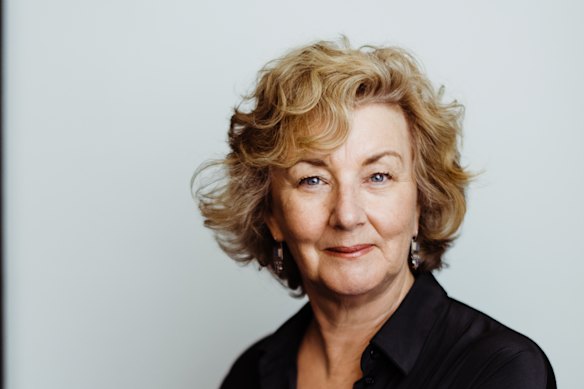
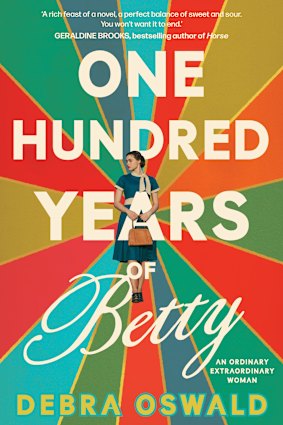
She describes her new novel 100 Years of Betty (her fourth adult book; she’s written several kids’ books) as a “fictional autobiography”, which follows the life of British-born Betty from her birth in 1928 on the kitchen table of her family’s house in south-east London until her 100th birthday in Australia, where she ends up after migrating as a Ten-Pound Pom in the 1950s.
She’s led a feisty, curious life, but she’s not a “quirky” older woman. “Maybe it helps that you go all the way through to old age with her,” says Oswald. “It’s not just about an older woman – we know all the layers of her, all her losses and worries and joys, so by the time she’s an older woman, everything that happened to her lands in … a complex way.”
The story is also, by virtue of when Betty was born and how long she lives, that of a century of great upheaval and social change. In Betty’s lifetime, she experiences war, the loss of family members, starting her life in another country and missed romantic opportunities. She survives an abusive marriage and life as a single mother, endures her son going to war in Vietnam, embraces the women’s liberation movement in the 1970s, and lives through the AIDS crisis of the 1980s. There is a lot going on.
“I really like whole-of-life novels, big sprawling family sagas like Pachinko,” Oswald says. “But I’d also been thinking about my mother, who was born pretty much the same time as Betty. She didn’t make it to 100, but I was thinking about how much the world had changed in her lifetime. I’m very interested in all the social changes.”
Like Betty, Oswald’s mother was one of 12 children who grew up in Deptford, and came to Australia as a Ten-Pound Pom. “And like Betty, she was a secretary in Sydney in the 1950s and ’60s,” she says.
“But Betty is also very different to my mother. In the way that writers do, I kind of snatched what I wanted from her story, and then some of it’s me,” she adds, referring to the years in which Betty falls into a job as a screenwriter for TV in the 1980s.
Advertisement
“I’m proper old myself! But I also had to do lots of research, which was really fun. The BBC has done its oral history of wartime experiences, which is a great gift to novelists,” she says. “Then I would fill my head with images of each decade, and I also had a Spotify soundtrack. It was a great way to get a sense of what a long a time it is, and how much has changed.”
Oswald didn’t want her epic novel to be a “schematic historical timeline”; while Betty’s life intersects with world events, it’s very much her story, while also underscoring life for women throughout the 20th and early 21st centuries.
Motherhood and friendship are also key themes. Oswald wanted to write about motherhood “over the long haul”. “I don’t think it’s written about often in fiction, so I wanted to write about (motherhood) though babies, teenagers and as young adults, from planning them, watching them suffer and go out into the world and make their lives,” she says.
Betty deals with being a single working mother when it wasn’t the norm. But she also attends anti-war rallies, discovers women’s liberation, and is engaged with the changing world around her; she is ahead of her time. Younger readers might be shocked at some of Betty’s hurdles. A couple of times I turned to Google because I couldn’t believe some of the things Betty mentions could have been true – that rape within marriage wasn’t illegal until the 1980s, and that it wasn’t until 1974 that women were “granted the right” to open a credit card with their husband’s permission.
“I love that you had to Google,” says Oswald. “It’s all true!” Including such shocking facts, she says, acts as a way of reminding ourselves that while things have changed because people worked hard to enforce change, we shouldn’t be complacent.
“There are still some infuriating things, unfairness and injustice and cruelty in the world even now,” she says. “But the fact that people have created change should spur us on, make us think.”
The epic story feels primed for a 10-part television series … “I would love that, and if you know any major streamers, let me know! I haven’t had a television project since Offspring, and that was 10 years ago,” she says of the TV show that was the most commercially successful dramas in the 2010s. Oswald created the series and was a writer for its first five seasons, winning an AACTA and a NSW Premier’s Award for scriptwriting.
Like Betty, she began working in TV in the 1980s (everything from Police Rescue to The Secret Life of Us and Bananas in Pyjamas), but she began her career as a playwright; her first play was workshopped when she was just 17.
She wrote her first book for kids in 1987. “I only took to writing grown-up novels 10 years ago,” she says, adding that she’s always a little nervous when she finishes a book.
Loading
And does she have a favourite medium? “No. I know that will sound lame, but it’s true. I love the camaraderie of television and working with other people. It’s incredibly fun.”
It’s creatively nourishing, she says, to work with other people, and (in) theatre, of course, you can gauge your audience’s reaction immediately. “You can hear them laugh or gasp and worry about the characters in front of you,” she says. With a book, she has to sit tight and wait for reader feedback.
“I can’t go around to people’s houses and peer over their shoulders and watch them reading my book,” she says. “I think it would be frowned upon legally.”
100 years of Betty (Allen & Unwin) is out now.
Discover more from World Byte News
Subscribe to get the latest posts sent to your email.
