





Local movies once challenged American blockbusters. Now they’re limping out of the multiplexes and arthouses, tails between their legs.
Local movies once challenged American blockbusters. Now they’re limping out of the multiplexes and arthouses, tails between their legs.
Opinion
May 30, 2025 — 3.00am
When Red Dog was released in 2011 it opened with a solid but not spectacular $1.9 million on 245 screens, trailing The Rise of the Planet of the Apes, Harry Potter and the Deathly Hallows and Captain America: The First Avenger and ahead of Bad Teacher and Bridesmaids.
But the cinematic journey of the red cloud kelpie who roamed the Pilbara in the early 1970s was only getting started.
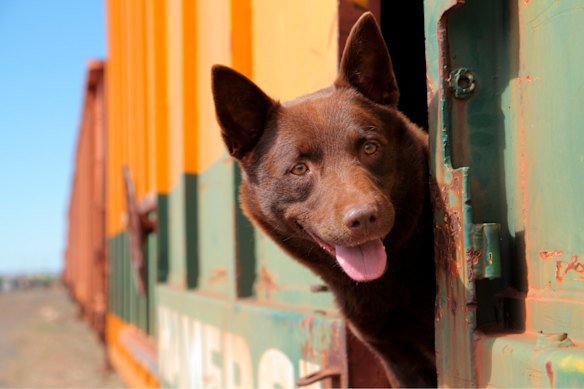
In the following weeks it jumped to number three and then two, ultimately making over $21 million and becoming the 11th biggest box office hit for the year in Australia (ahead of Thor, Kung Fu Panda 2 and X-Men: First Class).
“It’s barking mad,” WA-based producer Nelson Woss said to me during one of our daily phone chats during Red Dog’s remarkable box office run, which continued through Christmas when it became the biggest selling DVD in history (it was bumped of its perch with the arrival of The Avengers).
Flash-forward 15 years and Red Dog director Kriv Stenders was again spruiking a feature film, The Correspondent, the true-life prison drama that tells the story of the incarceration of Australian journalist Peter Greste (played by Richard Roxburgh) in an Egyptian jail.
This time, however, The Correspondent barely made it out of the gate, opening outside the top 10 and limping out of cinemas with a little over $600,000 in the bank.
Of course, Red Dog is a colourful mainstream family flick while The Correspondent is a bleak Kafka-esque prison drama in which Roxburgh’s Greste barely leaves the four walls of his cell and spends his time battling to make sense of his dilemma.
However, in the same year that Red Dog was released, Justin Kurzel’s sickening serial killer flick Snowtown made over $1 million, Fred Schepisi’s adaptation of Patrick White’s The Eye of the Storm made over $2 million, while two poorly reviewed crowd-pleasers – The Cup and A Few Best Men (a mere 18 per cent on Rotten Tomatoes) — hauled in $2.6 million and $5.5 million respectively.
Australian cinema has always been an up-and-down affair in terms of quality and box office, with our share ranging from 23.5 per cent in 1986 to 2 per cent in 2023.
And, of course, the global spectacles of Baz Luhrmann (Moulin Rouge, Australia, The Great Gatsby, Elvis) and George Miller (the Mad Max, Babe and Happy Feet franchises) have existed in a realm that you would barely call Australian films.
But I cannot recall a time when Australian movies have generated so little interest, with the latest batch of releases — Magic Beach, The Lost Tiger, Spit and The Correspondent — barely registering on the consciousness of local filmgoers, despite stars such as David Wenham and Richard Roxburgh touring the country, attending previews and Q&A sessions and appearing on television and radio talk shows.
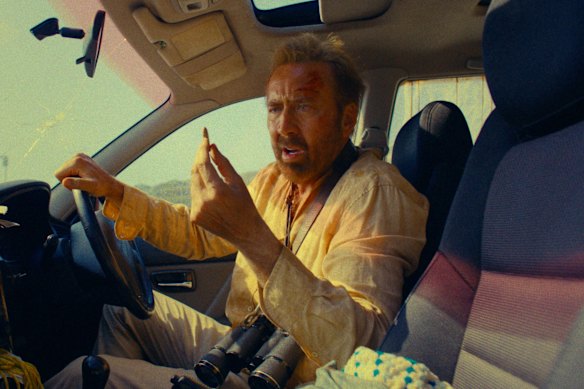
The most vivid example of the lack of engagement Australian audiences have with their own cinema is the WA-set The Surfer, a Wake in Fright-inspired freak-out in which Nicolas Cage’s increasingly frazzled businessman tangles with xenophobic surfers fighting to stop him from buying a beachside home.
Even though The Surfer features an Oscar-winning movie legend whose arrival in Yallingup whipped up global Instagram interest and was rapturously received at the Cannes Film Festival, it went out on just 76 screens in Australia — Hoyts and Event Cinema are not even bothering — which means it was destined to attract only a tiny audience.
While the loss of interest in Australian cinema is in lockstep with the demise of non-blockbuster movies across the globe caused by the COVID lockdown and, more significantly, the proliferation of streaming, that decline is more keenly felt here than in other territories because of our size and total immersion in American popular culture.
Every now and then an Oz movie will conquer the world and fill us with pride. We all beamed with pride as George Miller’s Fury Road leaped to the top of the lists of the greatest action films ever made.
But the default source for big-screen entertainment in Australia is Hollywood, which is why both our film and television industry have been swamped by the streaming tsunami.
Does it matter that audiences are no longer seeing movies on the big screen? The Surfer will soon be on Stan, where it will be watched by many more people, here and around the world, than during its brief window at the cinemas.
What it means is that Australian movies are no longer part of the conversation as they were during the 1970s, when films such as Newsfront, Picnic At Hanging Rock and The Chant of Jimmie Blacksmith were integral to our national cultural revival, or the early 90s, with that explosion of lurid comedies (Muriel’s Wedding, Priscilla: Queen of the Desert, Strictly Ballroom) that turned our passion for kitsch into a badge of honour.
Even if a movie does get a screening it is quickly sucked into the streaming vortex, joining the dozens of series that simply never get talked about, even if they are high quality.
I recently asked a group at a lecture I was giving if they had heard of the recent WA-made series Scrublands.
They looked at each other, then at me with a deep sense of confusion, as if I was asking them if they had seen a black-and-white Hungarian art movie from the 1930s instead of a television series based on a popular novel and shot in Augusta.
How little cultural impact Australian film and television makes once it enters the streaming black hole can be measured by Kurzel’s The Narrow Road to the Deep North. Despite being one of the best dramas in memory, and based on a celebrated novel, it has barely been discussed.
Here in WA the situation is even more dire, with the cross-border cultural cringe so intense that we get ignored by the country.
Dirt Music, The Furnace, Sweet As, Blueback, Kid Snow, H is For Happiness – all major disappointments.
Even David Vincent Smith’s stunning He Ain’t Heavy — for my money the best-ever film produced in WA — made pennies at the box office.
Ironically, the decline in interest in Australian movies comes at a time when we are in the final stages of building a long dreamed-about movie studio in Malaga.
Its purpose is to attract major productions from overseas (movies and television series) so that local talent can learn from the big boys and bring those skills to bear on their own productions.
How will it look when we have a state-of-the-art movie filmmaking facility welcoming lavishly funded productions from around the world when our own films play to near empty cinemas?
Unless something is done about Australian cinema we risk looking like an offshore factory for Hollywood, a place that provides labor but none of the artistry and ideas.
Or am I writing off Oz movies too quickly? Have we lost interest in Australian movies or are Australian filmmakers not giving us the kind of rich, full-blooded narratives that are entertaining as they are culturally relevant, as we have done at points in our history?
Australian filmmakers need to once again make the kinds of movies that still audience who are still going to see sophisticated non-blockbuster films from the United States and Europe, such Conclave and A Complete Unknown, two hugely entertaining movies with a lot on their minds that managed to lure viewers off couches and into cinemas and take part in a conversation.
What was the last Australian movie that did that?
Start the day with a summary of the day’s most important and interesting stories, analysis and insights. Sign up for our Morning Edition newsletter.
Mark Naglazas is a journalist specialising in Perth culture and the arts.
Discover more from World Byte News
Subscribe to get the latest posts sent to your email.
